


2026 Guide to Lightweight Mobility Aids for Seniors
Updated: 6 days ago

What if the tools that support your movement felt less like medical equipment and more like a high-performance travel accessory? It's a common frustration to feel held back by bulky walkers that cause shoulder strain or simply won't fit into a compact car trunk. You likely believe that maintaining your independence shouldn't come at the cost of your physical comfort or your personal style. We agree that your mobility aid should be a bridge to new experiences, not a barrier to them.
In this 2026 guide, you'll discover the most portable, high-tech, and lightweight mobility aids for seniors designed to help you maintain your vitality and travel with ease. We've curated the latest innovations that prioritize both ergonomics and elegance, ensuring you feel confident during every family visit and flight. We will explore the gold standard in posture-improving upright walkers, the latest FAA regulations for scooter batteries, and stylish foldable designs that redefine what it means to live a proactive, mobile lifestyle. Whether you're planning a trip abroad or a walk in the park, these curated solutions ensure you move with grace and reliability.
Table of Contents
The Evolution of Freedom: Why Lightweight Mobility Aids Matter in 2026
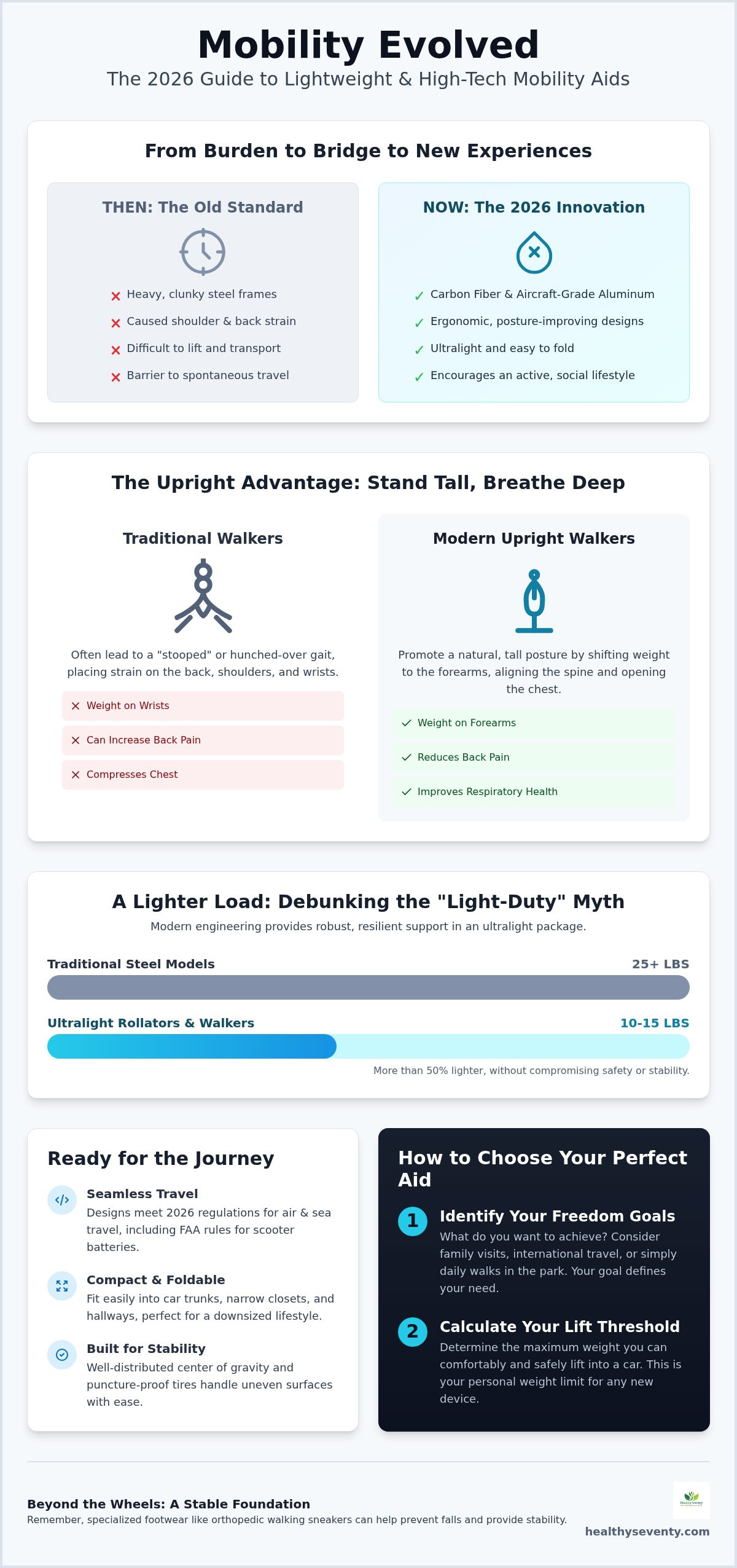
For decades, the image of a walker or scooter was one of heavy, clunky steel that required significant strength to lift. In 2026, that narrative has changed. Modern lightweight mobility aids for seniors utilize materials like carbon fiber and aircraft-grade aluminum to provide robust support without the physical toll of traditional gear. These devices aren't just scaled-down versions of old equipment; they're precision-engineered tools designed for a life in motion. By reducing the physical weight of your equipment, you effectively reduce the psychological burden of aging, making spontaneous outings feel like a joy rather than a chore.
There's a common misconception that "lightweight" implies "light-duty." This is a myth we need to debunk. The structural engineering behind 2026 equipment ensures that these aids handle standard weight capacities with ease. Using materials once reserved for high-end racing bicycles or aerospace engineering, manufacturers have created frames that are incredibly resilient. You get the stability you need for safety without the bulk that limits your travel. This shift allows you to focus on your destination rather than worrying about whether your equipment can withstand the journey.
The Vitality Connection: Mobility and Mental Health
How does your equipment affect your social life? Isolation often begins when the effort to leave the house outweighs the desire to go. When a walker is too heavy to manage alone, social circles naturally shrink. Portable gear changes this dynamic by reducing physical strain and preserving your daily energy for the destination, rather than the journey. Lifestyle mobility is the intersection of medical support and personal freedom.
Understanding Weight Classes in Modern Assistive Devices
Choosing the right tool starts with understanding the specs. What does "ultralight" actually mean in the real world? In the current market, an ultralight rollator typically weighs between 10 and 15 pounds. In contrast, traditional steel models often exceed 25 pounds. While the total number on the scale matters, the center of gravity is what truly ensures your safety. A well-designed device distributes weight to prevent tipping, even when the frame is exceptionally light. This evolution in mobility aids ensures you no longer have to choose between a sturdy frame and one you can actually lift.
Redefining the Stroll: Ultralight Upright Walkers for Posture and Pace
Traditional walkers often lead to a "stooped" gait, which can cause secondary health issues over time. Upright models represent a significant leap in ergonomic design, shifting your weight from the wrists to the forearms. This transition is instrumental in reducing back pain and improving respiratory health. When your chest is open and your spine is aligned, you naturally take deeper breaths and feel more energized. You can learn more about these benefits in The Comprehensive Guide to Upright Walkers. By standing tall, you aren't just moving safer; you're reclaiming your natural vitality.
The VOCIC Advantage: Posture Meets Portability
The VOCIC Upright Walker for Seniors stands out as a premier choice for active adults. It's specifically built to eliminate the "hunched over" look that many people find discouraging. This model features ergonomic armrests and adjustable heights, ensuring it fits your unique frame perfectly. While it provides robust support, it's engineered with materials that keep it manageable for solo car loading. The intuitive folding mechanism is a major benefit for those who don't want to struggle with their equipment in a parking lot. It's a gold standard among lightweight mobility aids for seniors who refuse to let their equipment slow them down.
Upright vs. Traditional: Which Lightweight Option Wins?
Is an upright model right for you? If you struggle with balance or find that leaning forward causes discomfort, the answer is likely yes. While publications often highlight the best walkers for seniors based on weight alone, the quality of your posture is just as vital. These models are engineered for stability, often including puncture-proof tires that handle uneven sidewalks with ease. They also accommodate a modern, downsized lifestyle by folding into a slim profile that fits into narrow closets or hallways.
Safety features in these modern uprights are designed to prevent tipping, giving you the confidence to explore new environments. Whether you're visiting a museum or walking through a local park, the right support makes all the difference. If you're ready to improve your daily stroll and breathe easier, investing in a posture-correcting walker is a proactive step toward maintaining your long-term independence.
On the Go: Foldable Mobility Scooters for Seamless Travel
Imagine boarding a cruise ship or navigating a bustling airport without the fear of physical fatigue. In 2026, the "travel scooter" has evolved from a heavy piece of medical equipment into a streamlined lifestyle enhancer. These devices are essential for seniors who refuse to let distance limit their exploration. When researching Mobility Aids, you'll find that the most impactful choice is often the one that fits into your existing travel plans without requiring a specialized vehicle lift. The Foldable Mobility Scooter for Seniors bridges the gap between long-range power and a compact footprint, allowing you to focus on the sights rather than the logistics of movement.
Staying informed about 2026 regulations is crucial for a stress-free journey. The FAA permits battery-powered mobility aids on flights, but specific rules for lithium-ion batteries apply. Passengers can carry one spare battery up to 300Wh or two spare batteries up to 160Wh each in their carry-on luggage. Ensuring your equipment meets these standards before you arrive at the gate prevents unnecessary delays. For a deeper look at how to prepare for your next trip, explore our Mobility Aids for Seniors 2026 Resource. This preparation ensures your transition from the car to the cabin is effortless.
Portability Metrics: Folding Speed and Compact Dimensions
Does the scooter require manual disassembly, or does it offer one-touch folding? For many, hand strength is a deciding factor. One-touch mechanisms allow the unit to collapse into a suitcase-like shape in seconds, making it easy to store in standard SUV trunks. You should look for a "sweet spot" where the unit weight is low enough for a partner to lift, yet the weight capacity remains high enough for stability. These lightweight mobility aids for seniors are engineered to provide a secure ride without the bulk of a traditional power chair.
Battery Life and Terrain Handling
Modern lightweight scooters aren't restricted to smooth indoor floors. Many are now built to handle uneven pavement or park paths, though they perform best on maintained surfaces. A modern lightweight scooter typically offers a range of 10 to 15 miles on a single charge. To maintain your vitality during long travel days, consider charging the battery during lunch breaks or whenever you're stationary for an hour. This proactive approach ensures you're always ready for the next adventure, whether it's a stroll through a botanical garden or a trip to the local market.
Beyond the Wheels: Wearable Stability and Small Travel Aids
Mobility isn't always about the wheels you use to navigate the world. Often, the most effective support starts exactly where you meet the ground. While we've discussed the mechanical advantages of walkers and scooters, your footwear serves as the primary "mobile foundation" for your daily life. High-quality orthopedic shoes are arguably the most lightweight mobility aids for seniors because they integrate support directly into your wardrobe. When your feet are properly aligned, your entire body benefits from reduced strain and improved balance.
Orthofeet: The Foundation of Independent Movement
Many seniors find that joint pain in the knees and hips stems from inadequate arch support or poor shock absorption. Orthofeet Orthopedic Walking Sneakers address these issues by providing a structured environment for your feet. These sneakers are designed with unique "easy-on" features, such as hands-free entry or adjustable straps, which are invaluable if you manage limited hand dexterity. By choosing the right footwear, you can significantly reduce the risk of trips and falls during your travels. You can find detailed comparisons and safety tips in our Best Walking Sneakers for Balance Guide.
Essential Travel Accessories
Once your foundation is secure, small travel-friendly accessories can fill the gaps in your mobility plan. Carbon fiber canes have become a staple for 2026 travelers because they weigh only a few ounces while offering high-strength support. They're perfect for navigating museum galleries or standing in airport security lines where a full walker might feel unnecessary. These tools are premier examples of lightweight mobility aids for seniors that prioritize discretion and ease of use.
Portable reacher-grabbers are another essential for maintaining independence in unfamiliar environments like hotel rooms or vacation rentals. These tools allow you to retrieve items from high shelves or the floor without overextending your reach or risking a loss of balance.
Telescoping Canes: These fold down to fit inside a carry-on bag, ensuring you always have a "third leg" when needed.
Lightweight Reachers: Modern versions use aluminum alloys to remain sturdy yet light enough for all-day use.
Ensuring your safety kit is as light as your luggage allows you to stay proactive about your health without feeling weighed down. If you're ready to upgrade your foundation, explore our curated selection of Orthofeet Orthopedic Walking Sneakers to experience the difference a supportive shoe makes.
The Selection Framework: How to Choose Your Perfect Aid
Selecting the right equipment is a personal journey that requires more than just looking at a feature list. To find the ideal lightweight mobility aids for seniors, you need a structured approach that prioritizes your unique lifestyle and physical needs. We've developed a five-step framework to help you navigate these choices with confidence. This process ensures that your new tool becomes a seamless extension of your movement rather than a cumbersome addition to your day.
Step 1: Identify your primary Freedom Goal. Are you looking for something to navigate narrow cruise ship corridors, or do you need a sturdy companion for park walks? Your destination dictates the necessary wheel size and stability.
Step 2: Calculate your Lift Threshold. This is the maximum weight you or a partner can comfortably lift into a vehicle. Knowing if your limit is 15 or 30 pounds will immediately narrow your search to manageable models.
Step 3: Verify terrain requirements. While many lightweight devices excel on smooth indoor floors, you must ensure the tires and frame are rated for the specific outdoor surfaces you plan to traverse.
Step 4: Check for ergonomic Fit. An aid that's too short causes slouching; one that's too tall strains the shoulders. Ensure the handle heights and seat dimensions align with your posture.
Step 5: Review the support network. True peace of mind comes from knowing a reliable warranty and a responsive customer service team back your investment.
Weight vs. Capacity: The Critical Balance
When you read a technical spec sheet, don't let the terminology confuse you. You'll often see "net weight," which refers to the device itself, and "gross weight," which includes the shipping box and accessories. Always focus on the net weight for daily handling. However, you should never compromise on weight capacity just to save a few pounds on the device frame. A high-quality carbon fiber walker might weigh only 12 pounds but should still support a 300-pound capacity without flexing. Additionally, consider the turning radius for indoor use. A compact design is essential for maneuvering through tight bathroom doors or crowded restaurant seating.
Next Steps: Embarking on Your Next Adventure
At Healthy Seventy, we believe that the later stages of life are a time for exploration and legacy. We focus on a curated selection of products because we value quality over sheer quantity. By choosing the right gear, you're not just buying a tool; you're investing in your ability to attend every family wedding and enjoy every sunset walk. It's time to stop letting bulky equipment dictate your boundaries. You can browse our curated collection of senior mobility aids at Healthy Seventy today and take the first step toward reclaiming your independence.
Step Into a More Mobile and Vibrant Future
The transition to using assistance doesn't have to feel like a loss of freedom. In fact, the right lightweight mobility aids for seniors act as a bridge to the activities and people you love most. We've seen how advanced materials like carbon fiber and aircraft-grade aluminum have stripped away the bulk, leaving only strength and style. From the posture-correcting benefits of upright walkers to the seamless travel enabled by foldable scooters, your movement is now supported by precision engineering. Proper footwear and compact accessories complete this foundation, ensuring every step is secure.
Healthy Seventy has been empowering seniors since 2024 with expert-vetted wellness resources designed for active independence. We believe your later years should be defined by your experiences, not your limitations. Our curated selections are more than just products; they're your partners in maintaining a proactive and joyful lifestyle. Your legacy of vitality starts with the choices you make today.
Explore Our Expert-Curated Mobility Collection to find the support you deserve. We're here to help you navigate your journey with grace and confidence.
Common Questions About Modern Mobility
What is the lightest walker for seniors that is still safe?
The lightest safe walkers are typically constructed from carbon fiber, often weighing between 10 and 15 pounds. These models offer high strength support while remaining easy to lift into a vehicle. Safety is maintained through a low center of gravity and wide wheelbases that prevent tipping. For those prioritizing posture, the VOCIC Upright Walker for Seniors provides a lightweight frame that supports a tall, confident gait without the bulk of traditional steel models.
Can I take a foldable mobility scooter on an airplane in 2026?
You can certainly travel with a foldable mobility scooter on an airplane in 2026. However, you must comply with FAA regulations regarding lithium ion batteries. You're permitted to carry one spare battery up to 300Wh or two spares up to 160Wh in your carry on luggage. It is best to notify your airline at least 48 hours in advance to ensure a smooth boarding process and proper handling of your device during the flight.
Are lightweight mobility aids as durable as heavy steel ones?
Modern lightweight mobility aids for seniors are just as durable as their heavier steel counterparts. Manufacturers now use aircraft grade aluminum and carbon fiber, which provide exceptional strength to weight ratios. These materials don't rust and are engineered to withstand daily use while remaining much easier to transport. Choosing a lightweight model doesn't mean you're sacrificing longevity; you're simply choosing more advanced engineering that supports a proactive and active lifestyle.
How do I know if an upright walker is better than a rollator?
An upright walker is ideal if you experience back pain or find yourself hunching over a standard rollator. It allows you to stand tall by supporting your weight through your forearms rather than your wrists. A traditional rollator might be better if you only need light balance assistance and prefer a more compact footprint. If your goal is to improve respiratory health and posture while walking, the upright design is the superior choice.
Do insurance plans typically cover lightweight or travel-specific mobility aids?
Insurance coverage for lightweight or travel specific aids varies significantly by provider. Traditional Medicare often covers basic models deemed medically necessary for use inside the home. They may not cover the additional cost of ultralight materials or foldable travel features. It's wise to check your specific plan's Durable Medical Equipment policy or consider these advanced tools as an investment in your personal freedom and the ability to travel without physical fatigue.
What is the best way to transport a mobility aid in a small car?
The best way to transport your aid in a small car is to choose a model with a one touch folding mechanism. Many lightweight mobility aids for seniors are designed to collapse into a slim profile that fits easily into a trunk or behind the front seat. If you're using a Foldable Mobility Scooter for Seniors, ensure you check the folded dimensions against your trunk space. Disassembling removable parts like batteries can also reduce the lift weight.
How much weight can a typical lightweight folding scooter hold?
A typical lightweight folding scooter can usually hold between 250 and 300 pounds. While the unit itself is designed for portability, the structural integrity of the frame remains high. Always check the specific weight capacity on the product spec sheet before purchasing. This ensures that you have the necessary stability for safe operation while still enjoying the benefits of a device that is easy to load into a vehicle or store in a closet.
Are there specific lightweight aids for seniors with arthritis?
Yes, there are specific features designed for those managing arthritis. Look for easy grip handles and larger, ergonomic braking systems that don't require significant hand strength. Orthofeet Orthopedic Walking Sneakers are also excellent for managing arthritis pain in the feet and lower joints. Additionally, upright walkers reduce the strain on your wrists and hands by shifting the support to your forearms, making them a compassionate choice for those with sensitive or painful joints.



Comments