


Comprehensive Thinning Hair Solutions for Older Adults: A 2026 Guide to Vitality

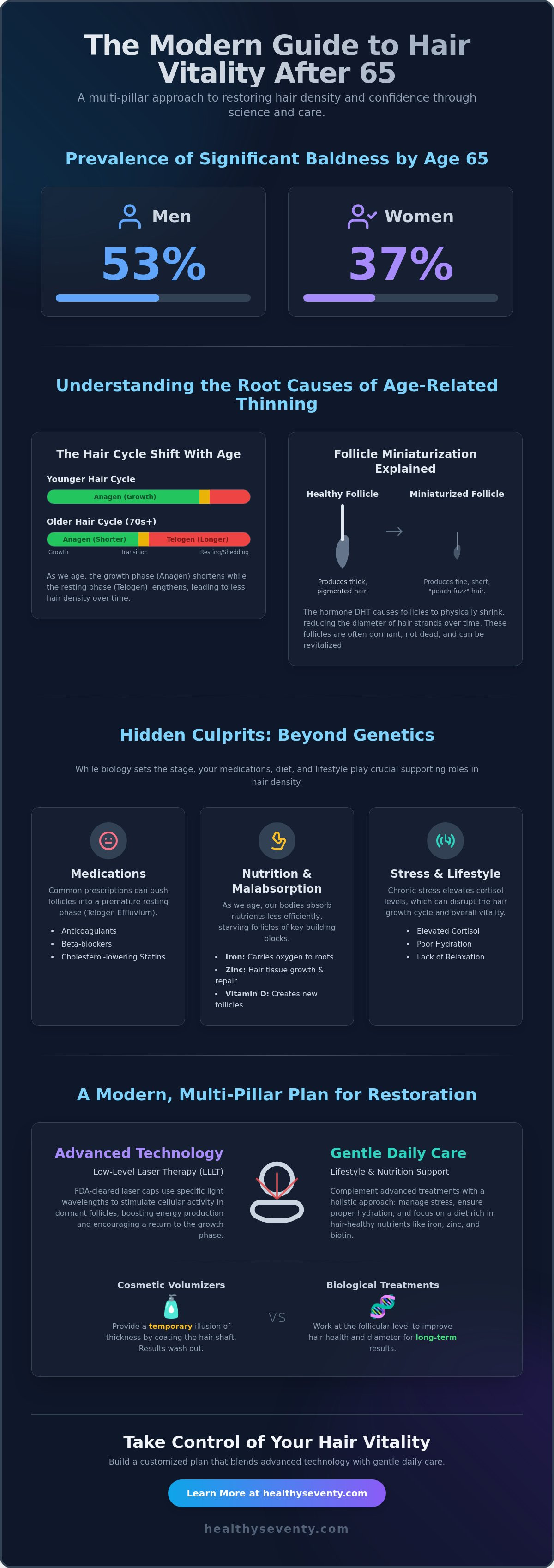
Did you know that by age 65, an estimated 53% of men and 37% of women experience significant baldness? It's a deeply personal transition that often feels like losing a piece of your identity or a quiet signal that your health is changing. You might feel overwhelmed by conflicting marketing claims while searching for effective thinning hair solutions for older adults, especially if you're sensitive to harsh chemicals. We understand that your hair is more than just a style; it's a reflection of your vitality and the life you've built.
We believe this stage of life should be defined by confidence and proactive care, not by what you've lost. This guide will show you exactly how to restore your hair's density and your sense of self through a modern, multi-pillar approach. You'll discover how to combine the latest FDA-cleared laser technology with gentle lifestyle shifts and medical advancements arriving in 2026. From stabilizing the scalp to finding a routine that fits your schedule, we're here to help you feel empowered and vibrant once again.
Key Takeaways
Learn why aging hair changes through follicle miniaturization and how understanding your growth cycle is the first step toward restoration.
Identify how common medications and nutrient malabsorption may be silently impacting your hair density and scalp health.
Explore modern thinning hair solutions for older adults, including how non-invasive, FDA-cleared laser caps use light technology to revitalize dormant follicles.
Discover the difference between temporary cosmetic volumizers and biological treatments that support long-term hair diameter.
Build a customized "Healthy Seventy" plan that blends advanced technology with gentle daily care to maintain your confidence and vitality.
Table of Contents
Understanding the Root Causes: Why Hair Thins as We Age
Why does hair change so significantly in our 60s and 70s? It's a biological shift that involves both the scalp's environment and the internal signals your body sends to every follicle. Geriatric thinning is a combination of follicles shrinking and the growth cycle spending less time in the active phase. By understanding these mechanics, you can better navigate the landscape of thinning hair solutions for older adults and choose a path that truly works for your lifestyle.
The hair cycle consists of three specific phases. Anagen is the growth period, Catagen is the transition, and Telogen is the resting phase. In your 70s, the Anagen phase shortens while the Telogen phase lengthens. This means hair has less time to grow thick and strong before it rests and eventually falls away. When more follicles enter the resting phase simultaneously, you'll notice more of your scalp becoming visible through your hair.
Dihydrotestosterone (DHT) plays a major role for both men and women. This hormone binds to receptors in the scalp, causing follicles to produce weaker strands. It's helpful to distinguish between normal age-related thinning and sudden-onset loss. If you notice rapid shedding or distinct bald patches, it's a good idea to consult a professional to rule out nutritional gaps or medical conditions. Understanding these differences helps you select the most appropriate thinning hair solutions for older adults that target your specific needs.
The Process of Follicle Miniaturization
Follicle miniaturization is the biological core of age-related thinning. Over time, the follicle physically constricts, producing hair that is increasingly fine and short. Eventually, the strand may lack pigment entirely, appearing as "peach fuzz." It's important to recognize the difference between density loss and shedding. Shedding refers to the number of hairs you lose daily, while density loss is the reduction in the actual diameter of the strands. Even when a follicle seems dormant, it's often still viable. These follicles are simply in a deep resting state and can often be revitalized with the right stimulation.
Hormonal Shifts Beyond Menopause
The decline of estrogen and progesterone in the years following menopause removes a natural shield for your hair. These hormones help maintain the growth phase. Without them, the hair becomes more susceptible to the effects of androgens. Thyroid health also plays a critical role; an underactive or overactive thyroid can make hair feel brittle and thin. Pattern hair loss is the primary hereditary cause of senior thinning, affecting a large percentage of the population as they reach their 70s.
The Hidden Culprits: Medications, Nutrition, and Lifestyle
While biology sets the stage for change, your medicine cabinet and kitchen pantry often play supporting roles in hair density. Many seniors are surprised to learn that life-saving medications can sometimes have unintended side effects on their scalp health. When exploring thinning hair solutions for older adults, it's vital to look at the whole person. This means examining everything from the prescriptions you take to the way your body absorbs nutrients in your 70s and beyond.
Are you currently taking an anticoagulant, a beta-blocker, or a cholesterol-lowering statin? These common prescriptions are essential for heart health, yet they are known "hair-thinners." They can inadvertently push follicles into a premature resting phase. This doesn't mean you should stop your treatment. Instead, it highlights the need for a holistic plan that balances medical necessity with hair preservation. Research into treatments for thinning hair suggests that identifying these triggers is often the first step toward stabilizing your volume.
Dietary habits also shift during retirement, but the "Malabsorption Factor" is the real hidden challenge. Even if you eat a balanced diet, your digestive system may struggle to extract essential minerals like iron, zinc, and vitamin D as efficiently as it once did. Iron is particularly crucial because it carries oxygen to your roots. Without it, your follicles lack the energy to produce strong strands. Chronic stress and elevated cortisol levels in the retirement years can further disrupt this delicate balance, making relaxation and proper hydration even more important for your overall vitality.
Medication-Induced Telogen Effluvium
This condition causes sudden, diffuse shedding across the entire scalp rather than localized patches. It often appears about three months after starting a new drug or experiencing a major health event like surgery. If you've recently started a new regimen for blood pressure or cholesterol, keep a close eye on your brush. Always consult your physician before making any changes; they might suggest a different dosage or a gentler alternative that supports your hair goals while keeping your health on track.
The Senior Nutritional Blueprint for Hair
Protein is the primary building block of keratin, the protein that makes up your hair. If your intake is too low, your body will prioritize vital organs over your hair follicles. While biotin and collagen supplements are popular, they work best when your baseline nutrition is solid. Proper hydration also plays a massive role in nutrient transport. Using Senior Friendly Water Filtration Systems ensures you're drinking clean water that supports your metabolic health. If you're looking for a non-invasive way to complement your nutritional efforts, an FDA-cleared laser hair growth cap can provide the external stimulation your follicles need to thrive.
Evaluating Topical and Cosmetic Solutions for Immediate Results
When you stand in the hair care aisle, the options are often dizzying. It's easy to get lost in labels promising instant thickness, but effective thinning hair solutions for older adults require a clear understanding of the difference between cosmetic "smoke and mirrors" and true biological change. Volumizing sprays and foams are wonderful for a special occasion. They coat the hair shaft with polymers to create the illusion of density. However, these products don't address the underlying health of the follicle. To see real restoration, you must look toward biological treatments that interact with the scalp's chemistry.
Scalp health is the often-ignored foundation of hair growth. Think of your scalp as the soil in a garden. If that soil is "clogged" with years of product residue, environmental pollutants, or excess sebum, a new hair strand will struggle to break through. This is why gentle cleansing is non-negotiable for seniors. Many standard shampoos contain harsh sulfates that strip away the natural oils aging hair desperately needs. Look for formulas featuring caffeine or saw palmetto. These ingredients work topically to help block DHT locally at the root, providing a supportive environment for your hair to thrive.
Minoxidil and Its Alternatives
Minoxidil remains a gold standard for biological hair regrowth. While a 5% concentration is common, many older adults find that 2% is much gentler on their increasingly sensitive skin. If you prefer a more botanical path, rosemary oil has gained significant attention for its ability to support circulation similarly to traditional topicals. You might experience a "dread shed" when starting these treatments. Don't let this discourage you. This temporary shedding is actually a positive sign; it means the follicle is pushing out a weak, resting hair to make room for a stronger, more vibrant strand. While topicals work on the surface, clinical reviews of Low-Level Laser Therapy (LLLT) show that light-based energy can reach even deeper to revitalize the hair bulb from within.
The Art of Scalp Stimulation
Active stimulation is one of the simplest ways to improve hair diameter. A daily four-minute scalp massage increases blood flow, which delivers essential oxygen and nutrients to the hair bulb. To complement this, consider an exfoliating shampoo once a week. These formulas remove the buildup that regular washing misses, ensuring your "scalp microbiome" remains balanced. A healthy microbiome prevents the inflammation that often leads to premature shedding. By keeping the scalp clear and the blood flowing, you create the ideal conditions for your hair vitality plan to succeed.
Modern Innovations: Low-Level Laser Therapy (LLLT) and Tech
Light is energy. For decades, researchers have explored how specific light wavelengths can influence human biology. This process, known as photobiomodulation, is the foundation of Low-Level Laser Therapy (LLLT). It's one of the most promising thinning hair solutions for older adults because it offers a non-invasive, drug-free way to address follicle health. Instead of relying on chemicals that might interact with your current medications, LLLT uses gentle red light to speak directly to your cells.
Clinical evidence shows that red light at a 650nm wavelength can penetrate the scalp to reach the mitochondria. Think of mitochondria as the tiny power plants inside your hair follicles. As we age, these power plants can become sluggish. The laser energy provides a much-needed "recharge," giving the follicles the fuel they need to stay in the growth phase longer. Because safety is a primary concern for the Healthy Seventy community, we focus exclusively on FDA-cleared devices. These tools have been rigorously vetted to ensure they deliver effective results without damaging sensitive skin.
How to Use a Laser Hair Growth Cap
Integrating technology into your routine doesn't have to be complicated. Success with a laser cap comes down to three simple steps:
Keep it clean: Always use the device on a clean scalp. Heavy styling products or oils can act as a barrier, preventing the light from reaching the follicle.
Stay consistent: Most protocols suggest a session of 20 to 30 minutes, three times per week. Find a time that works for you, perhaps while reading the morning news or enjoying a cup of tea.
Be patient: Hair growth is a slow biological process. While some notice changes earlier, you should track your progress over a 4 to 6 month window to see the full impact on your hair density.
Comparing Laser Caps vs. Laser Combs
While both tools use similar technology, they offer very different experiences. Laser combs require you to manually brush through your hair for the entire treatment time. This can be taxing for those with limited shoulder or wrist mobility. In contrast, laser caps provide "total coverage" for the entire scalp simultaneously. They are completely hands-free, which makes it much easier to stick to your schedule. For those experiencing the diffuse thinning common in later life, the uniform light distribution of a cap is often more effective. If you're looking for a reliable way to start, the FDA-Cleared Laser Hair Growth Cap provides a professional-grade solution you can use from the comfort of your favorite armchair.
Creating Your Personal Hair Vitality Plan for 2026
Building a successful strategy isn't about finding a single miracle cure. It's about the "Healthy Seventy" approach, where you combine modern technology, targeted nutrition, and gentle daily care into a seamless rhythm. When looking for thinning hair solutions for older adults, the goal is to create a sustainable environment where your follicles can thrive. This journey is as much about your internal well-being as it is about the strands on your head.
What does success look like in your 70s? It's important to set realistic expectations. While we may not return to the thick manes of our youth, we can certainly slow the rate of thinning, improve the diameter of existing hair, and enhance scalp coverage. This shift often leads to a renewed sense of confidence. You aren't just managing hair loss; you're investing in your vitality. However, keep an eye out for red flags. If you notice scarring, inflammation, or sudden, circular patches of loss, it's time to consult a dermatologist. These signs can indicate underlying conditions that require medical intervention beyond standard thinning hair solutions for older adults.
A Daily and Weekly Routine for Hair Health
Consistency is your greatest ally. By breaking your plan into manageable steps, you ensure that hair care becomes a natural part of your lifestyle rather than a chore. Consider this simple framework:
Daily: Focus on protein-rich nutrition and take four minutes for a gentle scalp massage to keep blood flowing to the roots.
Weekly: Schedule your LLLT sessions. Aim for three sessions of 20 to 30 minutes. Use this time for deep hydration treatments to keep aging hair from becoming brittle.
Monthly: Take progress photos. It's hard to see changes day to day, but side-by-side photos over several months will give you an objective view of your density improvements.
Holistic Wellness Integration
Your hair doesn't exist in a vacuum. It is a reflection of your total body health. Staying active is one of the best ways to support your scalp because exercise boosts systemic circulation. If joint discomfort has kept you sedentary, exploring non invasive joint pain relief can help you get back on your feet. Even a daily walk in the best walking sneakers for balance ensures that nutrient-rich blood reaches every part of your body, including your hair follicles. It's never too late to embrace your silver years with a plan that makes you feel empowered, vibrant, and fully yourself.
Empowering Your Journey Toward Lasting Vitality
You've explored the biological shifts of aging and the hidden impact of common medications on your scalp health. By shifting your focus toward the scalp environment and embracing modern technology, you can take active control of your appearance. Finding effective thinning hair solutions for older adults isn't just about vanity; it's about maintaining your independence and self-image during these cherished years. We focus on non-invasive, drug-free solutions that respect your body's unique needs.
Our national US-based support and research team is dedicated to providing expert-vetted wellness advice specifically for the 70+ community. You don't have to navigate these changes alone. We're here to act as your partner in wellness, offering curated resources to help you feel vibrant and prepared for the years ahead. Explore our curated FDA-Cleared Laser Hair Growth Cap and reclaim your hair vitality today.
It's a beautiful time of life to focus on yourself. Remember that every small step you take toward scalp health contributes to your overall legacy of wellness and clarity. You deserve to feel as empowered and confident as the incredible life you've built.
Frequently Asked Questions
Is it possible for hair to grow back after age 70?
Yes, it is absolutely possible to see regrowth and improved density after age 70. While the growth cycle naturally slows as we age, many follicles that appear dormant are simply in a resting phase. By using modern thinning hair solutions for older adults like light therapy and targeted nutrition, you can encourage these follicles to return to the active growth phase and produce stronger strands.
Are laser hair growth caps safe for seniors with other health conditions?
Laser hair growth caps are generally very safe for seniors because they are non-invasive and drug-free. Unlike systemic medications, low-level laser therapy works topically by using gentle light energy to stimulate the scalp. Since there are no chemical interactions with other prescriptions, they are an excellent option for those managing multiple health conditions. Always consult your physician to ensure new technology fits your specific health profile.
How long does it take to see results from thinning hair solutions?
You should expect to see visible results within four to six months of consistent use. Hair growth is a slow biological process that follows a specific cycle. The first few months typically focus on stabilizing existing hair and reducing daily shedding. By the six-month mark, many individuals notice improved strand diameter and better scalp coverage as new growth begins to mature and thicken.
Can certain medications for high blood pressure cause hair loss?
Yes, some high blood pressure medications, particularly beta-blockers and certain anticoagulants, are known to contribute to hair thinning. These drugs can sometimes trigger a temporary condition called telogen effluvium, which pushes hair into the resting phase prematurely. If you suspect your prescription is affecting your volume, discuss gentle alternatives or supplemental thinning hair solutions for older adults with your doctor to balance your heart health and hair goals.
Do I need a prescription for the most effective hair loss treatments?
You don't necessarily need a prescription to access effective treatments. While some oral medications require a doctor's visit, many of the most successful modern tools, such as FDA-cleared laser caps and topical minoxidil, are available for home use. These over-the-counter options allow you to build a proactive routine that fits your lifestyle. They provide professional-grade results without the need for frequent clinical appointments or pharmacy trips.
Is biotin really effective for thinning hair in older adults?
Biotin can be effective, but it works best if you have an underlying deficiency. In the 70+ demographic, nutrient malabsorption is a common challenge, meaning your body might not get enough B-vitamins from diet alone. While it isn't a miracle cure, supplementing with biotin alongside a protein-rich diet provides the essential building blocks your follicles need. This support helps your body produce the keratin necessary for strong hair.
What is the best hairstyle for seniors with thinning hair to look fuller?
Shorter, layered hairstyles are often the best choice for creating a fuller appearance. Long hair can become heavy and pull flat against the scalp, making thinning more obvious. A soft, textured bob or a classic pixie cut adds lift at the roots and creates the illusion of density. Using a gentle volumizing mousse can also help provide immediate cosmetic lift without damaging your fragile, aging strands.
How often should I wash my hair if it is thinning and fragile?
You should aim to wash your hair two to three times per week. Washing too frequently can strip away the natural oils that protect aging, fragile strands from breakage. Use a sulfate-free shampoo to maintain a healthy scalp environment without causing irritation. On non-wash days, a gentle scalp massage can help distribute natural oils and stimulate blood flow without the mechanical stress of a full wash.


Comments