


Elderly Fall Prevention: 2026 Home Safety Guide
- healthyseventy3
- 2 days ago
- 12 min read
Did you know that one in four adults over the age of 65 experiences a fall every single year? It's a sobering statistic that often fuels a quiet worry about maintaining your independence. You've likely felt that hesitation when stepping into the shower or reaching for a high shelf. We understand that the fear of a hip fracture isn't just about physical pain; it's about the fear of losing the life you love. Effective fall prevention for elderly at home shouldn't feel like turning your house into a sterile hospital ward. It is about making smart, dignified choices that empower you to move with certainty.
You deserve to feel secure without being overwhelmed by complex renovations. We promise to help you transform your living space into a fortress of independence using expert-backed strategies. This 2026 guide provides a manageable plan to secure your surroundings. We'll examine essential tools like the VOCIC Upright Walker for posture and Orthofeet sneakers for stability, alongside Personal Emergency Alert Devices. From simple lighting fixes to AI-driven gait monitoring, you'll gain the confidence to move freely while preserving your dignity and vitality.
Table of Contents
The Hidden Impact: Why Fall Prevention is About More Than Safety
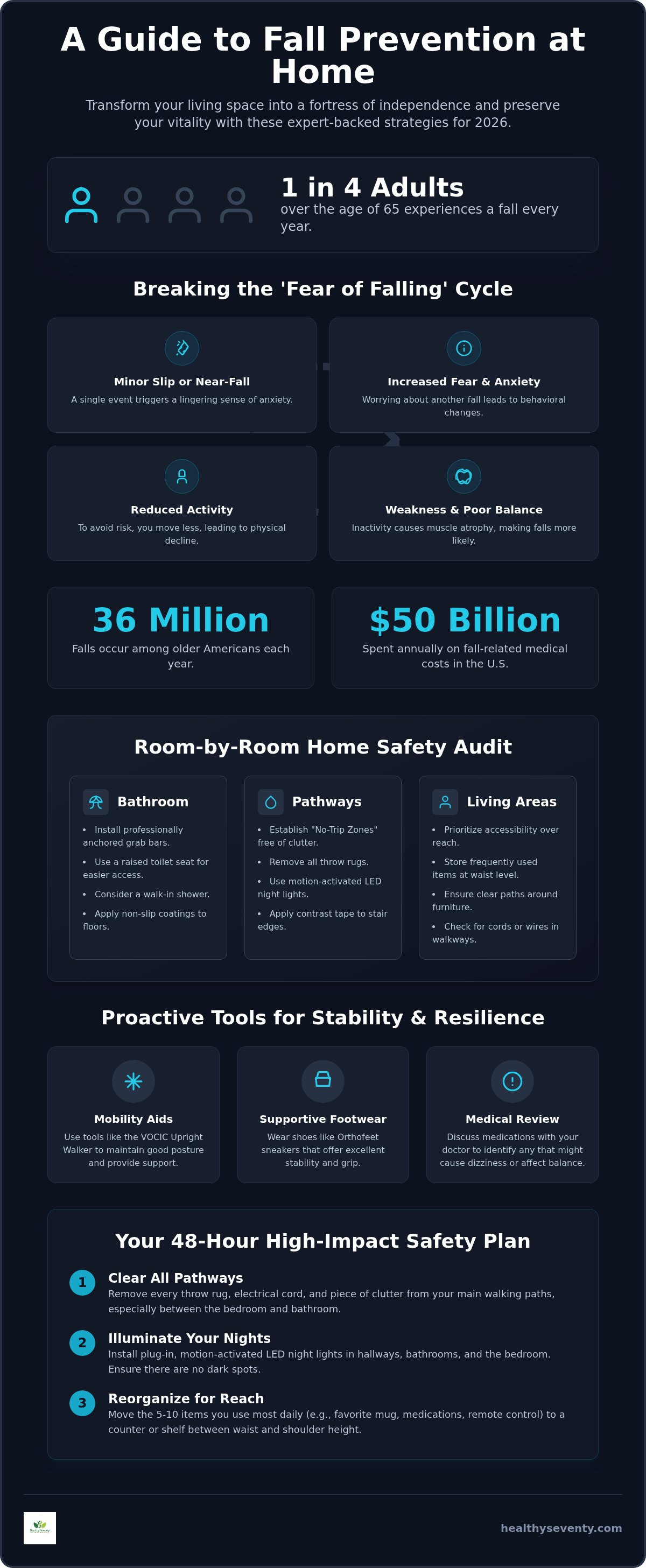
Fall prevention isn't merely a checklist of household chores; it's a commitment to your long-term autonomy. When we talk about fall prevention for elderly at home, we're describing a holistic strategy designed to protect your ability to choose how you live each day. Many seniors fall into the "Fear of Falling" cycle. This happens when a minor slip or a close call creates a lingering sense of anxiety. To avoid another scare, you might move less often. Unfortunately, this inactivity leads to muscle atrophy and decreased balance, which actually makes a future fall more likely. Breaking this cycle requires a proactive approach that views your home as a sanctuary rather than a series of obstacles.
The urgency is clear when we look at current data. As of 2026, more than 36 million falls occur among older Americans every year. For those over the age of 65, one in four will experience a fall this year alone. These aren't just numbers; they represent a significant challenge to the $50 billion annually spent on fall-related medical costs in the U.S. By making proactive modifications today, you're giving a priceless gift to your future self: the gift of continued vitality. For a comprehensive overview of fall prevention, it helps to look at both the physical and environmental layers of safety.
The Anatomy of a Fall: Understanding Risk Factors
Risk isn't always visible. We often categorize hazards into environmental factors, like loose rugs or poor lighting, and biological factors, such as changes in vision or leg strength. One of the most overlooked warning signs is the "near-fall." If you've ever tripped but caught yourself, your body is telling you that something in your balance or environment needs attention. This often relates to proprioception, which is your brain's ability to sense your body's position in space. As we age, this internal GPS can become less precise, making it harder to navigate uneven surfaces without conscious effort.
The Empowerment Mindset for Aging in Place
It's time to shift the narrative. Instead of focusing on "avoiding danger," we should focus on "preserving vitality." Implementing effective fall prevention for elderly at home reduces the cognitive load of moving. You don't have to spend mental energy worrying about every step, which frees you up to enjoy your hobbies and social life. Think of safety tools as performance enhancers. A well-designed walker or supportive orthopedic sneakers aren't signs of weakness; they're high-quality equipment that helps you maintain an upright, confident gait so you can stay active on your own terms.
Room-by-Room Home Safety Audit: A 2026 Checklist
Creating a secure environment begins with a thorough home safety audit. We recommend focusing your energy on high-traffic areas where daily routines happen. For hallways and open spaces, we utilize the "No-Trip Zone" concept. This means these paths must be entirely free of obstacles, including decorative furniture that narrows the walkway. By prioritizing fall prevention for elderly at home in these transition areas, you ensure that moving from the bedroom to the kitchen feels like a natural, worry-free progression rather than a navigation challenge.
The Bathroom: Securing the Highest-Risk Area
Water and hard surfaces make the bathroom a critical focus for safety. Grab bars are essential, but they must be professionally anchored into wall studs to be effective. According to ADA standards maintained through 2026, these bars should be installed 33 to 36 inches from the floor and be able to support 250 pounds of force. Consider a raised toilet seat and a walk-in shower to reduce the strain on your knees and hips. For the floor, modern non-slip coatings are often superior to traditional mats because they provide a uniform, permanent grip without the curling edges that create trip hazards.
Lighting and Navigation: Eliminating Shadow Hazards
Poor visibility is a major contributor to nighttime accidents. In 2026, smart lighting has become a cornerstone of safe living. Motion-activated LED lights are far more effective than manual switches; they illuminate your path the moment you step out of bed. We also suggest applying contrast-enhancing tape to the edges of stairs and any slight floor level changes. This simple visual cue helps your brain process depth more accurately. Removing throw rugs is one of the most impactful changes you can make to eliminate "clutter traps" in your primary walking paths.
The Kitchen and Bedroom: Accessibility Over Reach
A safe home is an organized home. In the kitchen, reorganize your "active zones" so that every item you use daily is stored between waist and shoulder height. This prevents the need for step stools or precarious reaching. In the bedroom, check your bed height using the "feet on the floor" rule. When you sit on the edge of the mattress, your feet should rest flat on the ground with your knees at a comfortable 90-degree angle. This ensures a stable base when you stand up. For unexpected spills, keep ergonomic, long-handled cleaning tools nearby to avoid bending over quickly.
While physical modifications are vital, having a secondary safety net provides immense peace of mind. You can learn more about these digital lifelines in our Medical Alert Systems for Seniors guide. Taking these steps ensures your home remains a place of comfort rather than concern. If you're looking for curated tools to support this transition, explore our latest mobility solutions designed for active living.
Building Physical Resilience: Beyond the Environment
While modifying your living space is essential, your body is your most reliable line of defense. Strengthening your core and legs provides an internal safety net that moves with you wherever you go. It's also vital to consult your healthcare provider for a thorough medication review. Many common prescriptions can cause orthostatic hypotension, a sudden drop in blood pressure when standing, which leads to dizziness. Maintaining steady blood pressure often starts with proper hydration, which supports both cognitive clarity and physical reaction times. To make staying hydrated effortless, consider exploring Senior Friendly Water Filtration Systems that provide pure, accessible water throughout the day.
Balance and Strength Training for Seniors
Tai Chi and simple leg-strengthening exercises are evidence-based methods for improving stability. Consistency is key. The "Sit-to-Stand" exercise, which involves rising from a chair without using your hands, serves as an excellent daily metric for functional mobility. If you can perform this move ten times comfortably, you're maintaining the leg power needed for long-term independence. These comprehensive fall prevention strategies emphasize that regular, low-impact movement is significantly more effective than occasional intense workouts. By focusing on fall prevention for elderly at home through movement, you turn your body into a fortress of vitality.
The Role of Vision and Hearing in Stability
Annual exams are non-negotiable for maintaining your equilibrium. Depth perception errors often cause trips on stairs or uneven terrain. If you wear multi-focal lenses, be extra cautious when looking down at your feet while navigating level changes. Surprisingly, untreated hearing loss is also linked to increased fall risk. When your brain works harder to process sound, it has fewer resources available for balance. Keeping these senses sharp ensures you can accurately process the world around you.
Holistic Wellness and Joint Health
Chronic pain often forces a "guarded" gait, which inadvertently increases trip hazards by shortening your stride. Addressing discomfort through Non-Invasive Joint Pain Relief can help you regain a natural, fluid walking pattern. Lowering systemic inflammation through mindful lifestyle choices directly improves the speed at which your nerves signal your muscles to stabilize your body during an unexpected slip. By approaching fall prevention for elderly at home from the inside out, you build the resilience needed to move with confidence and grace.
Proactive Tools: Mobility Aids and Footwear for Stability
Selecting the right equipment is a transformative step in your journey toward safer living. Modern technology has moved beyond purely functional designs to offer tools that actually enhance your quality of life. High-quality aids serve as the external framework for fall prevention for elderly at home, allowing you to focus on your destination rather than your next step. By integrating these solutions into your daily routine, you can maintain the active lifestyle you cherish while significantly reducing the risk of accidental slips.
Upright Walkers: Regaining Confidence and Posture
Traditional walkers often lead to what clinicians call "the hunched gait," where a user leans forward and looks down at their feet. This posture can actually increase the risk of a tumble and cause significant back pain. The VOCIC Upright Walker solves this by shifting your weight from your wrists to your forearms. This design encourages an active, upright posture, which opens up your vision and allows you to look forward at your surroundings. If you've noticed that a cane no longer provides the stability you need, transitioning to a four-wheeled upright walker is a smart way to regain your confidence and stride.
The Foundation: Orthopedic Footwear for Balance
Your connection to the ground is only as stable as your footwear. Walking inside the home in socks or loose slippers is a common but dangerous mistake. We recommend investing in Orthofeet Orthopedic Walking Sneakers, which are engineered with non-slip outsoles and superior arch support. These sneakers provide the essential sensory feedback your brain needs to maintain balance on various surfaces. You can find more details on specific models in our guide to the Best Walking Sneakers for Balance. Proper shoes act as the foundation for all other fall prevention for elderly at home strategies.
Emergency Alert Systems: The Ultimate Safety Net
While we focus on prevention, having a reliable plan for the unexpected is vital for your psychological well-being. A Landline Personal Emergency Alert Device provides a constant connection to help, ensuring you're never truly alone. Medical experts often cite "the golden hour" as the critical window for treatment after an injury; having immediate alert capability can drastically improve recovery outcomes. Whether you prefer a wearable pendant or wall-mounted buttons in high-risk zones like the bathroom, these systems offer a safety net that protects both your health and your dignity.
Ready to upgrade your home safety toolkit? Explore our full collection of mobility and stability aids to find the perfect match for your lifestyle.
Implementing Your Fall Prevention Plan for 2026
Starting a home safety transformation can feel like a daunting task. However, you don't need to finish everything in a single day. By breaking down your fall prevention for elderly at home strategy into manageable phases, you can build a more secure environment without the stress. We recommend beginning with immediate, low-cost changes before moving on to structural modifications. This methodical approach ensures that your home remains a place of comfort while you systematically remove hazards. Involving family members or professional contractors for larger projects not only lightens the load but also ensures that installations meet the latest safety standards.
Consistency is your greatest ally. We suggest scheduling a "Safety Check-In" every six months. Your mobility needs can change, and a regular reassessment allows you to adjust your environment accordingly. Whether it's tightening a loose handrail or updating your footwear, these small recurring reviews keep your safety plan relevant and effective. It's about being proactive rather than reactive.
Phase 1: The Weekend Safety Blitz
The first 48 hours are about high-impact, immediate fixes. Start by auditing every floor surface in your home. Remove loose rugs that lack a non-slip backing and secure any trailing electrical cords against the baseboards. Next, swap out standard light bulbs for high-lumen, motion-activated LEDs in hallways and bathrooms. These modern bulbs ensure you're never navigating in the dark. Finally, clear all stairways of decorative items or stored boxes. A clear path is a safe path, and these simple steps provide an instant boost to your home's security.
Phase 2: Investing in Long-Term Mobility
Once the immediate hazards are gone, focus on structural improvements and specialized equipment. This is the time to schedule a consultation for grab bar installation. If you're hiring a contractor, confirm they follow OSHA safety standards for home modifications. Ensure your bathroom grab bars are anchored to support at least 250 pounds of force. While modifying the environment, evaluate your current mobility tools. Many seniors find that the VOCIC Upright Walker provides a significant improvement in gait and posture compared to traditional models. Integrating fall prevention for elderly at home also means committing to a daily morning routine of balance exercises to keep your muscles responsive and strong.
Staying Connected to the Community
You don't have to navigate this journey alone. We invite you to join the Healthy Seventy community forum to share tips and success stories with others who are prioritizing their independence. Finding a "wellness buddy" can help you stay consistent with your balance training and provide mutual encouragement. Having a partner makes the process more social and rewarding. To further support your goals, explore our curated Mobility Aids for Seniors to find the perfect safety partner for your home.
Empower Your Mobility for the Years Ahead
Your home should be a place where you feel most free; it shouldn't be a space defined by hesitation. By addressing the "Fear of Falling" cycle and implementing a systematic room-by-room audit, you're taking active steps to preserve your vitality. We've explored how fall prevention for elderly at home is a sophisticated blend of environmental safety and physical resilience. Whether it's clearing a "No-Trip Zone" or adopting daily balance exercises, every small change builds a foundation for a more active, independent lifestyle.
You don't have to navigate these modifications alone. With expert-curated 2026 aging-in-place resources and high-quality stability tools like VOCIC upright walkers and Orthofeet sneakers, you can move with renewed certainty. Our platform is dedicated to supporting your senior vitality through research-driven advice and reliable safety solutions. Secure your independence with Healthy Seventy’s curated safety essentials today. It's your time to walk tall, live boldly, and embrace the legacy of your experiences with the peace of mind you deserve.
Frequently Asked Questions
What is the number one cause of falls in the elderly at home?
The primary cause of falls is usually a combination of environmental hazards and physical risk factors. Loose rugs, poor lighting, and cluttered walkways are the most frequent culprits found in the home. When these hazards meet age-related changes like decreased leg strength or slower reaction times, the risk of injury increases significantly. Identifying these specific triggers is the first step in effective fall prevention for elderly at home.
How can I convince my parent to use a walker or medical alert device?
Focus on empowerment rather than limitation when discussing these tools. Frame the VOCIC Upright Walker as a performance enhancer that helps them stay active and upright. Instead of highlighting what they can't do, emphasize how these devices protect their current lifestyle. Explain that a medical alert device is a safety net that provides the family peace of mind, allowing the parent to maintain their independence.
Are throw rugs safe if I use non-slip backing or tape?
Most safety experts recommend removing throw rugs entirely, even if they have non-slip backing. While tape can keep a rug from sliding, it doesn't prevent the edges from curling or creating a slight lip that causes a trip. A completely clear floor is the gold standard for safety. If you must have floor coverings, choose low-pile wall-to-wall carpeting or permanent non-slip coatings on hard surfaces instead.
Does Medicare cover home modifications for fall prevention?
Medicare typically does not cover structural home modifications like walk-in tubs or widening doorways. It generally only pays for durable medical equipment that is medically necessary and prescribed by a doctor. This may include items like walkers or hospital beds. For 2026, it's vital to check your specific plan or look into local community grants that help seniors fund essential safety updates for their living spaces.
How do I know if my house is safe for "aging in place"?
You can determine safety by performing a room-by-room audit focused on accessibility and visibility. Ask yourself if you can navigate the entire house without encountering stairs or narrow passages. Check if daily essentials in the kitchen are within easy reach. If you find yourself holding onto furniture for balance or squinting in dim hallways, it's time to implement more robust fall prevention for elderly at home.
What exercises are best for improving balance in people over 70?
Tai Chi is widely considered one of the most effective activities for improving balance and coordination. Simple leg-strengthening exercises, such as the sit-to-stand movement, are also excellent for maintaining functional mobility. Consistency is more important than intensity; even ten minutes of daily movement can significantly improve your stability. Always consult with a healthcare professional before starting a new fitness routine to ensure it is safe for you.
Can certain medications actually increase my risk of falling?
Yes, many common medications can cause side effects like dizziness, drowsiness, or a sudden drop in blood pressure. Drugs for blood pressure, sleep, and even certain over-the-counter allergy medications are frequent contributors to instability. It is essential to have your doctor or pharmacist perform a comprehensive medication review at least once a year. They can identify potentially dangerous interactions that might compromise your balance or physical reaction times.
What should I do immediately after a fall if I am alone?
Stay calm and take deep breaths before trying to move. Check your body for pain or signs of injury before attempting to get up. If you're not hurt, roll onto your side and crawl to a sturdy piece of furniture to pull yourself up. If you are injured or cannot get up, use your Landline Personal Emergency Alert Device immediately. This is why having a wearable safety tool is so critical.

Comments