


Essential Assistive Technology for Seniors Living Alone: A 2026 Independence Guide
Updated: 5 days ago

What if the secret to staying in your beloved home isn't a 24/7 caregiver, but a "digital companion" that respects your privacy as much as your safety? You likely value your independence above all else, yet the quiet worry of a missed pill or an unobserved fall can sometimes cast a shadow over your daily routine. It's natural to feel that traditional "medical" devices might strip away your dignity or make your home feel like a clinic. However, the landscape has changed dramatically since the FDA updated its guidance in January 2026, paving the way for more intuitive, user-friendly wellness tools.
This guide reveals how modern assistive technology for seniors living alone has evolved into a sophisticated safety net that balances cutting-edge protection with personal grace. We'll show you how to maintain a high quality of life while giving your family true peace of mind. You'll discover the latest 2026 innovations, including privacy-focused radar sensors that detect falls without cameras and voice-activated systems that bridge the gap between physical health and social vitality. From reliable emergency response solutions to smart home integrations, we'll help you curate a home environment that celebrates your wisdom and supports your proactive lifestyle.
Key Takeaways
Learn how the 2026 landscape has transformed clinical tools into "digital companions" that honor your personal dignity and home aesthetic.
Discover why selecting the right assistive technology for seniors living alone is your most powerful strategy for maintaining physical freedom and preventing nursing home placement.
Explore the "Privacy vs. Protection" framework to find safety solutions that watch over you without the use of intrusive cameras or surveillance.
Master the art of social and cognitive vitality by leveraging modern tools that keep you connected to loved ones and your daily schedule.
Follow a practical roadmap to implement these life-enhancing solutions one steady step at a time, ensuring you always feel guided and confident.
Table of Contents
What is Assistive Technology for Seniors Living Alone?
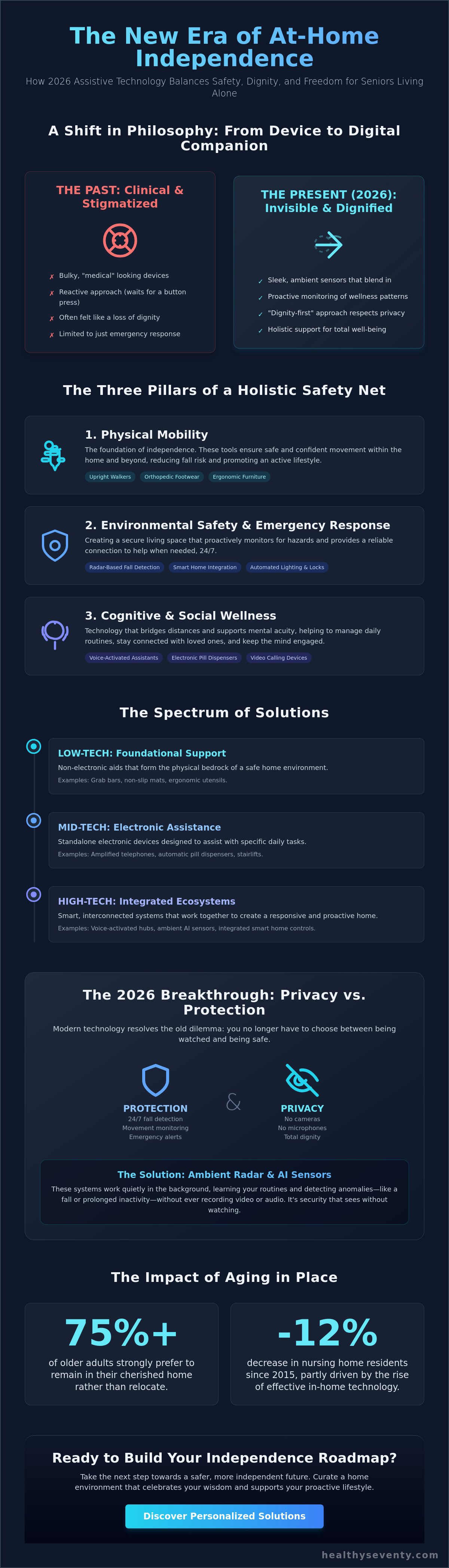
At its core, What is Assistive Technology involves any device, software, or system that helps you perform tasks that might otherwise be difficult. It's about bridging the gap between your desire for independence and the physical or cognitive changes that come with a life well-lived. For many, this means the difference between staying in a cherished home or moving into an assisted living facility. It's a powerful choice; research consistently shows that over three quarters of older adults prefer to age in place rather than relocate. This preference is reflected in the 12% decrease in nursing home residents observed since 2015, as more individuals embrace the tools that allow them to thrive in familiar surroundings.
Modern assistive technology for seniors living alone has moved far beyond the simple walking sticks of previous generations. In 2026, we view these tools through three essential pillars: physical mobility, cognitive support, and environmental safety. When these three areas are supported, you create a holistic safety net that protects your well-being without compromising your autonomy. It's no longer just about reacting to an emergency. It's about proactively maintaining your vitality every single day through curated solutions that fit your specific lifestyle.
The Spectrum of High-Tech vs. Low-Tech Solutions
Finding the right balance for your home doesn't require a degree in engineering. Effective support usually exists on a spectrum of complexity and interaction:
Low-tech essentials: These are the physical foundations of a safe home. Think of grab bars in the bathroom, non-slip mats, or ergonomic furniture that makes sitting and standing easier.
Mid-tech aids: These devices add a layer of electronic assistance. Examples include amplified telephones for clearer conversations or electronic pill dispensers that help you stay on track with your health regimen.
High-tech ecosystems: This is where modern innovation shines. Voice-activated home hubs and integrated smart sensors can now manage lighting, control temperature, and even provide companionship through AI-driven interactions.
Why 2026 is the Year of "Invisible" Assistance
The most exciting shift in 2026 is the move toward "invisible" assistance. We've moved away from the era of bulky, stigmatized wearable pendants that many felt were too "medical" looking. Instead, modern assistive technology for seniors living alone utilizes ambient room sensors and wall-mounted radar. These systems respect your privacy by avoiding cameras while still providing 24/7 monitoring. They don't just wait for you to press a button; they use AI to notice subtle changes in your movement patterns. This allows for a "dignity-first" approach where the technology works quietly in the background, ensuring you're safe while letting you simply enjoy the comfort of your home.
Foundational Mobility Aids: The Key to Physical Independence
Mobility is the primary factor that determines whether you can stay in your home or need to move to a care facility. It's the engine of your independence. When simple tasks like walking to the kitchen or checking the mailbox become difficult, your world can feel smaller. Research from the U.S. Department of Health and Human Services on Assistive Technology shows that these tools are vital for maintaining physical function. Integrating assistive technology for seniors living alone means choosing physical aids that keep you moving with confidence and grace.
Upright Walkers: Beyond the Traditional Rolling Walker
Traditional walkers often force you into a hunched position. This can restrict your breathing and lead to chronic back pain over time. Modern designs have changed this experience. An upright walker reduces strain on wrists and shoulders by shifting your weight onto your forearms and allowing you to stand tall. This improved posture supports better lung capacity and spinal health. When you're shopping for a device, look for padded armrests, a sturdy seat for resting, and all-terrain wheels that handle both carpet and sidewalks with ease.
Orthopedic Footwear as a Safety Device
Balance starts with what's on your feet. Many falls occur because of poor proprioception, which is your body's ability to sense its position and movement. Specialized sneakers improve this awareness while providing essential arch support. For anyone using assistive technology for seniors living alone, high-quality footwear is a critical safety component. Slip-resistant soles are a non-negotiable requirement for home safety. Good shoes protect your joints, making daily movement a source of vitality rather than a chore. They help you maintain your gait and prevent the small stumbles that can lead to bigger problems.
Non-Invasive Relief for Active Living
Chronic discomfort shouldn't be the reason you stop moving. You don't always have to rely on medication to manage aches. Technologies like shockwave therapy or heat devices offer non invasive joint pain relief that supports long-term recovery. By managing pain proactively, you can maintain an "active aging" routine that keeps your muscles strong and your spirits high. If you're ready to stand taller and walk further, exploring the VOCIC Upright Walker for Seniors is a wonderful way to regain your posture and your freedom.
Environmental Safety and Emergency Response Systems
How can you ensure your safety at home without feeling like you're under constant surveillance? This is the central question of the "Privacy vs. Protection" framework. For many, the idea of cameras in the bedroom or bathroom is a non-starter. Fortunately, 2026 has brought us a new era of assistive technology for seniors living alone that prioritizes your dignity while maintaining a rigorous safety net. By choosing the right level of monitoring, you can create a home that feels like a sanctuary rather than a clinical facility.
While high-speed internet powers many modern tools, we shouldn't overlook the reliability of established systems. For those in rural areas or households where Wi-Fi might be spotty, a landline-based connection offers a dependable "always-on" link to help. This variety in connectivity ensures that every senior, regardless of their tech preferences or location, has access to life-saving support when it matters most.
Fall Detection: Wearables vs. Ambient Sensors
Traditional fall detection often relied on pendants worn around the neck. While effective, these are sometimes forgotten on the nightstand or avoided due to the stigma of looking "medical." Modern wearables, like smartwatches, have made these alerts more discreet and stylish. However, the most significant breakthrough in 2026 is the use of ambient sensors. These wall-mounted devices use radar or LiDAR technology to map your movement without ever recording a single image. These 2026 sensors can now detect a fall even through shower curtains, providing critical protection in the bathroom where wearables are often left on the counter.
Smart Home Security for Peace of Mind
Your safety also involves protecting your home from outside influences. With seniors losing over $3 billion annually to fraud as of 2025, video doorbells have become an essential tool for screening visitors and preventing "doorbell anxiety." These devices let you see and speak to anyone at the door from the safety of your chair. Additionally, smart locks can be programmed to allow emergency access for family members or first responders, eliminating the need for a hidden key. Automated lighting is another simple but powerful addition; it can illuminate hallways the moment you step out of bed, removing the hazard of a "midnight trip" in the dark.
A Holistic Safety Checklist
Creating a truly fail-safe environment requires looking at the home as a complete ecosystem. This includes integrating fire, carbon monoxide, and water leak sensors into your alert system. For a comprehensive review of your living space, you can refer to a fall prevention for elderly at home guide for a room-by-room audit. This Guide to Assistive Devices and Technologies also highlights how safety intersects with daily self-care. If you're looking for a reliable, straightforward way to stay connected to help, the Landline Personal Emergency Alert Device remains a trusted cornerstone of assistive technology for seniors living alone, providing 24/7 monitoring without the complexity of modern apps.
Cognitive and Social Wellness: Tech for the Mind
Living alone offers a wonderful sense of freedom, but it can sometimes lead to feelings of quiet isolation. Social isolation is often called the "silent killer" because it can impact your heart health and cognitive function as much as any physical ailment. The right assistive technology for seniors living alone does more than watch for stumbles; it actively bridges the distance between you and your community. By staying tech-engaged, you keep your mind sharp and your spirit connected to the world around you. It's about ensuring your mental vitality matches your physical independence.
Voice assistants have become a cornerstone of this mental support. These devices act as helpful companions that can read the morning news, play your favorite music, or set gentle reminders for appointments. They provide a sense of interaction that makes a house feel more like a home. When you use these tools to stay informed and entertained, you're practicing proactive brain health that supports your long-term wellness.
Smart Medication Management
Managing a complex regimen of vitamins and prescriptions is essential for staying independent. It's easy to lose track of whether you took a specific dose, which can lead to unnecessary worry. Automatic dispensers are a reliable solution here. These devices provide clear alerts when it's time for your medication and can even notify a family member if a dose is missed. Locking mechanisms ensure you don't take too much, significantly reducing the risk of accidental overdose and providing peace of mind for you and your loved ones.
Maintaining Social Vitality
Technology should simplify your life, not complicate it. In 2026, we've seen a rise in senior-specific tablets with large, intuitive interfaces that make video calling as easy as pressing a single button. Digital photo frames are another heart-warming addition. Your family can "push" new photos of grandchildren or vacation spots directly to your frame from their phones, giving you a fresh window into their lives every morning. For those seeking more consistent interaction, AI-driven social robots have become a helpful 2026 companionship trend, offering conversation and reminders with a friendly, non-clinical presence.
Hydration and Nutrition Support
Proper nourishment and hydration are often overlooked aspects of cognitive health. Dehydration can lead to confusion and fatigue, making it harder to stay active and alert. Smart water bottles now track your daily intake and glow or pulse to remind you to take a sip. Purity is just as important as volume. You can explore our senior friendly water filtration systems guide to learn about maintaining high water quality at home. To ensure your kitchen remains a safe and healthy space, consider a Countertop Reverse Osmosis Water Filter for clean, refreshing hydration every day.
Building Your Independence Roadmap: Where to Start
Starting a new chapter of proactive wellness should feel like an opportunity, not a burden. Creating a personal roadmap for assistive technology for seniors living alone is about taking small, intentional steps toward a future of continued freedom. You don't need to transform your entire home in a single weekend. Instead, focus on a methodical approach that prioritizes your most immediate needs while respecting your personal space and daily rhythm. By identifying whether your primary challenges are physical, such as balance, or cognitive, such as remembering a complex medication schedule, you can build a foundation that truly supports your lifestyle.
It's natural to feel some hesitation when introducing new devices into your routine. If you're discussing these tools with a resistant loved one, frame the conversation around empowerment rather than surveillance. These tools aren't meant to replace your autonomy; they're designed to protect it. When budgeting for your roadmap, consider the difference between one-time investments in quality equipment and the ongoing peace of mind provided by monthly monitoring fees. Both play a vital role in a comprehensive safety plan.
The 3-Step Implementation Plan
To avoid feeling overwhelmed, we recommend a tiered approach to updating your home environment:
Step 1: Secure the environment. Start with the physical foundations. This includes improving lighting in hallways, installing grab bars in high-risk areas, and selecting mobility aids like the VOCIC Upright Walker for Seniors to ensure you can move with confidence.
Step 2: Establish emergency protocols. Once your physical space is secure, set up your safety net. This involves choosing reliable alert systems and smart locks that ensure help can reach you quickly if needed.
Step 3: Enhance daily life. Finally, look for tools that add joy and ease to your day. This might include social tablets, automatic pill dispensers, or hydration trackers that keep you feeling your best.
Evaluating Reliability and Ease of Use
Not all gadgets are created with the same level of care. When selecting assistive technology for seniors living alone, look for "senior-friendly" features such as large-button interfaces and high-contrast displays. Reliability is paramount; ensure your safety devices include battery backups and "cellular-failover" capabilities so they work even during a power outage or internet failure. Choosing products with dedicated, US-based customer support can also make the setup process much smoother and more reassuring.
The Role of Curated Wellness
In a marketplace filled with generic options, expert-vetted products offer a higher standard of safety and reliability. At Healthy Seventy, we dedicate our time to researching the most effective solutions in senior wellness, ensuring every recommendation meets our rigorous standards for quality and dignity. We believe that your later years should be a time of vitality and clarity. Independence is a journey we take together, and with the right tools in place, you can continue to thrive in the home you love for years to come.
Embracing a Future of Confident Independence
Your home is a sanctuary of cherished memories, and staying there is a goal worth pursuing with intention. We've explored how 2026 innovations have turned clinical devices into "digital companions" that respect your privacy while ensuring your safety. By prioritizing foundational mobility aids and implementing a tiered safety plan, you can navigate your daily routine with renewed vitality. Choosing the right assistive technology for seniors living alone isn't about surrendering your autonomy. It's about building a curated environment that honors your legacy and supports your proactive lifestyle.
Since 2024, Healthy Seventy has been dedicated to empowering adults over 60 by providing expert-vetted wellness products focused on dignity and safety. We believe your later years should be defined by clarity and joy rather than worry. You deserve a home environment that fully supports your wisdom and experience. Explore our curated collection of senior-safe mobility and health tools at Healthy Seventy. Your journey toward a safer, more vibrant home life starts with a single, confident choice.
Frequently Asked Questions
What is the most important assistive device for a senior living alone?
The most important device is one that addresses your specific physical or cognitive challenges while ensuring you can call for help. For many, this means a reliable emergency alert system or a high-quality mobility aid. These foundational tools provide the confidence needed to move through your home safely and remain connected to emergency services if a situation arises.
How do I convince my elderly parent to use a medical alert system?
Frame the conversation around maintaining their freedom rather than highlighting their vulnerability. You might explain that having a reliable device allows them to live independently for longer without the need for constant check-ins. Focus on the peace of mind it provides the entire family, allowing everyone to enjoy their time together without the underlying worry of an unobserved emergency.
Are there assistive technologies that don’t require a monthly subscription?
Yes, there are numerous one-time investment options that provide significant support. Physical mobility aids, ergonomic footwear, and specialized water filtration systems don't involve recurring fees. While professional 24/7 monitoring usually requires a subscription, you can find standalone devices like automatic pill dispensers or voice-activated hubs that offer helpful features with no monthly cost.
Can smart home devices like Alexa or Google Home really help seniors?
These devices are excellent tools for managing daily routines through simple voice commands. They can set medication reminders, control smart lighting to prevent falls, and provide instant access to news or music. For those using assistive technology for seniors living alone, these hubs act as a bridge to the digital world, making it easier to stay connected with family through voice-activated calling.
What is the difference between active and passive fall detection?
Active systems require you to physically press a button to call for assistance after a fall. Passive systems use sensors or wearables to automatically detect the impact or change in movement and alert help without your intervention. In 2026, passive systems have become highly sophisticated, using radar or LiDAR to monitor rooms without the need for cameras or pendants.
How can technology help a senior with early-stage dementia live alone?
Technology provides a structured environment that compensates for memory changes. Smart pill dispensers and voice-activated calendars help maintain a consistent daily schedule. Additionally, GPS-enabled wearables and smart locks can provide a safety net for those prone to wandering, ensuring that family members can be notified immediately if a loved one leaves a designated safe zone.
Does Medicare cover the cost of assistive technology or smart home devices?
Medicare Part B may cover certain devices if they are deemed medically necessary and classified as Durable Medical Equipment (DME). This typically includes walkers or manual wheelchairs but usually excludes general wellness products or smart home gadgets. It's best to check with your specific provider or a professional home safety assessor to see which items might qualify for reimbursement under your plan.
What are the best privacy-focused safety devices for seniors?
The best privacy-focused tools utilize ambient sensors like radar or LiDAR, which detect movement and falls without capturing any visual images. These are ideal for sensitive areas like bathrooms or bedrooms. Using assistive technology for seniors living alone that relies on landline connections or localized sensors also keeps your data more private than systems that are constantly connected to the cloud.



Comments