


Laser Hair Growth Cap for Seniors: Myth vs. Reality in 2026
Updated: Jul 1

Is that high-tech helmet in the glossy advertisement a genuine breakthrough in follicle science, or is it just an expensive way to light up your living room? For many, the search for a laser hair growth cap for seniors feels like a journey through a maze of conflicting claims and confusing jargon. You've likely spent years watching your hair thin and wondering if there's a dignified way to reclaim that sense of vitality without resorting to messy creams or invasive surgeries. It's completely natural to feel skeptical when your hard-earned retirement savings are on the line.
We're here to offer the clarity and professional insight you deserve. This guide cuts through the marketing noise to reveal the honest reality of what laser technology can actually do for thinning hair in your 60s, 70s, and beyond. You'll learn how to distinguish between basic safety clearances and real-world efficacy. We'll also provide clear, reliable criteria to help you decide if this non-invasive treatment is the right partner for your wellness journey in 2026.
Table of Contents
The Science of Low-Level Laser Therapy (LLLT) for Aging Hair
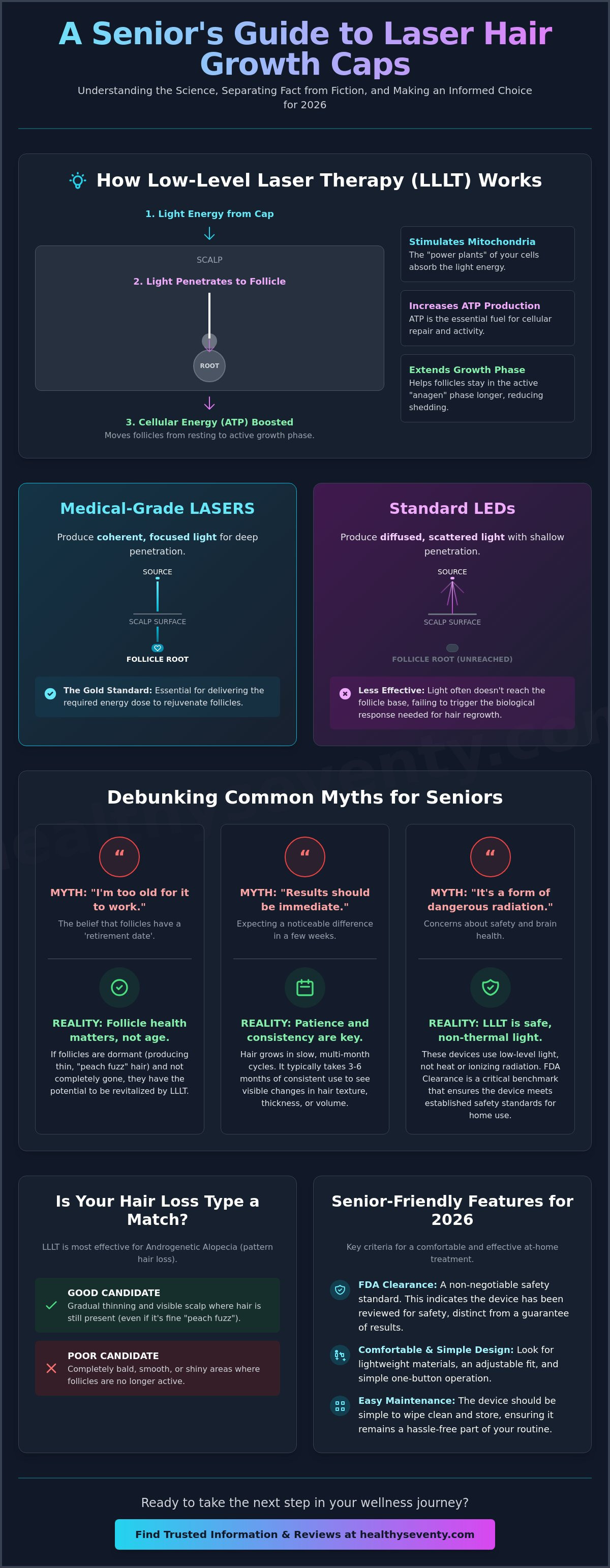
When we explore the technology behind a laser hair growth cap for seniors, we aren't talking about heat or burning. We're looking at The Science of Low-Level Laser Therapy (LLLT), a sophisticated, non-thermal light treatment. Unlike industrial lasers used for cutting, these medical-grade devices use specific red light wavelengths to communicate with your cells. For an older scalp, this communication is vital. As we age, the microcirculation that feeds our hair follicles naturally slows down. This reduction in blood flow means fewer nutrients reach the root, leading to thinner, more brittle strands. LLLT acts as a gentle catalyst, encouraging the scalp to improve its own internal environment without the need for chemicals or surgery.
For many seniors, the primary challenge isn't just that hair is falling out; it's that the "engines" responsible for growth are idling. Red light therapy addresses this by targeting the biological foundation of the hair follicle. By delivering light energy directly to the scalp, these devices help bypass some of the hurdles created by hormonal shifts and reduced vascular health, providing a proactive way to maintain your hair's natural vitality.
How Photobiomodulation Rejuvenates the Scalp
How does light turn into hair? It happens through a process called photobiomodulation. Think of your hair follicles like small engines. Inside these engines are mitochondria, the power plants of the cell. The red light energy from the cap is absorbed by these mitochondria, triggering the production of Adenosine Triphosphate (ATP). ATP is essentially cellular fuel. For older adults, whose cellular repair processes may have slowed over time, this boost of energy is transformative. It helps move follicles out of the resting (telogen) phase and back into the active growth (anagen) phase. LLLT is a non-invasive method to extend the hair growth cycle and prevent premature shedding.
Lasers vs. LEDs: Why the Distinction Matters
You might see inexpensive hats online that look similar to professional devices but cost a fraction of the price. The difference usually lies in the light source. True medical-grade laser diodes produce "coherent" light. This means the light waves are aligned and focused, allowing them to penetrate deeper into the scalp to reach the base of the follicle. LEDs, while beneficial for skin surface treatments, produce diffused light that scatters easily. If the light doesn't reach the root, it can't trigger regrowth. When choosing a laser hair growth cap for seniors, it's essential to look for the "medical-grade laser" designation in the product specifications. The efficacy of the device depends on the total energy delivered, often measured in joules. Without concentrated laser light, the scalp doesn't receive the "dosage" required to see a visible change in hair density.
Debunking the Top 3 Myths About Laser Hair Caps for Seniors
It's natural to approach new technology with a healthy dose of skepticism, especially when it involves something as personal as your appearance. Many seniors worry that they are being targeted by "miracle" gadgets that promise the world but deliver very little. When looking for a laser hair growth cap for seniors, you'll likely encounter a mix of genuine success stories and persistent myths that can cloud your judgment. Our goal is to replace that confusion with clarity, ensuring you make a choice based on science rather than marketing hype.
The "Too Old" Fallacy: Follicles vs. Age
The most common misconception we hear is the belief that hair follicles have a retirement date. Many people in their 70s and 80s assume their scalp is simply past the point of repair. However, chronological age is not the primary factor in determining success. What matters is the health of the follicle itself. As long as the follicle is still active, even if it is producing very thin, "peach fuzz" hair, it has the potential to be revitalized. While androgenetic alopecia (pattern baldness) progresses over decades, a laser cap can help maintain existing density. For many, simply stopping the progression of thinning is a significant victory that preserves their current look for years to come.
Another hurdle is the expectation of overnight results. A laser cap isn't a magic wand; it's a long-term wellness tool. Because hair grows in slow, multi-month cycles, you won't see a transformation in a week. Success requires consistency, often using the device for several months before noticing a change in texture or volume. Finding a trusted source for wellness information can help you stay patient and committed during this initial phase.
Safety and Radiation: Setting the Record Straight
Concerns about brain health or "radiation" are understandable but largely based on a misunderstanding of physics. The laser hair growth cap for seniors uses Low-Level Laser Therapy, which relies on non-ionizing radiation. Unlike X-rays or UV rays, this light does not have enough energy to damage DNA or affect brain tissue. It is often referred to as "cold laser" therapy because it doesn't produce heat. You won't feel your scalp burning or even warming up significantly during a session.
The safety of these devices is well-documented, and there is substantial clinical evidence for LLLT confirming that it is a safe, non-invasive option for at-home use. Most reputable devices carry FDA clearance, which serves as a benchmark for consumer safety. This clearance ensures the device meets strict manufacturing and safety standards, providing peace of mind as you integrate this technology into your daily routine.
Evaluating FDA Clearance vs. Efficacy: A Buying Framework
When you're ready to invest in a laser hair growth cap for seniors, you'll likely see the phrase "FDA Cleared" prominently displayed on every website. For many, this sounds like a gold seal of approval. However, there's a technical distinction between a device being "cleared" and one being "approved" that every savvy consumer should understand. In the medical device world, "FDA Approved" is typically reserved for high-risk items like pacemakers or new pharmaceutical drugs. For at-home wellness tools like hair caps, "FDA Cleared" is the appropriate and standard regulatory path. This means the manufacturer has proven to the FDA that their device is "substantially equivalent" to another legally marketed device that is already known to be safe.
To truly verify a manufacturer's claims, you don't have to take their word for it. You can look up a company’s 510(k) number in the official FDA database. This level of transparency is vital when you're navigating the many options available in 2026. Beyond basic safety, look for companies that have invested in clinical trials specifically involving older demographic groups. While The Science of Low-Level Laser Therapy is well-established, the way a 70-year-old scalp responds can differ from a 30-year-old scalp. Seeking out devices backed by research that includes participants in your age bracket provides an extra layer of confidence in your purchase.
What FDA Clearance Really Means for You
FDA clearance is primarily a measure of safety. It confirms that the device won't cause electrical shocks, won't damage your eyes with stray light, and won't burn your skin when used as directed. It gives you the peace of mind that you're putting a regulated, medical-grade tool on your head rather than an untested gadget. While this clearance verifies the safety of the technology, it's important to remember that individual results will always vary based on your unique biology and the current state of your hair follicles. Safety is a guarantee; specific regrowth levels are a shared journey between the technology and your body's response.
Red Flags in Senior Hair Care Marketing
Suitability and Success: Is Your Hair Loss Type a Match?
How do you know if a laser hair growth cap for seniors is the right investment for your specific needs? While the technology is impressive, it isn't a universal cure for every type of hair loss. Understanding your specific situation is the first step toward achieving the results you desire. Low-Level Laser Therapy (LLLT) is most effective when treating androgenetic alopecia, commonly known as pattern baldness. This condition is characterized by follicles that have miniaturized, or shrunk, over time but are still technically alive.
For many men, this looks like a receding hairline or thinning at the crown. For women, it often appears as a general widening of the part or a loss of volume across the top of the head. However, it's important to be realistic about "dead" follicles. If an area of your scalp is completely smooth, shiny, and devoid of even tiny, fine hairs, those follicles have likely reached a stage where they can no longer be revived by light therapy. Lasers require a living biological target to stimulate. If you're unsure about the status of your hair health, consulting a dermatologist is a wise move, especially if you experience sudden patches of loss, scalp pain, or redness.
Identifying Pattern Thinning vs. Scarring Alopecia
Distinguishing between standard age-related thinning and more complex medical conditions is crucial. Pattern thinning happens gradually over many years. In contrast, scarring alopecia involves permanent damage to the follicle caused by inflammation. Because laser therapy works by energizing existing cells, it cannot repair tissue that has already been replaced by scar tissue. To ensure you're taking the most effective path, we recommend exploring our guide on thinning hair solutions for older adults for a more holistic perspective on scalp health.
The Synergy of Multi-Modal Treatment
Many successful users find that a laser hair growth cap for seniors works best as part of a team. We often use the "soil and sun" metaphor to explain this relationship. Think of your scalp and nutrition as the soil, and the laser light as the sun. For a garden to thrive, you need both. Combining laser therapy with specialized topicals like Minoxidil or nutrient-rich hair serums can produce superior results. The topical treatments provide the "fertilizer," while the laser provides the energy needed for the follicle to process those nutrients effectively. Keeping your scalp clean and free of heavy buildup is also essential, as it ensures the light can penetrate deeply without being blocked. You can view our curated wellness tools to find high-quality options that complement your hair restoration journey.
Choosing Your Path: Senior-Friendly Features for 2026
Selecting the right laser hair growth cap for seniors involves more than just looking at diode counts or price tags. It's about finding a device that fits seamlessly into your lifestyle without creating physical strain or technical frustration. In 2026, the industry has shifted away from bulky, heavy "helmets" toward lightweight, discreet "cap" designs. These newer models are designed to be worn comfortably while you read a book or enjoy your morning coffee. A lighter device is particularly beneficial if you experience neck sensitivity or simply want a treatment that feels less like a medical procedure and more like a simple addition to your daily grooming.
Coverage area is another critical factor to consider before you buy. Many standard devices focus solely on the top of the head, but seniors often experience thinning at the temples and the very back of the crown. A well-designed cap ensures that the medical-grade lasers are positioned to reach these specific zones effectively. At Healthy Seventy, our curated approach to wellness technology prioritizes these practical details. We believe that every tool you use should serve your overall goal of maintaining vitality and independence without adding unnecessary complexity to your day.
Ergonomics for the Aging User
For many older adults, the best technology is the kind that stays out of the way. Cordless, battery-powered models provide the freedom to move around your home without being tethered to a wall outlet. This is a significant safety feature; it eliminates tripping hazards and allows for a truly hands-free experience. If you have mobility challenges or arthritis in your hands, you'll appreciate devices with simple one-button starts and adjustable sizing inserts that ensure a snug, comfortable fit. Some of the most thoughtful 2026 models even include voice-guided prompts. These provide clear audio cues when a session begins or ends, making the process effortless for those with visual impairments.
Next Steps for Your Hair Restoration Journey
Starting this journey requires a steady, patient commitment. Most protocols involve 15 to 30 minutes of use, three times a week. It isn't a race; it's a methodical investment in your self-confidence and long-term well-being. We encourage you to view hair health as one piece of a much larger puzzle. Just as you might explore non invasive joint pain relief to stay active and mobile, choosing a laser hair growth cap for seniors is about preserving your sense of self and your legacy. When you're ready to take the next step, we invite you to explore our curated options designed specifically to meet the unique needs of the modern senior.
Embracing a Proactive Path for Your Hair Health
Reclaiming your hair's vitality isn't about chasing a fountain of youth; it's about making informed, proactive choices that honor your life's journey. You've learned that while age isn't a barrier to follicle stimulation, your success depends on choosing a device that prioritizes safety and senior-specific ergonomics. By focusing on verified technology and maintaining a steady routine, you can slow the progression of thinning and protect the hair you have today.
Finding the right laser hair growth cap for seniors doesn't have to be a confusing or risky experience. At Healthy Seventy, we provide empathetic support for the 60+ community by offering expert-vetted wellness technology that meets rigorous FDA-cleared safety standards. We've done the research so you can focus on your results and your peace of mind. Explore Our Curated Selection of FDA-Cleared Laser Hair Growth Caps to discover a safe, non-invasive way to restore your confidence.
You deserve to feel vibrant and empowered in every stage of life. We're honored to be your partner on this journey toward a healthier, more confident you.
Frequently Asked Questions
Is it ever too late to start using a laser hair growth cap?
It is never too late to begin treatment as long as your hair follicles are still active and have not been replaced by scar tissue. Even in your 70s or 80s, these devices can help revitalize miniaturized hairs that have become thin and brittle. If you can still see fine, light hairs on your scalp, there is potential for a laser hair growth cap for seniors to improve your hair's overall density and strength.
How long does it take to see visible results from laser therapy?
You should expect to wait four to six months before noticing visible changes in your hair's volume or thickness. Hair grows in slow biological cycles, and the light technology needs time to shift follicles from the resting phase back into an active growth phase. Consistency is the most important factor during this window, as the cumulative effect of the light energy is what eventually produces a noticeable transformation.
Can I use a laser cap if I have gray or color-treated hair?
Yes, laser therapy is completely effective for gray, white, or color-treated hair. The light energy targets the specific cells within the hair follicle rather than the pigment in the hair shaft itself. You don't have to worry about the lasers fading your hair dye or being less effective because of your natural hair color; the biological response remains the same regardless of your shade.
Are there any side effects of using LLLT for seniors?
Low-Level Laser Therapy is non-invasive and generally free of serious side effects for the vast majority of users. Some people may experience a very mild scalp itch or a brief period of temporary shedding during the first few weeks of use. This shedding is actually a positive sign, as it indicates that new, stronger hairs are beginning to push out older, weaker strands to make room for healthier growth.
Do I need to shave my head for the laser cap to work?
You do not need to shave your head to use a laser hair growth cap for seniors effectively. While the laser light must reach the skin of the scalp to be effective, these devices are specifically designed to penetrate through existing thinning hair. Simply parting your hair or using a device with built-in hair-parting teeth can help ensure the light energy reaches the follicles without being blocked by your current hair.
Can I use a laser cap every day to speed up the results?
Using the device every day will not speed up your results and is generally not recommended by medical device manufacturers. Most clinical studies and protocols suggest sessions three times per week for optimal response. Much like a garden needing the right balance of sun and rest, your hair follicles need periods of recovery between light treatments to respond most effectively to the stimulation.
What happens if I stop using the laser cap after my hair grows back?
If you stop using the laser cap entirely, your hair will likely return to its previous state of thinning over the course of several months. Think of laser therapy like a fitness routine for your scalp; you must maintain a level of "exercise" to keep the results you have achieved. Most users transition to a less frequent maintenance schedule once they are satisfied with their new hair density.
Will a laser cap interfere with my hearing aid or other medical devices?
Laser caps use non-ionizing light that does not emit radiofrequency interference, so they typically won't affect hearing aids, pacemakers, or other electronic medical devices. However, because every individual health situation is unique, it's always a wise choice to consult with your physician before starting. They can provide personalized peace of mind that a laser hair growth cap for seniors is a safe addition to your daily wellness plan.


Comments