


Mobility Devices for Elderly: A Compassionate Guide to Choosing Independence in 2026
Updated: 5 days ago

A mobility aid isn't a sign of surrender; it's a high-performance upgrade for a life lived without limits. It's natural to feel a sense of hesitation when first researching mobility devices for elderly individuals. You may worry about social stigma or feel overwhelmed by technical terms like rollators and upright walkers. You want to remain steady on your feet, but you also want to maintain the vibrant social life and travel plans that define who you are.
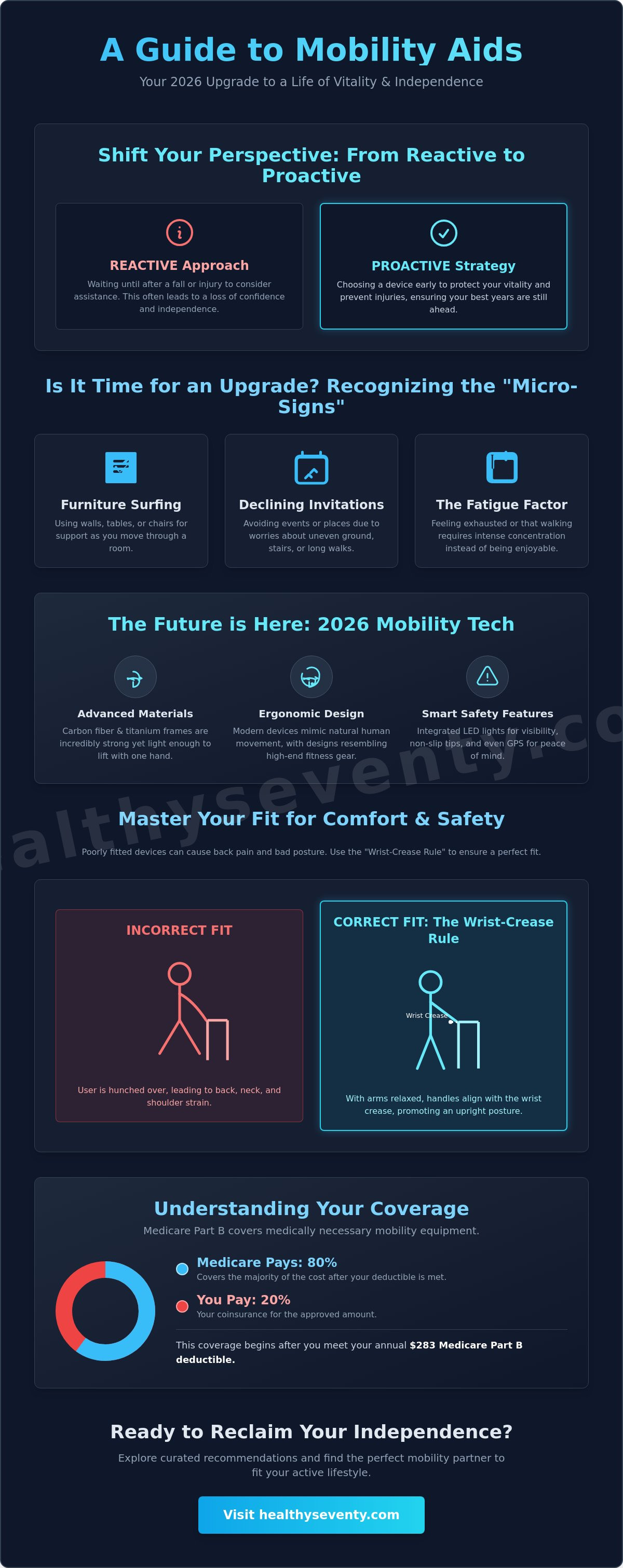
We're here to help you simplify these choices with clarity and deep empathy. This guide will show you how to select a device that protects your posture and enhances your vitality while fitting seamlessly into your lifestyle. We'll explore the latest 2026 advancements in smart safety technology, explain how Medicare Part B covers 80% of costs for medically necessary equipment after you meet the $283 deductible, and help you find the perfect tool to ensure your best years are still ahead of you.
Key Takeaways
Shift your perspective by viewing mobility aids as proactive tools for injury prevention rather than reactive responses to a fall.
Navigate the technical differences between manual and powered mobility devices for elderly to find the specific solution that matches your activity level.
Master the "wrist-crease" height adjustment to maintain a healthy posture and avoid the common back pain associated with poorly fitted walkers.
Assess your primary environment and travel frequency to ensure your chosen device fits easily through your hallways or into your car's trunk.
Discover how modern upright designs provide a more ergonomic experience that prioritizes your comfort and long-term vitality.
Table of Contents
What Are Mobility Devices for the Elderly and Why Do They Matter?
At its core, the term refers to a specialized category of assistive tools designed to enhance balance, provide stability, and improve weight-bearing capacity for those who find walking more challenging than it once was. To understand What Are Mobility Aids? is to recognize them as more than just medical equipment; they are essential instruments of freedom. These mobility devices for elderly individuals serve as a bridge between a restricted lifestyle and one filled with movement, allowing you to engage with your community and loved ones without the constant shadow of physical limitation.
We are currently witnessing a beautiful shift in how these tools are perceived. For decades, many people waited until after a fall or injury to consider assistance. This reactive approach often led to a loss of confidence. Today, the focus has moved toward proactive use. By choosing a device early, you aren't admitting defeat; you're choosing to protect your vitality and prevent the very injuries that could sideline your independence. It's a strategy for active aging that prioritizes your safety before a crisis occurs.
The psychological impact of the right support is just as significant as the physical benefits. When walking becomes a source of anxiety, it's common to begin withdrawing from social invitations or favorite hobbies. This isolation can lead to a quiet sense of loss. A reliable mobility aid acts as a silent partner that absorbs that anxiety. It restores your ability to walk through a gallery, visit a park, or travel to see family, ensuring that your social world remains as wide and vibrant as ever.
The Evolution of Senior Mobility in 2026
Modern engineering has completely transformed the user experience. In 2026, the heavy, rattling steel frames of the past have been replaced by sophisticated materials like carbon fiber and titanium. These materials make mobility devices for elderly users incredibly strong yet light enough to lift with a single hand. Designers now focus on ergonomics that mimic natural human movement, creating a seamless connection between the user and the device. Many of these tools now resemble high-end fitness gear rather than hospital supplies, reflecting the dignity and active spirit of the people who use them.
Recognizing the Signs: When is it Time?
It's often the "micro-signs" that tell us it's time to consider a little extra support. You might find yourself "furniture surfing," which is the habit of reaching for the backs of chairs or the edges of tables as you move across a room. Perhaps you've started declining invitations to places with uneven pavement or stairs. Another major indicator is the "Fatigue Factor." If a short walk feels like a grueling exercise in concentration rather than a pleasant stroll, your body is working too hard just to stay upright. Early adoption is key. Using a device while you still have strong muscle memory allows you to master the tool quickly, building the confidence needed to maintain a truly independent lifestyle.
Comparing the Most Common Types of Mobility Aids
Selecting the right tool is a deeply personal decision that depends on your daily routine and physical goals. Mobility devices for elderly adults are no longer one-size-fits-all solutions; they are precision tools tailored to specific environments. Whether you need a simple cane for light balance or a more robust system for all-day outings, understanding the mechanics of each category ensures you don't just move, but move with grace and confidence. Each device offers a different level of support, and the best choice is the one that fits your unique rhythm of life.
Powered solutions offer a different level of freedom for those who want to explore beyond their immediate neighborhood. A Foldable Mobility Scooter for Seniors allows you to join family trips to the park or the mall without worrying about physical exhaustion. These devices bridge the gap between being a spectator and being a participant in life's best moments. They are particularly useful for long-distance independence where manual effort might be a barrier. For many, these scooters are the key to continuing a legacy of travel and adventure.
Safety accessories have also seen a high-tech upgrade in 2026. It's common now to see non-slip tips that adapt to wet surfaces and integrated LED lights for evening walks. Since maintaining visibility at home is just as critical for safety, you can visit Ergovanta to discover lighting solutions that brighten every corner of your living space. Some high-end models even offer GPS integration, providing a quiet layer of security for both you and your loved ones. These features transform a simple walking aid into a comprehensive safety system that guards against falls and provides peace of mind during every outing.
Rollators vs. Traditional Walkers
The primary difference lies in the rhythm of your movement. Traditional walkers require a deliberate lift-and-place motion for every step. While this provides a very high level of stability, it can quickly become exhausting for those with limited upper-body strength. Rollators offer a continuous rolling motion that flows with your natural stride. These are the best use cases for outdoor endurance or navigating large indoor spaces like community centers. Most modern rollators feature a built-in seat and a sturdy frame that supports various weight capacities, yet they remain easy to fold for storage in a car or closet.
The Rise of the Upright Walker
In 2026, the industry has shifted toward designs that prioritize your spinal health. Traditional walkers often lead to a "hunchback" posture because you have to lean forward to grip the handles. The "Upright" revolution changes this by using padded armrests. By supporting your weight through your forearms, devices like the VOCIC Upright Walker for Seniors take the strain off your wrists and shoulders. This ergonomic shift allows you to look forward at eye-level, which is vital when Choosing the Right Mobility Device for your needs. For more details on how these models stack up, explore our Best Upright Walkers for Seniors: 2026 Comparison Guide. This design isn't just about walking; it's about walking with dignity and a clear view of the path ahead.
How to Choose the Right Device for Your Lifestyle
Choosing the right equipment is about more than just matching a height; it's about matching your spirit and your surroundings. Every home and every routine is different. Some of us find our joy in quiet mornings at home, while others are ready to board the next flight to a new city. To make the best choice, we must look at where you spend your time and how much energy you want to expend. As the National Institute on Aging highlights, maintaining movement is a compassionate guide to choosing independence as we age.
Start by assessing your primary environment. Does your home have narrow doorways or tight corners in the bathroom? If so, a compact frame is your best friend. Conversely, if you love visiting the local park, you'll need something that handles uneven pavement without vibrating through your arms. Choosing the right mobility devices for elderly family members or yourself also means looking honestly at physical strength. It's vital that you can lift your device over a curb or into a car trunk without causing a back strain. If you find yourself needing frequent breaks, the "Rest Factor" shouldn't be ignored. A built-in seat transforms a simple walker into a portable resting station, giving you the confidence to walk further.
Best Devices for Indoor Safety and Home Navigation
Navigating a house requires a device with an exceptional turning radius. You don't want to feel stuck in your own hallway. For indoor mobility devices for elderly users, maneuverability is the top priority. We often suggest pairing your walker with other safety tools like bedside step stools or strategically placed grab bars. These work together to create a safety net for your daily rituals. If you're focusing on making your living space more secure, you'll find our guide on Essential Mobility Devices for Elderly Home Safety particularly helpful.
Mobility Solutions for the Active Traveler
For those who refuse to let a passport collect dust, travel-ready features are essential. You need a device that folds with one hand and weighs less than 15 lbs. If you're flying, ensure your power source uses TSA-approved batteries. We've curated a specific list of Lightweight Mobility Aids for Seniors Who Love to Travel to help you stay on the move. Don't forget the importance of all-terrain wheels. Whether it's the deck of a cruise ship or the cobblestones of an old European square, larger wheels provide the stability you need to stay focused on the sights rather than your feet.
Posture and Safety: Maximizing the Benefits of Your Device
Have you noticed how some walkers seem to pull the user forward into a permanent slouch? This is often called the "hunchback" problem, and it's a common side effect of using traditional equipment that doesn't fit your frame. When you lean over a standard walker, you're compressing your chest and making it harder to take full, deep breaths. Over time, this poor alignment can actually worsen chronic back pain rather than relieving it. Choosing the right mobility devices for elderly users means looking beyond just the wheels; it requires a focus on how the device interacts with your spine.
The secret to ergonomic safety often lies in the "wrist-crease" sweet spot. To find your ideal handle height, stand as straight as possible with your arms hanging naturally at your sides. The handles of your walker or cane should align perfectly with the crease of your wrist. This small adjustment ensures your elbows have a slight, comfortable bend, which prevents shoulder strain and allows for better weight distribution. This simple change restores your vitality and ensures you're moving with clarity and purpose during every walk.
Safety also depends on lateral stability. While 3-wheel models are prized for their tight turning radius, 4-wheel designs offer superior stability that prevents tipping during sideways movements. Regardless of the model you choose, mastering the braking system is your most important safety habit. You should always follow the "lock before you sit" rule. Engaging the parking brakes before lowering yourself onto a rollator seat is a non-negotiable step that prevents the device from rolling away and causing a fall.
Correcting Posture with Upright Walkers
Vertical handles are the defining feature of the modern upright design. By supporting your weight through padded forearm rests, these devices encourage a neutral spine and allow for much better lung expansion. Upright walkers reduce neck strain by allowing the user to look straight ahead rather than down at the ground. If you're looking for more ways to stay limber, explore our guide on Posture Correction for Seniors: Simple Daily Techniques. If you're ready to experience this change firsthand, consider the VOCIC Upright Walker for Seniors, which is specifically engineered to promote this healthy alignment.
Safety Checks and Maintenance
Maintaining mobility devices for elderly safety involves a simple monthly routine. Keep a quick checklist to ensure your tool remains a reliable partner in your wellness journey:
Tighten any loose screws or bolts that may have vibrated loose during travel.
Test the brakes to ensure they grip the tires firmly and evenly.
Inspect tire treads for significant wear or trapped debris.
Wipe down the frame with a gentle sanitizer to maintain long-term durability.
In the early stages of using a new device, some people find that using a gait belt provides an extra layer of security while they build confidence. This is a helpful bridge as you adapt to your new rhythm of movement.
Curated Recommendations: The Healthy Seventy Selection
Moving from the research phase to your first walk is a significant milestone in your journey toward a healthier lifestyle. It's the moment where knowledge transforms into action. We've carefully curated a selection of mobility devices for elderly individuals that don't just meet medical standards but also elevate your daily experience. Our focus is on tools that integrate seamlessly into a holistic approach to wellness, ensuring that every step you take is supported by quality and thoughtful engineering.
True independence is about more than just moving from one room to another; it's about how you feel while doing it. This is why we recommend looking at your mobility through a wider lens. By combining high-performance walking aids with recovery tools like a Home Infrared Sauna for Relaxation, you create a complete ecosystem for vitality. This proactive approach helps soothe tired muscles after an afternoon outing, making it easier to stay consistent with your movement goals. You're not just buying equipment; you're investing in a legacy of active living.
The VOCIC Upright Walker: Posture Meets Independence
We prioritize the VOCIC Upright Walker: Regain Your Confidence and Posture because it addresses the core challenges of traditional designs. Its adjustable height and plushly padded armrests allow you to find a custom fit that feels natural. There's a powerful "Confidence Factor" that comes with standing tall. When you look forward instead of at the ground, your interactions with the world change. You feel more empowered, more present, and more like yourself. It's a medical-grade support system that looks and feels like a modern lifestyle tool.
Building Your Holistic Mobility Kit
A walker is only one part of the equation. To maximize your comfort, we recommend pairing your device with Orthofeet Orthopedic Walking Sneakers. These provide the high-quality orthopedic foot support necessary to maintain proper alignment from the ground up. If you're managing persistent discomfort, integrating at-home Shockwave Therapy can be a game-changer for maintaining joint health. This technology helps ensure your body stays as ready for movement as your mind is.
Taking this first step might feel daunting, but you're making a choice that your future self will thank you for. Start with short, familiar paths around your home or garden. As your confidence grows, so will your world. You have the wisdom to choose the right path and the tools to walk it with grace. Welcome to a new chapter of independence and vitality.
Step Into Your Next Adventure with Confidence
Embracing a new way of moving is a powerful declaration that your best days are ahead. We've explored how mobility devices for elderly individuals have evolved into sophisticated tools that prioritize your posture, safety, and social vitality. Whether you're navigating the familiar corners of your home or planning a journey across cobblestone streets, the right support ensures you never have to compromise on the lifestyle you love. It's about choosing tools that work with your body, not against it.
Since 2024, our mission has been to empower independent living by offering expert-vetted wellness products specifically for adults over 60. We believe your equipment should reflect your dignity and your drive to stay active. It's time to move beyond the fear of falling and step into a future defined by clarity and strength. Explore our curated selection of mobility aids designed for your vitality and discover how the perfect fit can transform your daily walk into a cherished ritual. Your journey toward lasting independence starts with a single, supported step. We're honored to walk beside you.
Frequently Asked Questions
Does Medicare cover the cost of mobility devices for the elderly?
Yes, Medicare Part B covers 80% of the approved cost for medically necessary mobility devices for elderly users after you meet your annual deductible. In 2026, that deductible is $283. You are responsible for the remaining 20% coinsurance. This coverage applies to prescribed items like walkers, wheelchairs, and scooters intended for use within your home environment.
What is the difference between a walker and a rollator?
The main difference is that a standard walker has four legs and must be lifted to move, while a rollator has wheels and is pushed. Walkers provide maximum stability for those who need to lean heavily on the frame for balance. Rollators are better for those who want a continuous, fluid walking rhythm and the convenience of a built-in seat for resting during longer outings.
How do I know what size walker I need for my height?
To find the correct size, stand straight with your arms hanging naturally and measure from the floor to the crease of your wrist. This "wrist-crease" measurement should match the height of the device handles. Most modern mobility aids feature adjustable height settings, allowing you to fine-tune the fit for optimal ergonomic support and a healthy, upright posture.
Can an upright walker fit through standard bathroom doors?
Most upright walkers are designed to fit through standard interior doorways, which typically measure between 28 and 32 inches wide. While these devices have a slightly larger profile to ensure stability, models like the VOCIC Upright Walker are engineered with home navigation in mind. It's always wise to measure your narrowest bathroom door before purchase to ensure a seamless and stress-free fit.
Are 3-wheel rollators safer than 4-wheel rollators?
4-wheel rollators are generally safer because they offer superior lateral stability and are less likely to tip during sideways movements. While 3-wheel models have a tighter turning radius for small spaces, they don't provide the same level of balance. For most seniors prioritizing fall prevention, the four-wheel design is the more reliable choice for both indoor and outdoor use.
How much weight can a lightweight portable mobility scooter carry?
Lightweight portable mobility scooters typically carry between 250 and 300 pounds, depending on the specific model's frame and motor strength. While these devices are built for easy folding and transport, they use durable materials to support a wide range of body types. Always check the manufacturer's specific weight rating to ensure the device meets your unique physical requirements and safety needs.
Is it difficult to assemble a mobility device at home?
Most modern mobility devices are designed for tool-free assembly and can be ready for use in under 15 minutes. Manufacturers focus on simplicity, often using "click-in" parts or large, easy-to-turn knobs. If you're concerned about the process, many users find that a family member or friend can easily assist with the initial setup to ensure every component is securely locked and safe.
How do I encourage a parent to start using a mobility aid?
Focus on the freedom and vitality the device provides rather than the limitation it addresses. Frame the conversation around staying active and participating in family events like park visits or shopping trips. Highlighting the sleek, modern designs of 2026 mobility devices for elderly users found at the MG Affiliate Store can also help reduce social stigma and emphasize that these are high-performance tools for maintaining a cherished, independent lifestyle.


Comments