


Non-Invasive Joint Pain Relief: A Comprehensive Guide to Mobility in 2026
What if the key to reclaiming your morning walk isn't found on an operating table, but within the quiet sanctuary of your own home? You've likely felt the heavy weight of losing your independence, watching as stairs become mountains and simple errands turn into daunting tasks. It's deeply frustrating when surface-level treatments only offer a fleeting mask for the discomfort you feel in every step. You deserve a path forward that respects your body and your time without the fear of long surgical recoveries or the risks associated with major procedures.
Finding effective non invasive joint pain relief shouldn't feel like an impossible choice between risky interventions and persistent stiffness. We've researched the most promising 2026 advancements to help you regain your vitality and walking confidence. You're about to discover a clear, easy-to-follow daily wellness protocol that blends professional-grade recovery technology with simple lifestyle adjustments. We'll explore how a "Trifecta of Vitality" approach, which combines advanced at-home tools, functional movement support, and cellular-level inflammation management, can help you write a more active and joyful next chapter of your legacy.
Table of Contents
The Evolution of Non-Invasive Joint Care for Seniors in 2026
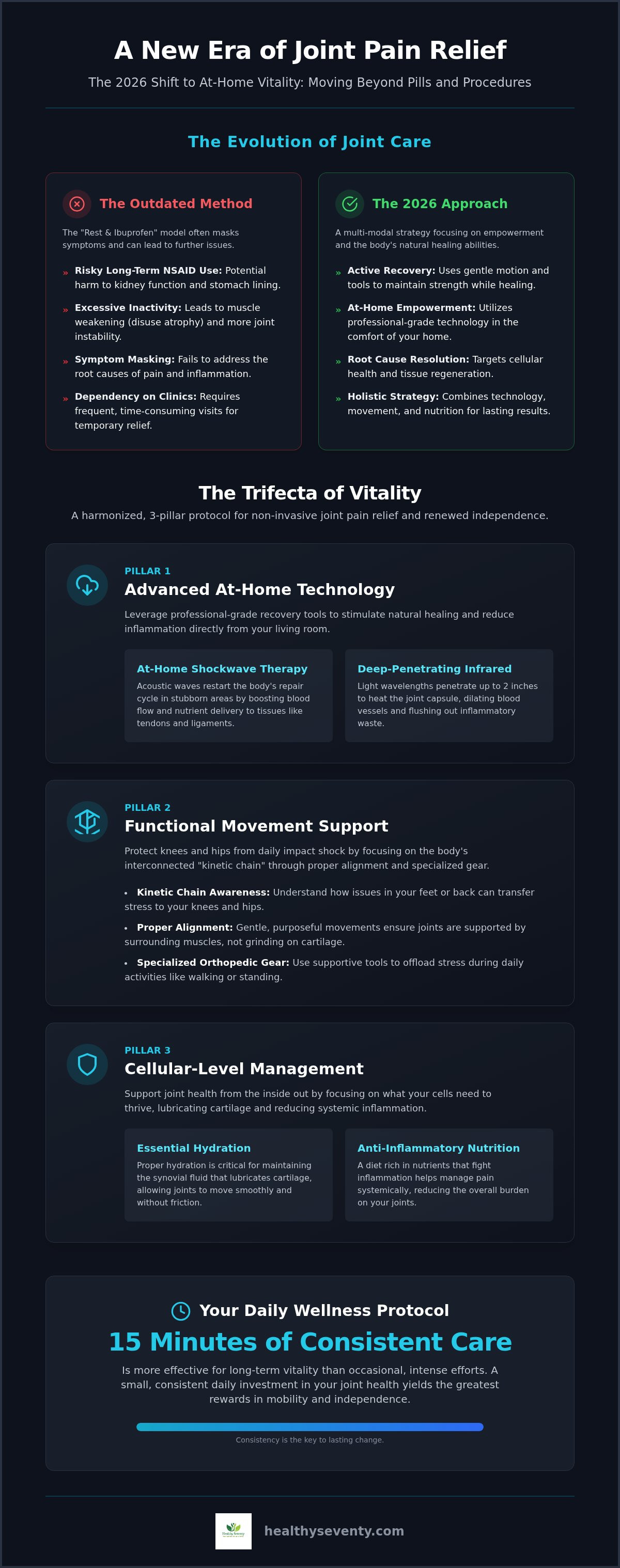
In 2026, the definition of non invasive joint pain relief has expanded far beyond simple topical creams or temporary braces. It is now understood as a sophisticated, multi-modal strategy that avoids surgical incisions and reduces the heavy reliance on long-term pharmaceutical intervention. This shift is largely driven by a healthcare environment that prioritizes "aging in place," where professional-grade recovery tools are no longer restricted to clinical settings. Instead of merely masking symptoms, modern protocols focus on cellular health and supporting the body's natural ability to regenerate tissue. The "Trifecta of Vitality" represents the current gold standard, harmonizing advanced technology, functional movement, and targeted nutrition to preserve your independence.
Why Traditional "Rest and Ibuprofen" is Outdated
For decades, the standard advice for an aching knee or stiff hip was simply to rest and take an over-the-counter anti-inflammatory. We now know that long-term NSAID use poses significant risks to kidney function and stomach lining, particularly for those over sixty. Beyond the chemical risks, the "rest" part of the equation often backfires. Excessive inactivity triggers a cycle of disuse atrophy, where the muscles surrounding a joint weaken, leading to even more instability and pain. The 2026 methodology favors active recovery. This approach uses gentle, purposeful motion and specialized tools to keep the joint mobile while it heals, ensuring you don't lose the strength you've worked so hard to maintain.
The Empowerment of At-Home Joint Management
How many hours have you spent in waiting rooms or stuck in traffic just for a brief consultation? Managing your well-being from the comfort of your living room removes the logistical stress of frequent clinic visits. There is a profound psychological shift that happens when you take a proactive role in your own healing. You aren't just a patient waiting for a diagnosis; you're a steward of your own vitality. Taking charge of your non invasive joint pain relief protocol at home fosters a sense of agency that no clinical visit can replicate. This empowerment is about more than just physical comfort. It's about the clarity and confidence to plan a weekend with your grandchildren or finally return to that garden project you've set aside. Reclaiming your time means reclaiming the life you love, supported by a home environment that works for you.
Advanced Recovery Technologies: Shockwave and Infrared Therapy
The first pillar of our modern vitality framework involves integrating professional-grade technology into your daily environment. For decades, these tools were locked behind clinical doors, requiring expensive appointments and travel. Today, sophisticated devices allow you to manage discomfort from your favorite armchair. By using targeted energy waves and deep-penetrating heat, these methods provide effective non invasive joint pain relief that addresses the root cause of stiffness rather than just numbing the surface. They work in tandem to reduce morning inflammation and prepare your body for the day's activities.
Shockwave Therapy for Chronic Pain: A Clinical Tool at Home
Shockwave therapy sounds intense, but it's actually a gentle way to restart your body's natural repair cycle. The device sends acoustic pressure waves into the tissue, creating what researchers call "micro-trauma." This subtle stimulation tricks the body into sending a fresh supply of oxygenated blood and nutrients to areas with poor circulation, like tendons and ligaments. It's particularly effective for stubborn conditions like plantar fasciitis or chronic hip discomfort that hasn't responded to traditional stretching. Modern versions are designed with seniors in mind, featuring intuitive controls and safety sensors to ensure the treatment remains comfortable and effective. If you've felt stuck in your recovery, a Shockwave Therapy Device for Pain Relief can be the catalyst that finally breaks the cycle of chronic stiffness.
Home Infrared Saunas: Systemic Relief and Relaxation
While a standard heating pad only warms the skin's surface, infrared technology uses specific light wavelengths to penetrate up to two inches into the body. This deep heat reaches the joint capsule itself, dilating blood vessels and flushing out the metabolic waste that contributes to systemic inflammation. Unlike traditional steam saunas that can feel stifling and humid, infrared saunas operate at a lower, more comfortable temperature while providing superior therapeutic benefits. This makes the Home Infrared Sauna for Elderly a true luxury wellness staple for those seeking a holistic approach to health. Regular use helps "detoxify" at a cellular level, leaving your joints feeling more lubricated and your mind more relaxed. It's an ideal evening ritual to prepare your body for a restful night of healing.
Choosing between these technologies depends on your specific needs:
Targeted Relief: Use shockwave therapy for specific "hot spots" like the heel, elbow, or hip where tendons feel tight or crunchy.
Systemic Vitality: Use infrared therapy for whole-body stiffness, general relaxation, and improving overall circulation.
Integrating both into your routine ensures you're addressing non invasive joint pain relief from both a structural and a systemic perspective.
Functional Mobility: Supporting Joints Through Alignment and Gear
Recovery technology provides a vital internal boost, but external alignment is equally critical to your long-term comfort. Think of your body as a "kinetic chain" where each joint relies on the stability and position of the one below it. When your feet aren't properly supported, your knees, hips, and lower back must compensate for the imbalance. This structural stress often leads to the very inflammation and wear that we seek to avoid. Achieving lasting non invasive joint pain relief requires a foundation of correct posture and high-quality gear that absorbs the "impact shock" of daily movement.
Orthopedic Footwear for Balance and Stability
Over time, the natural cushioning in our feet tends to thin, making every step on a hard surface feel more jarring to the ankles and knees. Specialized walking sneakers are designed to restore this lost comfort while providing the stability needed to prevent falls. A wide toe box is essential as it allows your toes to splay naturally, reducing pressure on the midfoot joints. Combined with firm arch support, these features help redistribute your weight evenly across the entire foot. You can find more detailed recommendations in our resource on the Best Walking Sneakers for Balance.
Upright Walkers: Realigning the Spine to Protect the Joints
Have you noticed how traditional walkers often lead to a "hunched" or "shuffling" gait? This forward slump compresses the spine and strains the neck muscles, creating a new set of aches. Upright walkers represent a significant advancement in 2026 by allowing you to stand tall while moving. By supporting your weight through the forearms rather than just the wrists, these devices shift the load onto your core and larger muscle groups. The VOCIC Upright Walker is specifically engineered to promote this healthy alignment. It turns a simple walk into an exercise in posture correction, protecting your joints while you reclaim your active independence.
It's time to reframe how we view mobility aids. They aren't symbols of limitation; they are sophisticated tools that multiply your existing strength. By optimizing your alignment, you reduce the daily wear and tear on your cartilage and ligaments. This proactive approach to non invasive joint pain relief ensures that your body remains a reliable partner in your journey toward a more active and fulfilling lifestyle.
The Cellular Approach: Hydration, Nutrition, and Inflammation
While the right gear and recovery technology provide a structural boost, the internal biochemical environment of your joints determines how smoothly you move. Think of your joints like a well-oiled machine; without the proper internal fluids, even the best parts will eventually grind and wear down. True non invasive joint pain relief requires a cellular strategy that addresses systemic inflammation and ensures your cartilage remains well-lubricated. In the medical community, joint lubrication is defined as a delicate combination of naturally occurring hyaluronic acid and optimal systemic hydration.
The Role of Pure Water in Joint Lubrication
It's a quiet reality that many seniors live in a state of chronic dehydration. As we age, our natural thirst signals often weaken, leading to "dry" joints where friction increases and cartilage begins to fray. However, the quality of your water is just as important as the quantity. Common contaminants found in standard tap water, such as heavy metals or excess chlorine, can trigger low-grade systemic inflammation that settles in your most vulnerable joints. Ensuring your water is as pure as possible is a fundamental step in any wellness protocol. To protect your body from these hidden irritants and ensure your cells receive the highest quality of care, you can explore Senior Friendly Water Filtration Systems for ensuring toxin-free hydration.
Anti-Inflammatory Nutrition for 2026
What you place on your plate acts as a daily dose of medicine for your joints. The "Mediterranean-plus" diet, specifically adapted for the metabolic needs of those over seventy, focuses on high-quality fats and antioxidants. Omega-3 fatty acids found in cold-water fish and walnuts act as natural lubricants, while the curcumin in turmeric serves as a powerful shield against flare-ups. We also recommend incorporating collagen-boosting nutrients like bone broth or vitamin C-rich berries to support the structural integrity of your tendons. One of the most immediate ways to feel a sense of "lightness" in your movement is to reduce processed sugars. These sugars are notorious for fueling the inflammatory fire that causes morning stiffness. By choosing whole, vibrant foods, you provide your body with the raw materials it needs for sustainable non invasive joint pain relief.
Designing Your Daily Protocol for Lasting Joint Vitality
Achieving sustainable non invasive joint pain relief is rarely the result of a single, heroic effort. It's the cumulative power of small, intentional choices made every day. We've found that fifteen minutes of consistent therapy daily is far more effective for cellular repair than a two-hour session once a week. By weaving the technologies and strategies we've discussed into a predictable rhythm, you create a supportive environment where your joints can actually thrive rather than just endure. This isn't about pushing through the pain; it's about providing your body with the tools it needs to maintain its own vitality.
Before you begin, it helps to evaluate which technology fits your current needs. Use this quick checklist to guide your daily choices:
Choose Infrared Therapy if: You feel a general, systemic stiffness in the morning or want to reduce overall inflammation and stress.
Choose Shockwave Therapy if: You have "hot spots" or localized discomfort in specific tendons, like the heel, elbow, or hip.
Choose Posture Support if: You feel a "slumping" sensation or experience increased back pain after standing for more than ten minutes.
A Sample "Pain-Free Day" Routine
Start your morning with gentle movement and infrared warmth. Spending ten minutes with deep-penetrating heat helps break through night-time stiffness and dilates your blood vessels for better circulation. During the mid-day hours, focus on functional mobility. Using an upright walker for a twenty-minute outdoor walk ensures you're maintaining bone density while keeping your spine in a healthy, neutral alignment. In the evening, address any specific "problem spots" with targeted shockwave therapy. Finish your day by prioritizing high-purity hydration to replenish the fluids your cartilage needs for tomorrow's movement.
When to Consult a Professional
While at-home management is empowering, your safety is always the priority. You should reach out to your doctor if you notice "red flags" such as sudden, intense swelling, visible redness that feels hot to the touch, or a total loss of function in a joint. When you speak with your primary care physician, bring a list of the at-home tools you're using. Most professionals appreciate a proactive patient who is dedicated to a conservative, non-surgical path. For a broader look at how these strategies fit into a long-term wellness plan, you can read our Pillar Article on Non-Invasive Relief. Your legacy is built on the moments you share with your community, and staying active is the best way to ensure those moments continue for years to come.
Embracing a Future of Movement and Independence
The journey toward a more active lifestyle doesn't require a radical medical intervention or a compromise on your comfort. By harmonizing advanced recovery technology with thoughtful daily habits, you've discovered a sustainable path to vitality that respects your body's natural wisdom. You now have the tools to address discomfort at the cellular level through pure hydration and to protect your structural alignment with specialized gear. This multi-layered approach ensures that non invasive joint pain relief is a reality you can maintain from the comfort of your own home.
As you implement your new daily protocol, remember that consistency is your greatest ally in preserving your active independence. We invite you to explore our curated collection of joint relief and mobility solutions to find the expert-vetted tools that best support your unique needs. Our mission is to provide community-trusted advice and non-surgical recovery technology tailored specifically for the wellness of those over sixty. You've worked hard to build a lasting legacy. Now is the time to enjoy it with the clarity and physical confidence you deserve. Your most vibrant chapters are still being written, and we're honored to walk beside you.
Frequently Asked Questions
Is at-home shockwave therapy safe for seniors with thinning skin?
Yes, modern devices are designed with safety sensors and adjustable intensity levels to protect delicate tissue. The therapy focuses on deep-tissue acoustic waves rather than surface friction. It's best to start on the lowest setting and use the included conductive gel to ensure a smooth, comfortable experience. This allows the technology to stimulate healing in the tendons without causing irritation to the skin's surface or fragile outer layers.
How long does it take to see results from an infrared sauna for joint pain?
Many individuals feel immediate relief from stiffness and an increased range of motion after a single twenty-minute session. For lasting results and a significant reduction in systemic inflammation, consistent use three to four times a week for at least a month is recommended. This regular exposure helps flush out metabolic waste and supports the natural repair of joint tissues, leading to a more comfortable and active daily routine.
Can an upright walker really help with my chronic lower back pain?
Yes, because an upright walker realigns your spine and shifts weight from your lower back onto your forearms and core muscles. By eliminating the "hunched" posture common with traditional walkers, you reduce the compression on your vertebrae. This improved alignment is a cornerstone of non invasive joint pain relief, helping you walk longer distances with significantly less strain on your lumbar region and neck muscles.
What is the best type of water for reducing joint inflammation?
Reverse osmosis water is considered the gold standard for reducing inflammation because it removes up to 99% of contaminants like heavy metals and chlorine. These impurities can trigger low-grade immune responses that exacerbate joint swelling. By drinking highly purified water, you ensure your body's "joint oil"—the synovial fluid—is clean and effective, providing the internal lubrication necessary for smooth, pain-free movement throughout your entire day.
Do I need a prescription for at-home joint recovery devices?
Most at-home wellness tools, including infrared saunas and orthopedic footwear, don't require a prescription for purchase. While some specialized recovery devices are FDA-cleared for home use, they are available directly to consumers. However, if you plan to use HSA or FSA funds, a Letter of Medical Necessity from your doctor might be required. It's always wise to discuss new protocols with your physician to ensure they align with your history.
Can I use shockwave therapy if I have had a previous joint replacement?
You should never apply shockwave therapy directly over a metal implant or a prosthetic joint. The acoustic waves can interfere with the bond between the implant and the bone. However, you can safely use the device on the surrounding muscles and tendons to relieve tension and secondary pain. Always consult your orthopedic surgeon before using any high-energy recovery technology near a surgical site to ensure your long-term safety and implant integrity.
How many times a week should I use infrared heat for my arthritis?
Daily use is perfectly safe and often provides the most consistent relief for chronic arthritis symptoms. Many seniors find that a morning session helps break through "sleep stiffness," while an evening session prepares the body for restful healing. Even a short ten-minute session every day is more effective for managing non invasive joint pain relief than a long session once a week, as it keeps your circulation steady.
Are orthopedic sneakers necessary if I already use custom orthotics?
Yes, because even the best orthotics need a stable, supportive "chassis" to function correctly. Most standard sneakers lack the depth and wide toe box required to accommodate custom inserts comfortably. Orthopedic sneakers are engineered with specific heel cradles and rocker soles that work in harmony with your orthotics. This combination provides the ultimate defense against impact shock, protecting your knees and hips from the jarring forces of walking on hard surfaces.


Comments