
Orthopedic Sneakers for Fallen Arches: A Senior’s Guide to Pain-Free Mobility
- healthyseventy3
- 3 days ago
- 13 min read

What if the persistent ache in your knees and the instability in your step aren't just signs of getting older, but signs that your foundation has simply lost its shape? With an estimated 30% of adults living with flat feet, many seniors find that choosing the right orthopedic sneakers for fallen arches is the missing piece in their daily wellness routine. It's frustrating when sharp pain in the heel or arch makes a simple morning walk feel like a challenge. You've worked hard to reach this stage of life. You deserve to maintain your independence and vitality without being sidelined by foot fatigue or poor alignment.
We understand that you're looking for more than just a shoe; you're looking for a way to restore your balance and protect your joints. This article will help you discover how curated orthopedic footwear can alleviate arch pain and keep you active well into your 70s and beyond. We'll explore how to identify essential features like the APMA Seal of Acceptance and superior shock absorption that transform your walking experience. By the end of this guide, you'll know exactly how to choose a pair that offers medical-grade support and helps you achieve the pain-free mobility and improved posture you've been searching for.
Table of Contents
Understanding Fallen Arches in Seniors: More Than Just Flat Feet
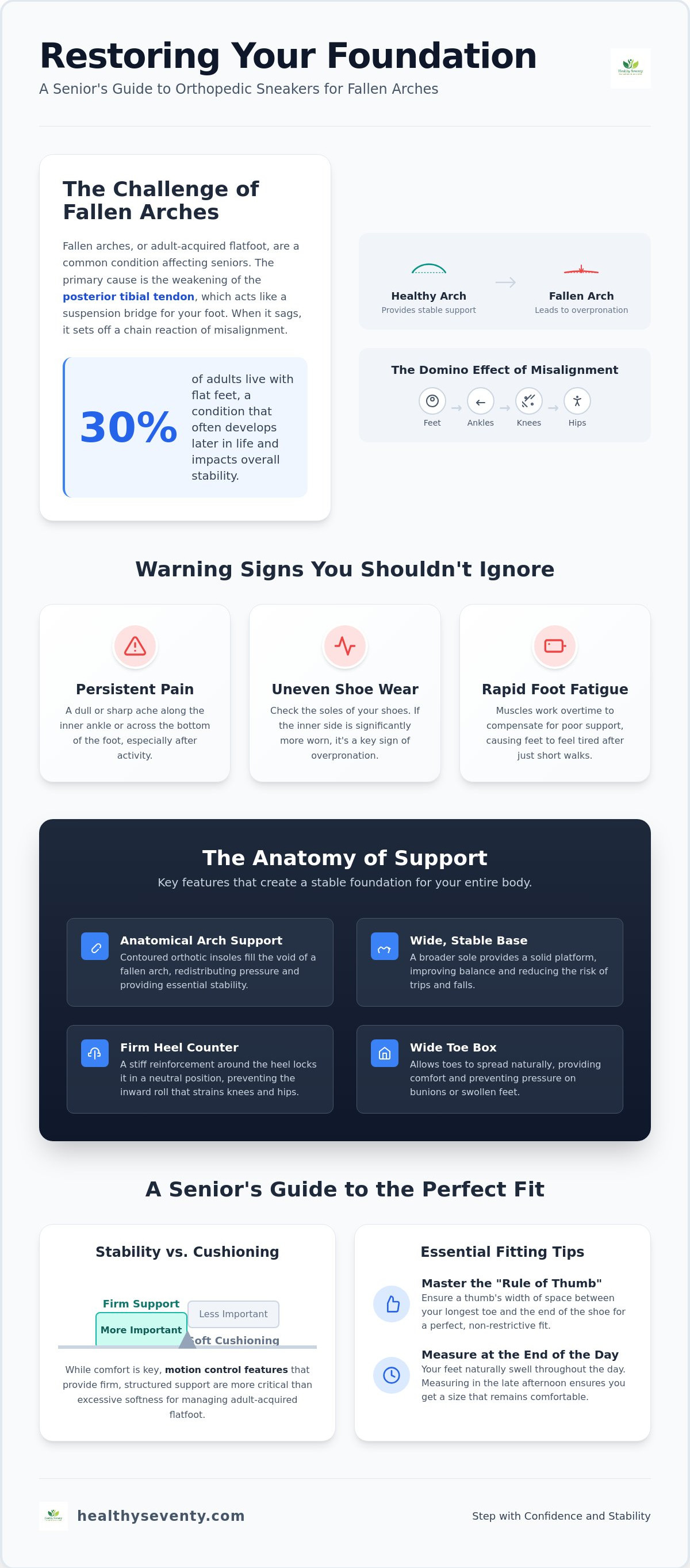
Many of us grew up thinking flat feet were something you were simply born with, but for seniors, the reality is often different. Fallen arches, also called pes planus, frequently develop later in life due to years of weight-bearing activity and structural changes. Approximately 30% of adults live with this condition, which is often referred to medically as adult-acquired flatfoot. It isn't just a cosmetic concern; it's a significant shift in your body's foundation that can impact how you move through your 60s, 70s, and beyond.
The primary architect of your foot's arch is the posterior tibial tendon. Think of this tendon as a suspension bridge that holds up the middle of your foot. When this tendon remains strong, it maintains the arch's height and absorbs the shock of every step. However, as we age, this "bridge" can begin to sag. When the arch collapses, the foot begins to roll inward excessively, a process known as overpronation. This doesn't just stay in the feet. It creates a domino effect that misaligns the ankles, knees, and hips, making every mile feel much longer than it used to.
For many seniors, this lack of structural integrity leads to a noticeable decrease in stability. Without a firm arch to lock the foot into a stable position, maintaining balance becomes harder, which directly increases the risk of trips and falls. This is why orthopedic sneakers for fallen arches are so vital. They act as an external support system, stepping in to provide the stability that your internal tendons may no longer be able to manage on their own.
Why Arches Fall as We Age
Decades of movement naturally take a toll on the ligaments that bind the bones of our feet together. Over time, these tissues lose their elasticity, especially if you've managed chronic conditions like arthritis or experienced weight fluctuations that put extra pressure on your midfoot. Tendon insufficiency is the primary driver of senior arch collapse, occurring when the posterior tibial tendon becomes too weak or inflamed to support your weight. It's a common part of the aging journey, but it's one we can proactively manage with the right tools.
Symptoms You Shouldn’t Ignore
Identifying the shift early can save you months of discomfort. You might notice a dull or sharp pain along the inner ankle or a persistent ache across the bottom of your foot after a day of activity. Take a look at your favorite pair of walking shoes; if the inner side of the sole is significantly more worn down than the outer edge, your arches are likely collapsing. You may also find that your feet feel unusually tired after short walks, signaling that your muscles are working overtime to compensate for a lack of support. Switching to orthopedic sneakers for fallen arches can provide immediate relief from this specific type of fatigue and help restore your confidence in every step.
The Anatomy of Support: Key Features of Orthopedic Sneakers
Choosing orthopedic sneakers for fallen arches is an investment in your skeletal alignment. It isn't just about finding a soft cushion; it's about engineering a foundation that supports your entire body. To understand how these shoes work, we look at the "Stability Triangle." This concept combines three critical elements: robust anatomical arch support, a deep heel cup, and a wide, stable base. When these three features work in harmony, they prevent the midfoot from collapsing toward the floor and keep your weight centered.
Contoured orthotic insoles are the heart of this structural system. Unlike the flat liners found in standard footwear, these insoles are shaped to redistribute pressure across the entire surface of your foot. This prevents painful pressure points from developing on the heel or the ball of the foot. For those seeking Expert Insights on Fallen Arches, medical research emphasizes that maintaining this alignment is the first step in preventing secondary pain in the ankles and shins. By filling the void of a collapsed arch, the shoe provides the "scaffolding" your tendons can no longer provide on their own.
A firm heel counter is another non-negotiable feature. This is the stiff reinforcement at the back of the shoe that wraps around your heel. By locking the heel in a neutral position, it significantly reduces overpronation, the inward rolling motion that often leads to knee and hip strain. When this control is paired with a wide toe box, the shoe offers a sanctuary for seniors dealing with bunions or daily swelling. It allows the toes to splay naturally, which improves your overall balance and ground feel. For a curated selection of footwear that prioritizes these anatomical needs, exploring the Orthofeet options at Healthy Seventy can help you find your perfect fit.
The Role of Anatomical Arch Supports
These inserts do more than just provide comfort; they mimic the natural bone structure that a healthy posterior tibial tendon would normally maintain. By providing a firm "stop" for the arch, they prevent the inward roll that causes the rest of your skeleton to shift out of place. It's the difference between medical-grade support that holds its shape and generic foam that simply flattens under your weight.
Midsole Technology and Shock Absorption
As we age, our joints lose some of their natural shock-absorbing capacity, making midsole technology vital. Most high-quality sneakers use EVA foam for its lightweight responsiveness or polyurethane for its long-lasting durability. These materials provide the energy return needed to reduce the impact on your ankles and knees with every step. If you're focusing on fall prevention, you might also want to check out our guide on the best walking sneakers for balance to see how cushioning and grip work together for maximum safety.
Stability vs. Cushioning: Finding the Right Balance
Have you ever tried walking across a soft, sandy beach and felt your ankles wobbling with every step? While that pillowy sensation might feel luxurious for a moment, it actually illustrates why excessive softness is often the enemy of stability for seniors. When searching for orthopedic sneakers for fallen arches, it's easy to fall into the trap of thinking that more cushioning equals less pain. In reality, a shoe that is too soft lacks the structural resistance required to keep a collapsed arch from sinking even further toward the ground. For those of us in our 60s and 70s, the goal isn't just to soften the blow; it's to create a steady, reliable platform for every step.
Motion control is the gold standard for managing adult-acquired flatfoot. Unlike standard neutral sneakers, motion control shoes are engineered with a rigid internal structure that prevents the foot from rolling inward excessively. This is often achieved through a "straight last," which means the shoe is built on a flatter, wider shape rather than a curved one. This design provides more surface area for a flat foot to rest upon, which naturally improves your balance and reduces the strain on your lower legs. When you combine this with the right shoe weight, you'll find that your legs feel significantly less fatigued at the end of a long afternoon.
The Problem with Excessive Cushioning
While some shock absorption is necessary to protect aging joints, "pillowy" midsoles can actually lead to ankle instability and increase your risk of trips. A foundation that is too squishy doesn't provide the sensory feedback your brain needs to maintain balance. To support a collapsed arch effectively, you need a firmer foundation that holds its shape under pressure. The "sweet spot" is a shoe that offers a layer of high-quality foam for comfort but rests on a stable, non-compressible base to ensure your foot remains in a neutral position.
Motion Control and Overpronation
One of the most effective features in these shoes is the medial post, which is a section of firmer foam located directly under the arch. This post acts as a gentle but firm barrier, guiding your foot into a healthier alignment as you walk. Motion control technology aligns the ankle and shin by providing a firm barrier that prevents the foot from collapsing inward during the gait cycle. By using orthopedic sneakers for fallen arches with these specific features, you can effectively "reset" your posture from the ground up, protecting your knees and hips from the cumulative effects of overpronation.
Finally, consider the flexibility of the sole. While a flexible shoe might seem natural, seniors with fallen arches often benefit from a "rigid rocker" sole. This design has a slight curve that helps your foot roll forward effortlessly. It takes the workload off your midfoot and toes, allowing you to walk longer distances with much less effort and discomfort.
A Senior’s Guide to Fitting and Selecting Your Shoes
Finding the right fit is about more than just a number on a box. As we age, our feet often flatten and lengthen, meaning the size you wore a decade ago likely isn't the size you need now. When you're shopping for orthopedic sneakers for fallen arches, you must account for the fact that your feet will naturally change shape throughout the day. To get the most accurate fit, always measure your feet in the late afternoon. This is when daily swelling is at its peak, ensuring your new shoes won't feel too tight after a few hours of activity.
Once you have the shoe on, check for the "Rule of Thumb." There should be about a half-inch of space, roughly the width of your thumb, between your longest toe and the tip of the shoe. This prevents your toes from crowding, which is essential for maintaining balance. You should also evaluate the ease of entry. Many seniors find that hands-free designs or adjustable strap options are far more practical than traditional laces, especially if grip strength or flexibility is a concern. Before you commit, test the shoes on a hard kitchen or hallway floor during your trial period. Walking on carpet can mask a lack of support; you need to know how the shoe performs on the unforgiving surfaces you encounter every day.
Managing Foot Volume and Swelling
Daily fluctuations in foot volume are common, making adjustable closures like Velcro or bungee cords superior to traditional laces. These allow you to loosen or tighten the fit as your needs change throughout the day. High-quality orthopedic footwear also features removable insoles. This is a vital feature if you need to swap the factory liner for custom orthotics prescribed by your podiatrist. Proper fitting is a cornerstone of non-invasive joint pain relief, as it ensures your foundation is stable enough to protect your knees and lower back.
The Importance of Width
Standard shoes often fail seniors because they are too narrow, which can exacerbate the pain caused by a collapsed arch. It's important to distinguish between wide (2E) and extra-wide (4E) requirements. A cramped toe box forces the bones of the foot into an unnatural position, leading to bunions and increased arch strain. However, a wider shoe shouldn't mean a loose shoe. Ensure the heel counter fits snugly so your foot doesn't slip, which could lead to blisters or instability. To find a pair that balances these complex fitting needs, explore our curated selection of Orthofeet Orthopedic Walking Sneakers designed specifically for senior foot health.
Orthofeet: The Gold Standard for Aging Arches
When we look at the vast landscape of footwear, few brands align as perfectly with the needs of the aging foot as Orthofeet. We've spent years researching various solutions, and we've curated Orthofeet as a gold standard recommendation because they address the biomechanical challenges of flat feet without sacrificing daily comfort. Every pair is built around a specialized Orthotic Support System. This isn't just a basic liner; it's a sophisticated structure that incorporates anatomical arch support and a cushioning heel pad to realign the foot and reduce pain from the ground up.
The ergonomic sole is another standout feature that makes a tangible difference in your daily life. It uses a mild rocker design to ease the walking gait and reduce the force required to move through your step. This takes the pressure off sensitive joints and allows for a more natural, fluid motion. Beyond the mechanics, there is the matter of style. Modern orthopedic sneakers for fallen arches have moved far beyond the bulky, clinical designs of the past. Today, you can enjoy a sleek, athletic look that pairs perfectly with your casual wardrobe while still providing the rigorous support your arches require.
Why Orthofeet Stands Out for Seniors
One of the most practical features is the inclusion of multiple arch boosters. These allow you to customize the level of support based on the unique height of your arch, which can change as the day progresses. The interior is lined with padded membranes that protect sensitive skin from friction and pressure points, a vital consideration for those with thinning skin or circulation issues. By stabilizing your foundation, these orthopedic sneakers for fallen arches help improve your overall posture; this reduces the cumulative strain on your lower back and hips that often results from a collapsed foundation.
Investing in Your Independence
Choosing the right footwear is a proactive step toward maintaining your lifestyle and your legacy. When you can walk without the fear of pain or instability, you're more likely to stay socially active and physically engaged with your community. This simple change reduces the need for more invasive treatments later on. It's an investment in your long-term mobility and your ability to live life on your own terms. Walking confidently isn't just about physical health; it's about the psychological freedom to explore your world without hesitation or fear of a fall.
Are you ready to experience the difference that curated support can make for your mobility? Explore our curated selection of Orthofeet sneakers and take the first step toward a more active, pain-free future.
Step Into a Future of Pain-Free Movement
Reclaiming your mobility starts with recognizing that your feet are the foundation of your entire body. We've explored how adult-acquired flatfoot is a manageable condition when you have the right support systems in place. By prioritizing the "Stability Triangle" and choosing motion control over excessive cushioning, you're protecting your knees, hips, and lower back from unnecessary strain. Remember that a precise fit, measured when your feet are at their largest, is the final key to ensuring your footwear works for you, not against you.
Finding the right orthopedic sneakers for fallen arches is an investment in your independence and long-term vitality. Our curated selection features doctor-recommended Orthofeet technology, designed specifically for the unique ergonomics of aging feet. To ensure your complete satisfaction, we offer a 60-day wear test guarantee on selected styles, so you can test your new foundation on the surfaces of your own home. You don't have to let foot pain dictate your pace; you have the wisdom and the tools to stay active and engaged.
Browse Our Expert-Curated Orthopedic Sneaker Collection and rediscover the joy of walking with confidence today. Your journey toward a more active lifestyle is just a better-fitting shoe away.
Frequently Asked Questions
Can orthopedic sneakers actually fix fallen arches permanently?
Orthopedic sneakers cannot permanently reverse the structural collapse of a fallen arch; instead, they provide the external support your tendons no longer offer. Think of them as a daily management tool rather than a cure. By holding the foot in a neutral position, they prevent further damage and allow you to walk without the chronic inflammation associated with adult-acquired flatfoot.
How do I know if I have fallen arches or just naturally flat feet?
You can distinguish between the two by looking at your medical history and current symptoms. Naturally flat feet are present from childhood and often don't cause pain, while fallen arches develop in adulthood and typically involve new discomfort in the inner ankle or midfoot. If your arch used to be visible but now touches the floor, you're likely dealing with a structural collapse.
Are expensive orthopedic sneakers worth the investment for seniors?
Investing in high-quality orthopedic sneakers for fallen arches is often more cost-effective than managing the long-term consequences of falls or joint surgery. These specialized shoes use medical-grade materials that retain their shape much longer than standard foam sneakers. For seniors, the improved balance and reduced joint strain directly translate to greater independence and a more active, fulfilling daily routine.
Can I use my custom orthotics in orthopedic sneakers?
Most high-quality orthopedic shoes are designed with removable insoles specifically to accommodate custom orthotics. You should look for styles with extra depth to ensure that your prescription inserts don't make the shoe feel too tight or cause your heel to slip. This combination allows you to pair your podiatrist's specific corrections with the stability and shock absorption of a professional walking shoe.
What is the difference between stability shoes and motion control shoes?
Stability shoes are designed for those with mild overpronation, whereas motion control shoes offer a much more rigid structure for severe arch collapse. If your arches have fallen significantly, motion control technology provides the firm medial post and straight last needed to stop the foot from rolling inward. This higher level of correction is essential for seniors who need to stabilize their foundation and prevent skeletal misalignment.
How often should a senior replace their orthopedic walking shoes?
You should generally replace your walking shoes every 300 to 500 miles, which for most active seniors equates to every six to twelve months. Even if the upper part of the shoe looks new, the internal support structures and shock-absorbing foams eventually compress and lose their effectiveness. If you notice new aches in your knees or see uneven wear on the soles, it's time for a fresh pair.
Do fallen arches cause pain in the knees and lower back?
Fallen arches create a domino effect that often results in persistent pain in the knees, hips, and lower back. When your foot rolls inward, it forces your shin and thigh bones to rotate internally, which pulls your pelvis out of alignment. By using orthopedic sneakers for fallen arches, you can realign your entire kinetic chain and alleviate the pressure that causes these secondary aches.
Should I wear my orthopedic sneakers inside the house?
Wearing your supportive shoes inside the house is highly recommended, particularly if your home has hardwood, tile, or laminate flooring. These hard surfaces provide zero shock absorption and can worsen the inflammation in a collapsed arch. Keeping a dedicated indoor pair ensures that your feet are protected from the moment you get out of bed, reducing morning stiffness and preventing slips on slick surfaces.

Comments