


Orthopedic Sneakers for Fallen Arches: A Senior’s Guide to Pain-Free Mobility
Updated: 2 days ago

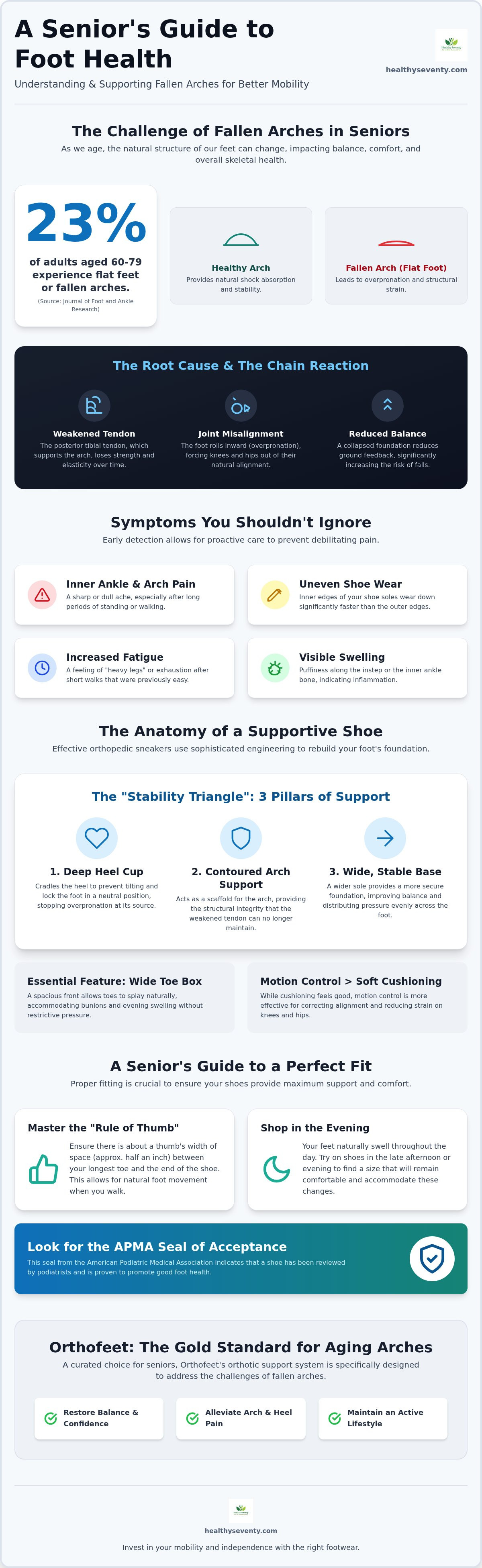
Did you know that nearly 23% of adults between the ages of 60 and 79 live with the daily challenges of flat feet? If you've felt a sharp, persistent pain in your heel or noticed that your balance feels a bit less certain than it used to, you aren't alone. These sensations often stem from the gradual collapse of the foot's natural structure, which can lead to misaligned joints and unnecessary strain on your knees and hips. Selecting the right orthopedic sneakers for fallen arches is about more than just cushioning; it's a vital step toward protecting your skeletal health and maintaining your independence.
It's understandable to feel frustrated when footwear that looks stylish fails to provide the medical support your body requires. You deserve to move through your 60s and 70s with vitality rather than hesitation. This guide will show you how the right footwear can alleviate arch pain and restore your natural gait. We'll examine the specific features that define high-quality orthopedic shoes, explain why the APMA Seal of Acceptance is such a critical benchmark for quality, and explore how modern designs offer a perfect blend of medical precision and curated style.
Table of Contents
Understanding Fallen Arches in Seniors: More Than Just Flat Feet
Have you noticed your footprint looks a bit wider lately, or perhaps that your feet feel heavier against the floor when you step out of bed? This isn't just a natural part of getting older; it's a clinical condition known as adult-acquired flatfoot. While many people are born with flat feet, seniors often experience a gradual collapse of the foot's structural integrity. According to research published in the Journal of Foot and Ankle Research, the prevalence of flat feet increases from 13.3% in middle age to over 23% for those aged 60 to 79. This shift can fundamentally change how you move, making the search for the right orthopedic sneakers for fallen arches a priority for your long-term wellness.
The health of your arch relies heavily on the posterior tibial tendon, a powerful cord of tissue that runs down the inside of your ankle. Its primary job is to hold up the arch and provide stability during each step. When this tendon weakens or becomes inflamed, the arch loses its support system. In the medical community, tendon insufficiency is recognized as the primary driver of senior arch collapse. As the arch descends, the foot begins to roll inward, a process called overpronation. This misalignment doesn't stay localized to your feet; it forces your knees to rotate and your hips to tilt, which often leads to persistent strain throughout your entire skeletal system.
Perhaps most importantly, fallen arches significantly impact your balance. Your feet are your primary sensors for the ground, and a collapsed arch reduces the stability of your foundation. This structural change is a documented contributor to an increased risk of falls among older adults. By choosing specialized orthopedic sneakers for fallen arches, you aren't just buying footwear; you're investing in a tool that realigns your body and restores your confidence in every step.
Why Arches Fall as We Age
Decades of movement naturally take a toll on the ligaments and tendons that keep your feet resilient. Over time, these tissues lose their elasticity, making it harder for the foot to "spring" back into place. Factors like weight fluctuations or chronic conditions such as arthritis can accelerate this process by placing additional stress on the midfoot joints. When these elements combine, the arch gradually yields to the pressure of daily activity, leading to the physical changes you might be noticing today.
Symptoms You Shouldn’t Ignore
Identifying the early signs of arch collapse allows you to take proactive steps before the pain becomes debilitating. Keep an eye out for these common indicators:
Inner Ankle Pain: Sharp or dull aching along the inside of the ankle and the bottom of the foot, especially after standing for long periods.
Uneven Shoe Wear: Check the soles of your current shoes; if the inner edges are significantly more worn down than the outer edges, you're likely overpronating.
Increased Fatigue: Feeling a sense of "heavy legs" or exhaustion after short walks that used to be easy.
Swelling: Visible puffiness along the instep or the inner ankle bone.
The Anatomy of Support: Key Features of Orthopedic Sneakers
How does a shoe actually "rebuild" the foundation of a collapsed foot? It isn't just about adding extra padding; it's about sophisticated engineering. The most effective orthopedic sneakers for fallen arches are built around the "Stability Triangle." This structural philosophy combines a contoured arch support, a deep heel cup, and a wide, stable base. Together, these three pillars work in harmony to provide the structural integrity that a weakened posterior tibial tendon can no longer maintain on its own. When your foot is cradled by this system, your entire body feels the difference in alignment from the ground up.
A firm heel counter is a critical, yet often overlooked, component of this support system. This is the stiff reinforcement at the back of the shoe that wraps around your heel. Its primary job is to lock the heel in a neutral, vertical position. By preventing the heel from tilting, it effectively stops the inward rolling motion of overpronation before it can cause a chain reaction of pain in your knees and hips. Pair this with a wide toe box, and you have a shoe that respects the natural changes of the aging foot. A spacious front end is essential for seniors who manage bunions or natural evening swelling, as it allows the toes to splay comfortably without restrictive pressure.
The Role of Anatomical Arch Supports
Anatomical arch supports are designed to act as a scaffold for your foot. Unlike generic foam inserts that simply compress under your weight, medical-grade supports are shaped to mimic the natural curve of a healthy arch. This precision redistributes pressure across the entire surface of the foot, rather than concentrating it on the heel and the ball of the foot. By filling the void created by arch collapse, these orthotics provide the necessary lift to keep your ankles and shins properly aligned during every step.
Midsole Technology and Shock Absorption
The midsole is where the "work" of shock absorption happens. For seniors, the choice of material is vital for preserving joint health. While EVA foam is prized for being lightweight and soft, denser polyurethane midsoles often provide the long-term "energy return" needed to reduce fatigue during longer walks. This focus on high-quality materials is a hallmark of the best walking sneakers for balance, ensuring that your footwear helps you stay active without the usual post-walk soreness. If you're ready to experience this level of curated support, the Orthofeet Orthopedic Walking Sneakers provide a specialized orthotic system that addresses these needs with professional-grade precision.
Stability vs. Cushioning: Finding the Right Balance
When you're shopping for new footwear, it's tempting to reach for the softest, most "pillowy" pair on the shelf. There's a common misconception that walking on a cloud is the best way to soothe aching feet. However, for those managing fallen arches, excessive softness can actually be a hindrance. While cushioning provides immediate comfort, it often lacks the structural integrity required to keep a collapsed arch from rolling too far inward. Finding the right orthopedic sneakers for fallen arches is about discovering the "sweet spot" where comfort meets a firm, reliable foundation.
Think of your shoes as the foundation of a house. If the ground is too soft, the structure begins to lean. Similarly, if your shoe is too flexible or overly cushioned, your ankle may wobble, leading to the very instability that causes trips and falls. For seniors, the goal is to find a shoe that offers "motion control." These designs are specifically engineered to limit excessive foot movement, providing a level of discipline that standard walking shoes simply don't have. By balancing a responsive midsole with a rigid frame, these sneakers help you maintain a steady, upright posture throughout the day.
The Problem with Excessive Cushioning
While a thick layer of foam might feel wonderful for the first few minutes, "pillowy" shoes can lead to significant ankle instability over time. When your foot sinks too deeply into a soft sole, your brain receives less feedback about the ground's surface. This lack of sensory input makes it harder to maintain your balance, especially on uneven sidewalks or plush carpets. A firmer foundation is necessary to support a collapsed arch because it provides a consistent platform that doesn't yield under the pressure of your body weight.
Motion Control and Overpronation
Motion control technology is the secret to managing the "rolling inward" motion of overpronation. This is often achieved through a medial post, which is a section of firmer foam located directly under the arch area. It acts as a gentle but persistent barrier that prevents the foot from collapsing mid-stride. Motion control technology aligns the ankle and shin, ensuring that every step follows a healthy, stable path. Additionally, look for shoes built on a "straight last." This means the shoe is shaped more like a rectangle than a curve, providing the extra surface area that flat feet need for maximum contact with the ground.
Sole flexibility also plays a major role in your walking gait. While some flexibility is good, many seniors benefit from a rigid "rocker" sole. This design gently tapers at the heel and toe, allowing your foot to roll through the walking motion with less effort from your joints. Finally, don't overlook the weight of the shoe. A sneaker that is too heavy can lead to rapid leg fatigue, while one that is too light may skip out on the essential support features you need. Aim for a lightweight, supportive model that keeps you moving with vitality well into your evening hours.
A Senior’s Guide to Fitting and Selecting Your Shoes
Finding the right orthopedic sneakers for fallen arches requires a different strategy than buying a pair of casual loafers. As we age, our feet tend to flatten and lengthen, often increasing by a half size or more over several decades. To get an accurate fit, always measure your feet in the late afternoon. This is when natural swelling is at its peak, ensuring your shoes won't feel constricting by dinner time. When you try them on, use the "Rule of Thumb." There should be about a half inch of space, or the width of your thumb, between your longest toe and the tip of the shoe. This prevents your toes from jamming against the front during downhill walks.
Don't just walk on the plush carpet of a shoe store or your living room during your trial period. Carpet absorbs impact and can mask a shoe's lack of stability. Instead, test your new footwear on hard surfaces like tile or hardwood. This gives you a true sense of how the midsole handles shock and whether the arch support remains firm under pressure. If you struggle with flexibility, evaluate the ease of entry. Many modern designs offer hands-free entry or adjustable straps that eliminate the need to bend over and struggle with traditional laces.
Managing Foot Volume and Swelling
For many seniors, foot volume fluctuates throughout the day due to circulation changes. Traditional laces can become tight and uncomfortable as swelling sets in, potentially restricting blood flow. Adjustable closures, such as Velcro straps or bungee cords, are far superior because they allow you to customize the tension in seconds. These features are a key part of non-invasive joint pain relief, as they prevent the foot from being squeezed. Additionally, ensure the shoe has removable insoles. This allows you to swap out factory padding for custom medical orthotics if your podiatrist recommends a bespoke solution.
The Importance of Width
A cramped toe box is a primary cause of secondary foot pain and can exacerbate the discomfort of a collapsed arch. You must distinguish between wide (2E) and extra-wide (4E) requirements to give your feet the space they deserve. If you feel pressure on the sides of your pinky toe or manage bunions, an extra-wide fit is often the best choice. To ensure the heel doesn't slip in a wider shoe, look for models with a padded collar and a deep heel cup. This keeps your foot secure while giving your toes the room they need to splay naturally. If you are ready to find your perfect fit, browse our curated selection of orthopedic sneakers for fallen arches to restore your comfort today.
Orthofeet: The Gold Standard for Aging Arches
When searching for the right orthopedic sneakers for fallen arches, you aren't just looking for a shoe; you're looking for a partner in your daily mobility. At Healthy Seventy, we've carefully curated Orthofeet as a primary recommendation because their engineering goes beyond basic comfort. Every pair is built with a specialized Orthotic Support System that works to realign the foot and body from the ground up. This isn't a one-size-fits-all approach. Instead, it's a sophisticated system designed to address the specific structural changes that occur in our 60s, 70s, and beyond. These sneakers combine medical precision with a modern aesthetic, proving that you don't have to sacrifice your personal style to enjoy genuine medical support.
The ergonomic sole is a standout feature, utilizing a mild rocker design that eases the walking motion. By gently propelling the foot forward, it reduces the strain on your midfoot joints and the posterior tibial tendon. This mechanical advantage is vital for seniors who find that walking has become more of a chore than a pleasure. With every step, the shoe absorbs impact and redistributes pressure, allowing you to stay on your feet longer without the looming threat of arch pain or fatigue. It's a thoughtful blend of science and wearability that helps restore a natural, confident gait.
Why Orthofeet Stands Out for Seniors
One of the most impressive aspects of this brand is the level of customization available right out of the box. Every pair includes multiple arch boosters that can be added or removed to create a bespoke fit. This is particularly helpful for seniors whose arch height may vary between the left and right foot. Beyond support, these shoes feature padded interior membranes made from soft, seam-free fabrics. This design protects sensitive skin from friction and pressure points, which is a critical consideration for those with fragile skin or circulation concerns. By improving your foundation, these sneakers also have a positive impact on your posture, helping you stand taller and move with greater stability.
Investing in Your Independence
Choosing high-quality footwear is a proactive investment in your long-term independence. When your feet are properly supported, you're less likely to require more invasive treatments or struggle with the secondary hip and knee pain caused by poor alignment. There's also a significant psychological benefit to wearing the right orthopedic sneakers for fallen arches. Walking without the fear of a sudden "twinge" or a loss of balance allows you to engage more fully with your community, whether that's a stroll through the park or a trip to the local market. If you're ready to reclaim your active lifestyle, explore our curated selection of Orthofeet sneakers and take the first step toward pain-free mobility.
Step Forward into a More Vibrant Future
Your journey toward pain-free mobility begins with the foundation you build today. We've explored how understanding the mechanics of your feet, from the "Stability Triangle" to the specific needs of the posterior tibial tendon, can transform your daily walks. By prioritizing motion control over excessive cushioning and ensuring a precise fit, you're doing more than just buying shoes; you're protecting your independence and long-term balance. Selecting high-quality orthopedic sneakers for fallen arches is a powerful act of self-care that pays dividends in every step you take.
You don't have to navigate this transition alone. Our curated collection features doctor-recommended Orthofeet technology, specifically engineered for the unique ergonomics of aging feet. To ensure your absolute comfort and peace of mind, we offer a 60-day wear test guarantee on selected styles. This allows you to experience the difference in your own home and on your own schedule. It's time to stop letting arch pain dictate your boundaries and start enjoying the vitality you deserve. Browse Our Expert-Curated Orthopedic Sneaker Collection and rediscover the joy of moving with confidence.
Frequently Asked Questions
Can orthopedic sneakers actually fix fallen arches permanently?
Orthopedic sneakers cannot permanently reverse a collapsed arch, but they provide the essential structural support needed to manage the condition effectively. By holding the foot in a neutral position, these shoes prevent further tendon strain and alleviate daily pain. Think of them as a reliable support system that allows you to remain active and independent without the need for more invasive medical interventions.
How do I know if I have fallen arches or just naturally flat feet?
Naturally flat feet are a lifelong structural trait, while fallen arches are a condition that develops later in life, often accompanied by new pain. If you've noticed your feet becoming wider or your ankles leaning inward over time, you're likely experiencing adult-acquired flatfoot. This change often results in increased fatigue and discomfort along the inner ankle that wasn't present in your younger years.
Are expensive orthopedic sneakers worth the investment for seniors?
Investing in high-quality orthopedic sneakers for fallen arches is a proactive step toward avoiding the high costs of fall-related injuries and chronic joint treatments. While the initial price may be higher than standard footwear, the specialized engineering protects your knees and hips from misalignment. It's a curated choice that prioritizes your long-term mobility and reduces the risk of balance-related accidents.
Can I use my custom orthotics in orthopedic sneakers?
You can absolutely use custom orthotics in most orthopedic sneakers, provided the shoe features a removable insole. This flexibility allows you to combine a professionally crafted insert with the superior stability and wide base of a medical-grade shoe. Always ensure the shoe's depth is sufficient to accommodate the extra volume of your custom prescription without cramping your toes or causing the heel to slip.
What is the difference between stability shoes and motion control shoes?
Stability shoes offer moderate support for mild overpronation, while motion control shoes provide a much firmer foundation for severe arch collapse. Motion control models typically feature a straighter shape and a denser medial post to stop the foot from rolling inward. For seniors with significantly fallen arches, motion control technology is often the better choice to ensure total skeletal alignment and improved balance.
How often should a senior replace their orthopedic walking shoes?
Most seniors should consider replacing their walking shoes every six to twelve months, or roughly every 300 to 500 miles of use. Even if the upper part of the shoe looks new, the internal support structures and shock-absorbing foams degrade over time. Once these materials lose their resilience, they can no longer provide the precise alignment your arches require to stay pain-free during your daily activities.
Do fallen arches cause pain in the knees and lower back?
Fallen arches are a frequent cause of referred pain in the knees, hips, and lower back due to the kinetic chain effect. When your foot collapses inward, it forces your lower leg to rotate, which puts an unnatural twist on the knee joint and tilts the pelvis. By correcting your foundation, you can often find significant relief for these secondary aches throughout your entire body.
Should I wear my orthopedic sneakers inside the house?
Wearing your orthopedic sneakers for fallen arches inside the house is highly recommended, especially if you have hard flooring like tile or wood. Walking barefoot on unforgiving surfaces provides zero support for a collapsed arch, which can lead to inflammation and morning heel pain. Dedicated indoor-only orthopedic shoes ensure your feet remain protected and aligned from the moment you step out of bed.


Comments