
Posture Correction for Seniors: 2026 Guide
- healthyseventy3
- 4 days ago
- 13 min read
Updated: 10 hours ago

What if the "stoop" we often associate with aging wasn't an inevitable sentence, but a physical habit you could actually unlearn? It's deeply frustrating when a simple walk to the park is overshadowed by a nagging ache in your neck or the constant fear that your balance might fail you. You deserve to look in the mirror and see the same tall, confident person you've always been. This 2026 guide to posture correction for seniors is here to show you that reclaiming your height and your independence is entirely possible through proactive care.
We understand that maintaining vitality requires a thoughtful, multi-dimensional approach. In this article, you'll discover how to blend expert-backed exercises with modern technology, such as the VOCIC Upright Walker, to support your spine's natural alignment. We'll also discuss how foundational tools like Orthofeet sneakers and the relaxing heat of an infrared sauna can play a vital role in your recovery. From reducing chronic pain to improving your breathing, we'll guide you through the latest strategies to ensure you stay mobile and upright for years to come.
Table of Contents
Understanding Posture and Why Alignment Matters for Senior Longevity
Posture is far more than a static pose or a way of standing for a photograph. It's a continuous, active dialogue between your bones, muscles, and the constant pull of gravity. For many, the journey toward effective posture correction for seniors begins with recognizing that alignment is the foundation of every movement you make. When your body is stacked correctly, gravity becomes a partner that provides stability rather than a burden that weighs you down.
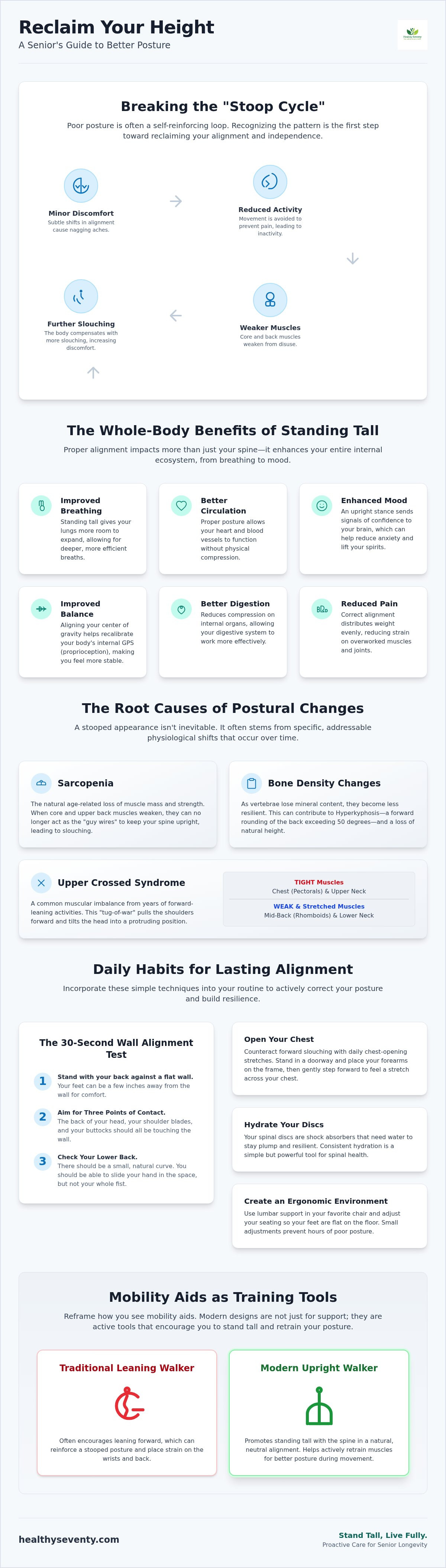
Without intentional care, it's easy to fall into what experts call the "Stoop Cycle." This happens when subtle shifts in alignment cause minor discomfort, leading you to move less to avoid pain. This inactivity weakens the core and back muscles meant to support you, which causes further slouching and more discomfort. It's a self-reinforcing loop that can diminish your independence if left unchecked, but it's a cycle that can be broken with the right tools and habits.
Proper alignment isn't just about your back; it affects your entire internal ecosystem. When you hunch forward, you physically compress your internal organs. This can lead to shallower breathing as lung capacity is restricted, sluggish digestion, and even hindered circulation. Standing tall literally gives your heart, lungs, and stomach the room they need to function at their best. It's a simple change that yields profound benefits for your overall health.
As we age, our "proprioception," or our body's internal GPS, can become less precise. This sense tells us where our limbs are in space without us having to look at them. Research into Aging movement control shows that these sensory changes can make balance feel more precarious. Improving your posture helps recalibrate this internal system. By aligning your center of gravity, you make every step feel more secure and predictable.
The Anatomy of Aging: Kyphosis and Bone Density
Hyperkyphosis is a common concern that often stems from a combination of muscle weakness and changes in bone density. As vertebrae lose mineral content, they can become less resilient to the pressure of daily life. Kyphosis is the forward rounding of the back exceeding 50 degrees. Engaging in posture correction for seniors involves protecting the structural integrity of your spine through weight-bearing movements and ergonomic supports. By focusing on bone health, you can maintain your natural height and protect your spinal cord from unnecessary strain.
Emotional and Social Benefits of Standing Tall
There's a powerful psychological feedback loop between how you hold your body and how you feel. When you stand upright, your brain receives signals of confidence and safety, which can naturally lift your mood and reduce feelings of anxiety. This isn't about vanity; it's about how you project your spirit to the world. A tall, open posture invites social engagement and helps you feel more present in your community. Think of your posture as a reflection of your current vitality and a proactive choice to embrace your legacy with clarity and strength.
Common Causes of Postural Changes in Older Adults
Many people assume that a stooped appearance is simply an unavoidable part of getting older. In reality, these changes often stem from specific, addressable physiological shifts. One of the primary drivers is sarcopenia, which is the natural loss of muscle mass and strength. When the core and upper back muscles lose their tone, they can no longer act as the sturdy "guy wires" that keep your spine upright. This makes posture correction for seniors less about "trying harder" and more about rebuilding the specific muscle groups that support your frame.
Another frequent culprit is Upper Crossed Syndrome. This condition occurs when a specific imbalance develops in the upper body. The chest muscles become tight and shortened from years of forward-leaning activities, while the muscles in the middle of the back become overstretched and weak. This muscular tug-of-war pulls the shoulders forward and tilts the head into a protruding position. Experts often suggest simple stretches to Fix your posture, but identifying this specific imbalance is the first step toward a lasting solution.
Past injuries or surgeries also play a significant role in how you stand today. If you've spent years favoring a weak knee or a stiff hip, your body has likely developed compensatory movement patterns. These "shortcuts" might have helped you avoid pain initially, but they often throw the pelvis and spine out of alignment. Over time, these habits become baked into your nervous system. Combining targeted movement with consistent awareness is essential for unlearning these patterns and reclaiming your natural stature.
The "Modern Senior" and Tech Neck
In 2026, seniors are more digitally connected than ever. Whether you're video calling grandchildren on a tablet or reading the news on a smartphone, these devices often lead to "tech neck." This happens when you tilt your head down for extended periods, placing immense pressure on the cervical spine. To prevent this, try holding your device at eye level. We recommend taking a "posture break" every 20 minutes to gently roll your shoulders and reset your gaze on the horizon.
Foundational Stability: How Foot Health Affects the Spine
Your spine's alignment actually begins at your feet. If your arches have fallen or if you're wearing unsupportive shoes, it creates a kinetic chain reaction that travels upward. Poor foot support forces your knees to turn inward and your pelvis to tilt, making it nearly impossible to maintain an upright back. Choosing stable footwear, such as Orthofeet Orthopedic Walking Sneakers, provides the firm, cushioned base your body needs. When your feet are properly aligned, your pelvis can sit in a neutral position, which naturally eases the strain on your lower back. Exploring the curated resources at Healthy Seventy can help you find the right foundational tools to support your posture correction for seniors journey.
Essential Daily Techniques for Correcting Alignment
Reclaiming your posture doesn't require grueling hours at a gym. Instead, it's about consistent, gentle reminders that help your body remember its natural center. A simple way to start each morning is with the "Wall Alignment Test." Stand with your back against a flat wall, aiming to have your heels, buttocks, shoulder blades, and the back of your head making contact. Don't be discouraged if your head or shoulders don't quite reach yet. This 30-second check-in serves as a vital baseline for posture correction for seniors, helping you visualize the path toward a neutral spine.
Beyond this daily test, integrating "micro-movements" into your routine prevents the stiffness that often leads to a slouch. If you've been sitting for 20 minutes, take a moment to simply roll your shoulders back or reach for the ceiling. These small bursts of activity keep your joints lubricated and your muscles engaged. The NIH on Posture in Older Adults highlights that even these brief adjustments can improve balance and reduce the risk of falls by keeping your center of gravity stable.
Safe and Effective Exercises for Every Level
Targeted movements help retrain the muscle groups we identified earlier as being prone to imbalance. The Wall Angel is a scapular squeeze exercise performed against a flat vertical surface. To perform it, keep your back against the wall while slowly sliding your arms up and down like you're making a snow angel. This strengthens the upper back and opens the chest. For those who prefer to remain seated, pelvic tilts are excellent for lower back health. Simply sit tall and gently arch your back, then round it, focusing on the movement of your hips. Finally, chin tucks are a powerful way to reverse "tech neck" by strengthening the deep flexors of the neck. Draw your chin straight back, as if making a double chin, without tilting your head up or down.
The Role of Heat Therapy in Muscle Readiness
Have you ever noticed how much more pliable your body feels after a warm bath? Warming your muscles before stretching is a proactive way to prevent strain and improve your range of motion. Using a Home Infrared Sauna provides deep, penetrating heat that relaxes tight tissues, making your posture correction for seniors exercises much more effective. We suggest a simple "Heat-Stretch-Move" routine: spend 15 minutes in the soothing warmth of a sauna, follow it with your chest-opening stretches, and finish with a short, brisk walk. This sequence ensures your muscles are prepared, flexible, and ready to support your upright frame throughout the day.
Modern Mobility Aids as Postural Training Tools
Mobility aids are often misunderstood as mere signs of decline. In reality, they're active supports that can be a central part of your strategy for posture correction for seniors. Traditional rollators often require you to lean forward and look down at your feet, which unintentionally reinforces the "Stoop Cycle" we discussed earlier. Modern designs, however, shift the focus upward. By using aids that support your forearms, you redistribute your weight through your core and back rather than putting all the pressure on your wrists and shoulders.
Height adjustability is another critical feature that shouldn't be overlooked. When a device is set to your specific proportions, it encourages a natural, forward-facing gaze. This alignment is essential for keeping your cervical spine in a neutral position. Instead of hunching over a low frame, you can walk with your head held high, looking toward your destination rather than your toes. It's about choosing tools that work with your body's natural mechanics to keep you tall and confident.
The VOCIC Upright Walker: Standing Tall while Moving
The upright walker by VOCIC is specifically engineered to address these postural needs. Its design allows you to stand within the frame rather than behind it, which provides a significant proprioceptive advantage. You feel more secure and balanced when your center of gravity is supported from all sides. The ergonomic armrests take the strain off your upper body, making it easier to maintain a tall stance for longer periods. This isn't just about getting from point A to point B; it's about training your body to remain upright while in motion. By keeping your gaze level with the horizon, you're actively practicing posture correction for seniors with every step you take.
Choosing the Right Aid for Your Posture Goals
Deciding between a traditional rollator and an upright walker depends on your specific lifestyle and physical goals. If your primary focus is spinal health and rebuilding confidence in public, an upright design is often the superior choice. However, fatigue is a major contributor to poor posture. If you're planning a longer outing, a foldable mobility scooter can be a wise addition to your wellness toolkit. Using a scooter for distance prevents the fatigue-based slouching that happens when your muscles tire out. When selecting a device, use this checklist for ergonomic support:
Seat Height: Ensure it allows your feet to rest flat on the ground for proper pelvic alignment.
Handle Grip: Look for padded, non-slip surfaces to reduce joint pressure in the hands and wrists.
Frame Width: It should be narrow enough for home use but wide enough to provide a stable, secure base.
To see how these tools can transform your daily walks and support your long-term mobility, explore our curated selection of mobility aids for seniors.
Creating a Holistic Environment for Lasting Postural Health
Your physical environment acts as a silent partner in your journey toward better alignment. Even the most dedicated efforts in posture correction for seniors can be undermined if your home setup encourages a slouch. Think about where you spend most of your time. Is your favorite reading chair supportive, or do you sink so far into it that your chin naturally drops to your chest? Simple modifications, such as raising your computer monitor to eye level or adding a lumbar roll to your dining chairs, can make a world of difference. These adjustments ensure that standing tall becomes your body's easiest option rather than a constant struggle against your surroundings.
Sleep is another critical window for spinal health. During the night, your body works to repair tissues and decompress the spine. If your mattress is too soft, your pelvis can sink, throwing your lower back out of alignment for hours at a time. Aim for a mattress that offers medium-firm support and a pillow that keeps your neck in a neutral position, level with your shoulders. When you wake up without that familiar morning stiffness, you'll find it much easier to engage in the stretches and movements that keep you mobile throughout the day.
Nutrition also plays a foundational role in maintaining your height and structural integrity. Bones require a steady supply of Calcium and Magnesium to remain dense and resilient, while Vitamin D is essential for absorbing these minerals. As we've discussed, protecting bone density is a proactive way to prevent the vertebral changes that lead to a rounded back. By nourishing your frame from the inside out, you provide the strength your muscles need to keep you upright and confident.
Spinal Hydration and Pure Water
One of the most overlooked aspects of spinal health is hydration. Your intervertebral discs are largely composed of water, acting as fluid-filled shock absorbers that protect your vertebrae. When you're dehydrated, these discs can become thin and less effective, leading to discomfort and reduced height. Because the thirst reflex can diminish as we age, it's vital to make drinking water a conscious habit. Utilizing senior friendly water filtration systems ensures that the water you drink is pure and easily accessible, removing any barriers to staying hydrated.
Try following a gentle hydration schedule to keep your discs plump and resilient:
Morning: Drink a full glass of water immediately upon waking to rehydrate after sleep.
Mid-Day: Keep a bottle nearby during your morning walk or household activities.
Afternoon: Have a glass with a light snack to maintain energy and focus.
Evening: Sip slowly throughout the evening, tapering off before bed to ensure restful sleep.
Building a Posture-First Daily Ritual
True posture correction for seniors isn't a one-time fix; it's a lifestyle built on small, supportive rituals. From your morning "Wall Angel" stretches to the way you use your upright walker for stability, every choice adds up to a more vibrant, independent version of yourself. You don't have to navigate these changes in isolation. We invite you to join the Healthy Seventy community, where you can find shared wisdom, accountability, and encouragement from others on the same path. Start with just one small change today, like adjusting your chair or drinking an extra glass of water, to protect your mobility and your legacy for years to come.
Embrace Your Tallest Self and Reclaim Your Independence
Your journey toward better health doesn't have to be a solo endeavor or a clinical struggle. By integrating the daily exercises and environmental adjustments we've discussed, you're choosing a path of proactive vitality. Effective posture correction for seniors is truly a holistic process, combining the strength of your own movement with the support of expertly designed tools. Whether you're refining your home ergonomics or staying hydrated to protect your spinal discs, every small choice helps you stand taller and breathe easier.
At Healthy Seventy, our mission is to act as your knowledgeable mentor, offering solutions curated by wellness experts who value your legacy. We focus on non-invasive, proactive health to ensure you remain the author of your own story. If you're ready to transform your daily walks into a posture-building ritual, Explore the VOCIC Upright Walker for better posture and independence. With national shipping available on all our mobility aids, your next step toward a more confident future is closer than you think. You have the wisdom and the tools; now it's time to rise to the occasion.
Common Questions About Senior Postural Health
Is it possible to correct my posture after age 70?
Yes, it's absolutely possible to see improvements in your alignment regardless of your age. Your muscles and connective tissues remain adaptable throughout your life, meaning you can retrain them to support a more upright frame. While changes may take longer than they did in your younger years, consistent practice of posture correction for seniors can lead to reduced pain and better balance. It's about progress, not perfection, as you reclaim your natural vitality.
How long does it take to see results from posture exercises?
You may begin to feel a difference in your comfort levels within just a few weeks of consistent movement. However, visible changes in your standing alignment typically take four to eight weeks of dedicated practice. This timeline allows your muscles to strengthen and your nervous system to adopt new habits. Remember that years of postural habits won't disappear overnight. Patience and a steady routine are your best partners in this journey toward standing taller.
Are posture corrector braces safe for seniors with osteoporosis?
You should exercise caution with restrictive braces if you have osteoporosis, as they can sometimes lead to further muscle weakness if used excessively. These devices often do the work your muscles should be doing, which might cause your core to rely on the brace rather than its own strength. It's much safer to focus on active supports and exercises that build bone and muscle resilience. Always discuss any new wearable device with your healthcare provider first.
Can an upright walker actually help fix a hunched back?
An upright walker serves as a proactive training tool that encourages you to look forward rather than down at your feet. By supporting your weight through your forearms, it helps open your chest and align your spine while you move. This design prevents the leaning habit common with traditional walkers. Over time, walking in this taller position helps reinforce better habits, making it a valuable part of posture correction for seniors.
What is the best sleeping position for senior spinal health?
Sleeping on your back with a small pillow tucked under your knees is often considered the best position for maintaining a neutral spine. This setup helps preserve the natural curve of your lower back and reduces pressure on your discs. If you prefer sleeping on your side, place a pillow between your knees to keep your hips aligned. Avoid sleeping on your stomach, as this can strain your neck and pull your spine out of alignment.
How does dehydration affect my posture and back pain?
Dehydration directly impacts the fluid filled discs between your vertebrae, which act as your body's natural shock absorbers. When these discs lose water, they become thinner and less resilient, leading to spinal compression and increased back pain. This physical shrinking can make it much harder to maintain an upright posture. Staying consistently hydrated ensures these discs remain plump, providing the cushioning your spine needs to stay flexible and pain free throughout the day.
Do I need to see a doctor before starting a posture correction routine?
It's always a wise choice to consult with your physician or a physical therapist before beginning a new exercise regimen. This is especially important if you're experiencing sharp pain, numbness, or have been diagnosed with conditions like severe osteoporosis or spinal stenosis. A professional can provide a personalized assessment to ensure the movements you choose are safe for your specific needs. They can help you tailor your routine to maximize benefits while minimizing any risk.
Can poor posture cause breathing difficulties in older adults?
Poor posture can significantly impact your breathing by physically compressing your ribcage and restricting the movement of your diaphragm. When you hunch forward, your lungs don't have the space they need to expand fully, which can lead to shallower breaths and reduced oxygen intake. Correcting your alignment opens up your chest cavity, allowing for deeper, more efficient breathing. You'll likely find that standing taller naturally makes you feel more energized and less winded during daily activities.


Comments