


Shockwave Therapy for Plantar Fasciitis: A Senior's Guide to Non-Invasive Relief
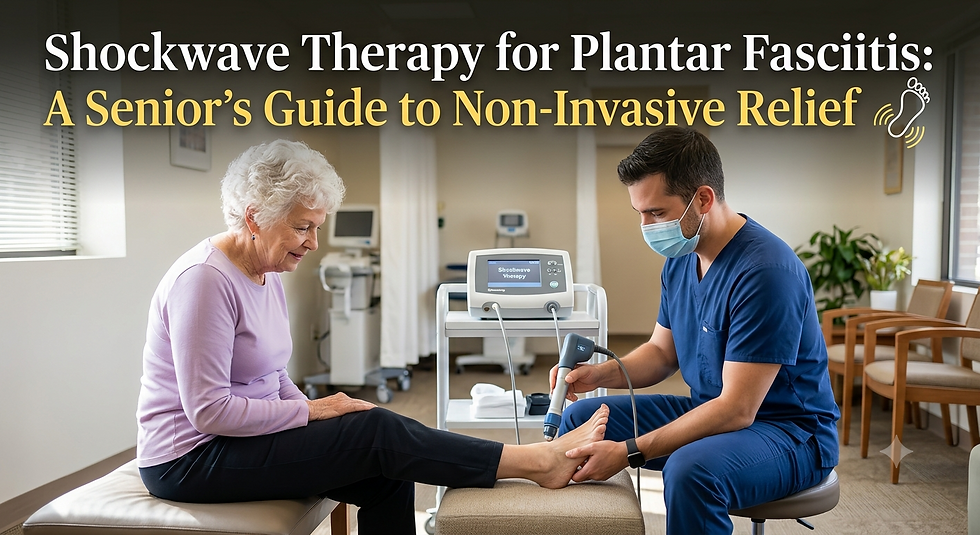
What if the sharp, stabbing pain that greets you every morning isn't an inevitable part of aging, but a signal that your body simply needs a cellular jumpstart? If you've spent months dreading those first few steps out of bed or cutting your daily walks short, you're certainly not alone. Many seniors find that traditional remedies like rest or ibuprofen offer only fleeting relief. This is where shockwave therapy for plantar fasciitis enters the conversation as a sophisticated, non-invasive alternative. It's a technology designed to bridge the gap between temporary fixes and the lasting mobility you deserve.
We understand the desire to maintain your independence without the risks of surgery or the discomfort of needles. In this guide, you'll discover how advanced sound waves can eliminate chronic heel pain and restore your natural stride. We will explore the impressive success rates that reach as high as 85 percent for many patients. You'll also learn about the significant 2026 Medicare coverage updates and gain clarity on whether an at-home device is a reliable choice for your wellness journey. It's time to stop managing the pain and start reclaiming your active lifestyle.
Key Takeaways
Understand how acoustic energy triggers a natural healing response to repair chronic tissue degeneration rather than just masking inflammation.
Learn why shockwave therapy for plantar fasciitis is often the most effective solution for those who've managed persistent heel pain for over six months.
Compare the immediate intensity of clinical sessions against the privacy and long-term savings offered by quality at-home technology.
Identify important safety considerations and contraindications, such as pacemakers or certain medications, before beginning your treatment.
Discover the essential steps to confirm your diagnosis and select the healing path that best supports your personal mobility goals.
Table of Contents
Understanding Shockwave Therapy for Senior Foot Health
For many years, the standard advice for heel pain was simply to rest and apply ice. While that might work for a teenager with a temporary sports injury, senior feet require a more specialized approach. Extracorporeal shockwave therapy, or ESWT, is a medical breakthrough that uses high-energy acoustic waves to stimulate the body's natural healing processes. It's a technology that has evolved significantly since its inception. Originally developed in the 1980s as a way to break up kidney stones without surgery, doctors soon noticed a fascinating side effect. These sound waves also promoted tissue regeneration and bone healing in the surrounding areas.
Today, shockwave therapy for plantar fasciitis has become a gold standard for those seeking to avoid the risks of invasive surgery or the temporary relief of corticosteroid injections. For a senior, this technology is particularly vital. It doesn't just mask the pain. Instead, it addresses the underlying tissue damage. By sending targeted pulses into the heel, the therapy encourages the body to restart its own repair mechanisms, which often slow down as we get older. It's a proactive way to maintain your vitality without the downtime required by more aggressive medical interventions.
What is Plantar Fasciitis in the Later Years?
The plantar fascia is a thick, resilient band of tissue that acts as the primary shock absorber for your foot's arch. As we age, this ligament naturally loses some of its moisture and elasticity. This change makes it far more susceptible to micro-tears during everyday activities like morning walks or gardening. In many seniors, the condition evolves from simple, acute inflammation into something called "fasciosis." This is a chronic degeneration of the tissue rather than a temporary swell. Understanding this distinction is key. You aren't just dealing with a "strained" foot; you're dealing with tissue that needs a focused signal to begin rebuilding itself.
Why Traditional Fixes Often Fail for Over-60s
Why do standard treatments often fall short as we get older? It usually comes down to a slower regenerative cycle and the unique health considerations of the 60+ demographic. Consider these common hurdles:
Slower Metabolism: Your body's natural repair speed decreases over time. A "wait and see" approach often leads to months of unnecessary immobility.
NSAID Risks: Long-term use of anti-inflammatory drugs like ibuprofen can pose serious risks to senior digestive systems and heart health.
The Steroid Rebound: While cortisone shots provide immediate relief, they can actually weaken aging ligaments over time. This increases the risk of a full rupture, which is a setback nobody wants.
By choosing shockwave therapy for plantar fasciitis, you are opting for a path that respects your body's long-term integrity while providing a clear route back to the activities you love.
The Science of Sound: How ESWT Heals Plantar Fasciitis
How can sound waves, which you can't even see, fix a physical problem in your heel? It might feel like magic, but the science behind shockwave therapy for plantar fasciitis is remarkably logical. When these acoustic pulses travel through your skin, they create what doctors call "therapeutic microtrauma." This isn't damage in the traditional sense. Instead, it's a precise, controlled signal that tricks your body into thinking a new injury has occurred. For a senior whose healing response has grown quiet or "stale," this signal is exactly what's needed to wake up the immune system and restart the repair cycle.
One of the most significant benefits for aging feet is the process of neovascularization. Neovascularization is the formation of new blood vessels to nourish damaged tissue. Because the plantar fascia has a naturally poor blood supply, it often struggles to heal on its own as we get older. By stimulating these new pathways, the therapy delivers fresh oxygen and nutrients directly to the site of the pain. Research into the effectiveness of shock wave therapy shows that this increased circulation is a primary reason why patients experience long-term relief rather than a temporary mask.
Radial vs. Focused Shockwaves: Which Do You Need?
Are all shockwaves the same? Not quite. Radial waves spread out like a pebble dropped in a pond, making them excellent for treating broad areas of muscle tension and surface-level discomfort. In contrast, focused waves are like a laser beam, penetrating deep into the heel to target chronic, stubborn injuries. Many modern clinical protocols now combine both types to ensure every layer of tissue is addressed. If you are exploring a shockwave therapy device for pain relief to use at home, you'll typically find radial technology, which offers a safe and steady way to manage symptoms from the comfort of your favorite chair.
The Biological 'Jumpstart' Effect
Beyond blood flow, these sound waves act as a biological hammer against painful calcifications or bone spurs. They help soften these deposits, making them easier for the body to reabsorb. Simultaneously, the mechanical pressure causes the release of growth factors that specifically repair aging collagen. You may even feel immediate relief because the pulses overstimulate nerve endings and reduce Substance P, which is a chemical your body uses to transmit pain signals. It's a multi-layered approach that respects the complexity of your health and your desire for a swift return to mobility.
Professional vs. At-Home Shockwave Therapy: Comparing Your Options
Choosing how to receive your treatment is a personal decision that depends on your lifestyle, mobility, and long-term health goals. Clinical shockwave therapy for plantar fasciitis is well-regarded for its high-intensity pulses. These sessions are powerful and typically require fewer total visits to achieve results because of the concentrated energy levels used by specialists. However, for many seniors, the logistics of coordinating transportation to a clinic and the cumulative expense of multiple professional appointments can be significant hurdles. It's a path that offers expert supervision but demands more of your time and physical energy.
Modern technology has made it possible to bring this relief directly into your living room. At-home devices operate at a lower intensity, which often feels more comfortable for sensitive or thinning skin. While you may need to use a home device more frequently to achieve the same "dose" of healing energy found in a clinic, the convenience is unmatched. You can treat your heel while watching the evening news or enjoying a quiet morning. For those on a fixed income, investing once in a quality device often proves more economical than paying for a long series of specialist visits. This consistency can be just as effective as high-power clinical sessions over time.
What to Look for in a Home Shockwave Device
When selecting a device for personal use, comfort and safety should be your top priorities. Look for models with adjustable intensity levels so you can start gently and increase the power as your comfort grows. Ergonomics are equally important. If you manage arthritis in your hands, a device with a comfortable, non-slip handle is essential for ease of use. Always verify that the equipment has the necessary safety certifications and FDA clearance. We often recommend the Shockwave Therapy Device for Pain Relief because it is thoughtfully designed to be both effective and approachable for seniors seeking a reliable home solution.
The Clinical Experience: What to Expect at the Doctor
If you choose the professional route, the process is straightforward and predictable. A specialist will apply a cooling ultrasound gel to your heel to help the sound waves travel efficiently into the tissue. Each session usually lasts between 15 and 20 minutes. You won't feel sharp pain. Instead, most patients describe the sensation as a series of small, rhythmic pulses or a light tapping against the skin. It is a methodical procedure designed to be as stress-free as possible while delivering the concentrated energy your body needs to heal. Whether you choose the clinic or your own home, the goal remains the same: a return to the activities that bring you joy.

Is Shockwave Therapy Right for You? Candidacy and Expectations
Determining whether you are a good candidate for this technology often comes down to what clinicians call the "Rule of Six." If you have been struggling with sharp heel pain for more than six months, your condition has likely transitioned from a temporary strain to a chronic state. At this stage, your body's natural inflammatory response has quieted down, leaving the tissue in a state of stagnation. This is precisely when shockwave therapy for plantar fasciitis is most effective. It provides the necessary stimulus to restart a healing process that has otherwise stalled.
While the technology is remarkably safe, there are specific health factors that require a thoughtful approach. Because the pulses stimulate blood flow and cellular activity, certain conditions are considered contraindications. If you are currently taking prescription blood thinners, have a pacemaker, or are managing an active infection in the foot, this treatment may not be suitable for you. We always encourage a quick conversation with your healthcare provider to ensure your unique medical history aligns with this path. Transparency about your medications and existing devices ensures your journey toward relief is both safe and effective.
Success Rates in the Senior Demographic
The data surrounding this treatment is highly encouraging for those in their later years. Clinical studies generally report success rates ranging from 60% to 85% for patients with chronic symptoms. Most individuals see a 30% to 60% reduction in their pain scores within the first 6 to 12 weeks of starting treatment. It is important to remember that healing is a marathon, not a sprint. You likely won't feel 100% better after a single session. Consistency is the primary factor in achieving these results, especially for those using a Shockwave Therapy Device for Pain Relief at home. Your goal is a steady, cumulative improvement that eventually allows for a walk in the park without a limp.
Safety and Side Effects for Older Adults
Safety is a paramount concern for our community, and fortunately, the side effects of this therapy are minimal and temporary. You might experience slight redness, minor swelling, or a brief period of numbness in the treated area. These reactions typically resolve within 24 to 48 hours. ESWT does not damage healthy tissue but specifically targets areas of different density. This makes it a much safer long-term option than repetitive steroid injections, which can eventually lead to the thinning of the protective fat pad on your heel. By choosing this non-invasive route, you are protecting the structural integrity of your feet while inviting the body to repair itself naturally.
Active recovery is the final piece of the puzzle. After a session, we don't recommend total bed rest. Instead, engaging in gentle, pain-free movement helps circulate the growth factors released during treatment. It's about finding that perfect balance between giving your feet the stimulus they need and the grace they deserve to mend.
A Step Toward Pain-Free Living: Implementing Your Recovery Plan
Starting your journey to recovery is an act of self-care that honors both your history and your future vitality. While the science of shockwave therapy for plantar fasciitis is impressive, the results truly shine when you integrate the treatment into a thoughtful, holistic routine. You've already learned how these sound waves jumpstart your cellular repair; now it's time to map out the practical steps to reclaim your morning walks and daily independence.
Your first step should always be a consultation with a foot specialist to confirm your diagnosis. It's important to ensure your heel pain isn't caused by a stress fracture or a different nerve issue. Once you have clarity, you can choose the path that best fits your lifestyle. Whether you prefer the supervised intensity of clinical sessions or the privacy of a high-quality at-home device, your commitment to the process is what creates lasting change. Consistency is the bridge between temporary relief and a permanent return to mobility.
Supportive equipment is a vital partner in this process. We strongly recommend pairing your therapy with the best walking sneakers for balance to ensure your arches remain protected and your gait stays stable. This specialized footwear helps prevent new micro-tears while your ligaments are in their sensitive repair phase. As you progress, monitor your comfort levels closely. If you're using a home device, start with a gentle setting and only increase the intensity as your tissue becomes more resilient. Your body's feedback is the most reliable guide for a safe and steady recovery.
Complementary Therapies for Maximum Relief
Healing rarely happens in a vacuum, and shockwave therapy works best when supported by other healthy habits. Integrating gentle calf stretches into your morning routine can prevent the tightness that often pulls on the plantar fascia. These simple movements fit perfectly within a broader framework of non invasive joint pain relief strategies that prioritize your long-term wellness. Some seniors also find that using a night splint helps keep the ligament elongated, significantly reducing the sharpness of those first few steps out of bed.
Maintaining Your Vitality Post-Treatment
As your pain begins to fade, it's natural to feel a surge of excitement. However, we encourage a gradual return to your favorite activities. Don't rush back to long hikes or strenuous gardening immediately. Instead, start with short, leisurely strolls on flat, even surfaces. Maintaining consistent arch support in every pair of shoes you own will help prevent the recurrence of symptoms. You have spent a lifetime building your legacy and staying active; you deserve to move through this world with grace and without the burden of chronic pain.
Reclaiming Your Active Lifestyle
Your journey toward pain-free movement is closer than it feels. By understanding the benefits of shockwave therapy for plantar fasciitis, you've taken the most important step toward reclaiming your natural stride. We have explored how acoustic energy provides a biological jumpstart for chronic heel pain; it is a signal that tells your body it's time to heal. Whether you decide on professional clinical sessions or the comfort of a home routine, you now have the knowledge to choose the path that best supports your vitality.
You don't have to accept sharp heel pain as a permanent companion. If you're ready to take the next step toward a life without a limp, Explore our curated Shockwave Therapy Device for Pain Relief. Our device is expert-vetted for senior safety and serves as a powerful, non-invasive alternative to surgery. With our 30-day mobility guarantee, you can begin your recovery with complete confidence. You've spent a lifetime caring for others; it's finally time to prioritize your own comfort and independence. We're here to support every step of your journey back to the activities you love.
Frequently Asked Questions
Does shockwave therapy for plantar fasciitis actually hurt?
Most patients describe the sensation as a series of small, rhythmic pulses or a light tapping against the skin rather than sharp pain. While the intensity can be adjusted based on your comfort level, you might feel a mild ache during the procedure. This sensation is a helpful sign that the acoustic waves are reaching the targeted tissue to stimulate a natural healing response. Any post-treatment soreness typically fades within twenty-four hours.
How many sessions of shockwave therapy will I need before I feel a difference?
A standard course of treatment typically consists of 3 to 5 sessions spaced about a week apart. While many individuals report a noticeable reduction in pain after just one or two visits, the full biological benefits of shockwave therapy for plantar fasciitis often take 6 to 12 weeks to manifest. Your body needs this time to build new blood vessels and repair damaged collagen fibers effectively for long-term relief.
Is shockwave therapy covered by Medicare or private insurance in 2026?
As of January 2026, Medicare began covering up to 10 sessions of this therapy for patients with chronic plantar fasciitis. Coverage among private insurance companies remains inconsistent, as some still classify the procedure as investigational. We recommend contacting your specific provider to confirm your benefits and determine if you've met the requirement for trying conservative treatments, such as stretching or orthotics, for at least six months first.
Can I use an at-home shockwave device if I have a heart condition or pacemaker?
You should not use a shockwave device if you have a pacemaker or an implanted heart rhythm device. The acoustic pulses can potentially interfere with the electronic signals of these life-sustaining tools. If you have a general heart condition but no implanted device, it is still essential to consult with your cardiologist before beginning any new therapeutic protocol to ensure it is safe for your specific health profile.
What is the difference between shockwave therapy and ultrasound therapy?
Ultrasound therapy uses high-frequency sound waves to create deep heat and increase blood flow in soft tissues. In contrast, shockwave therapy delivers high-energy acoustic pulses that create controlled microtrauma to restart the healing process in chronic injuries. While ultrasound is often used for acute strains, shockwave is specifically designed to address stubborn degeneration and even help the body break down painful calcifications or bone spurs.
What happens if shockwave therapy doesn't work for my heel pain?
While this therapy has a high success rate ranging from 60% to 85%, it may not resolve every case of heel pain. If you don't experience relief after a full course of treatment, your specialist might recommend advanced orthotics, physical therapy, or other non-invasive strategies. It's important to rule out other potential causes, such as nerve entrapment or stress fractures, if your symptoms persist after the protocol.
Can I walk normally immediately after a shockwave treatment session?
Yes, you can typically walk and resume light daily activities immediately following a session. Most clinicians recommend weight-bearing as tolerated, which means you should listen to your body and avoid heavy impact or long hikes for the first 24 to 48 hours. This brief period of relative rest allows the initial healing response triggered by the therapy to begin the repair process without added physical stress.
Is shockwave therapy safe for seniors with osteoporosis or thinning skin?
Shockwave therapy is generally safe for seniors with osteoporosis because it targets the soft tissue and ligaments rather than the bone structure itself. For those with thinning skin, at-home devices with adjustable intensity are particularly beneficial. These tools allow you to start with a very gentle setting to ensure the skin remains comfortable while still delivering effective healing energy to the underlying plantar fascia ligament.


Comments