
Aging in Place Technology: The 2026 Guide to Independent Living
- healthyseventy3
- 4 hours ago
- 12 min read
What if the very walls of your home could do more than just provide shelter? Imagine a living space that doesn't just hold your memories, but actively protects your future through thoughtful aging in place technology. You likely value your independence above all else, yet it's natural to feel a sense of unease about the challenges that come with the passing years. Whether it's the quiet worry of falling while alone or the frustration of a staircase that feels steeper than it used to, these concerns are valid and deeply personal.
The good news is that 2026 marks a turning point in our ability to thrive at home. It's no longer about cold, clinical gadgets that feel intrusive or overwhelming. Instead, modern advancements are designed to be invisible threads of support that weave seamlessly into your daily rhythm. This guide will show you how to transform your home into a safe, empowering sanctuary that restores your physical freedom and peace of mind. We'll explore the latest innovations in mobility, safety, and wellness, ensuring you stay connected to the world and comfortable in your own skin for years to come.
Table of Contents
Evolution of Independence: Aging in Place Tech in 2026
Traditionally, many people thought of technology in the home as a series of blinking lights and complicated buttons. By 2026, aging in place technology has matured into a sophisticated, holistic ecosystem that prioritizes your comfort over clinical utility. It's a collection of tools designed to support your safety, mobility, and emotional wellness without turning your sanctuary into a hospital room. When you embrace these advancements, you aren't just adding gadgets to your life; you're building a foundation for a future where you remain the architect of your own days.
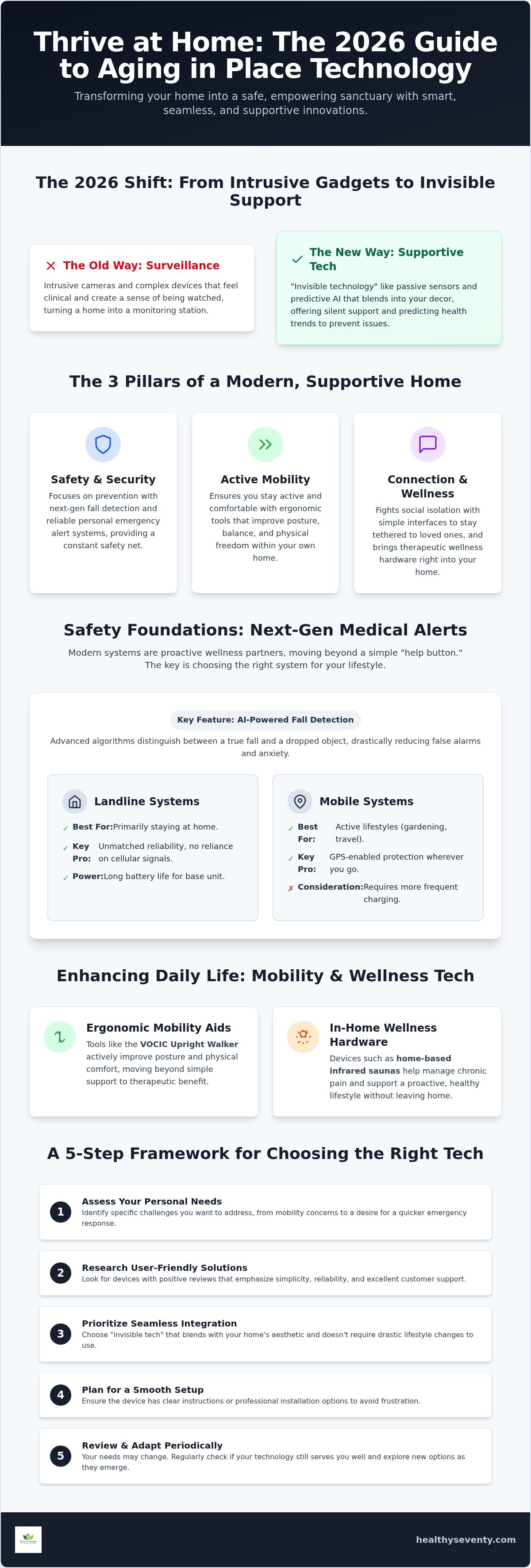
This year marks a significant shift toward "invisible technology." These are devices that blend into your decor, such as smart flooring that detects falls or lighting that subtly adjusts to your circadian rhythm. This evolution ensures that your home remains yours, reflecting your personal style while providing a quiet layer of protection. This supportive environment acts as a vital bridge to more specialized mobility aids for seniors, ensuring that every transition in your physical needs is met with grace. Choosing Aging in place solutions is an act of empowerment and a commitment to proactive living.
From Surveillance to Support: A New Mindset
Older adults are increasingly moving away from the intrusive feel of cameras. They prefer passive sensors that monitor movement patterns or hydration levels through smart faucets. The role of AI in 2026 isn't to watch you, but to predict health trends. It looks for subtle changes in your daily behavior that might suggest a minor health issue before it becomes a crisis. By catching these signs early, you can take action on your own terms. This approach allows you to maintain your dignity while utilizing high-tech assistance that feels like a partner rather than a monitor.
The Core Pillars of a Tech-Enabled Home
A truly supportive home rests on three foundational pillars that work together to enhance your lifestyle. First is safety and security, which focuses on preventing the "what if" scenarios through landline personal emergency alert devices. Second is mobility, which ensures you stay active within your own four walls using ergonomic tools like the VOCIC Upright Walker. Finally, there's connection. Modern aging in place technology uses simple, intuitive interfaces to help you fight social isolation, keeping you tethered to the people and hobbies you love. These pillars don't just keep you safe; they help you thrive.
Safety Foundations: Next-Generation Medical Alert Systems
Safety is the bedrock of any successful plan to remain at home. While the classic "help button" provided a basic safety net for decades, 2026 has ushered in a sophisticated era of aging in place technology where devices are as stylish as they are functional. Modern systems have evolved into smart wearables that monitor heart rate, activity levels, and even sleep quality. This shift transforms a reactive emergency tool into a proactive wellness partner. For a deeper look at specific features, you can explore our medical alert systems for seniors guide.
A major breakthrough this year is the refinement of fall detection algorithms. These systems now use complex AI to distinguish between a dangerous tumble and a heavy book dropping on the floor. This precision reduces the anxiety of false alarms while ensuring help is summoned the moment it's truly needed. Research supported by the National Institute on Aging continues to push the boundaries of in-home technology, proving that these digital safeguards are essential for maintaining your vitality and peace of mind.
Landline vs. Mobile: Which System Fits Your Lifestyle?
Choosing between a landline and a mobile system depends on your daily habits. Landline units offer unmatched reliability and long battery life for those who spend most of their time indoors. If you find comfort in the familiar, a Landline Personal Emergency Alert Device provides a stable connection that doesn't rely on cellular signals. Conversely, active seniors who enjoy gardening, traveling, or neighborhood walks benefit from GPS-enabled mobile units. These handheld devices offer protection wherever you go, though they require more frequent charging. Both systems serve as a vital safety foundation, allowing you to focus on living fully.
Passive Fall Detection: The 'No-Wearable' Revolution
One common hurdle is the simple act of forgetting to put on a pendant or watch. To solve this, 2026 has seen a rise in passive sensors. Using radar or wall-mounted technology, these systems monitor the home environment without the need for a wearable device or invasive cameras. They respect your privacy while providing 24/7 coverage in high-risk areas like bathrooms or kitchens. Many of these sensors integrate with smart home hubs, automatically brightening the lights if a fall is detected to help responders navigate your home safely. This ambient layer of aging in place technology ensures you're never truly alone, even when your wearable is on the nightstand.
Active Mobility: High-Tech Support for Posture and Balance
While most discussions around aging in place technology focus on digital sensors and remote alarms, the physical tools you use to move through your home are equally vital. In 2026, we've moved past the idea of a walker as a simple metal frame or a symbol of decline. Instead, these devices have been redefined as essential ergonomic equipment designed to work in harmony with your body. By prioritizing spinal alignment and joint health, modern mobility aids transform movement from a difficult chore into a source of renewed vitality and confidence.
The Upright Advantage: Why Posture Matters
Traditional walkers often force a "hunching" posture that leads to chronic back pain and restricted breathing. When you lean forward to support yourself, you compress your spine and limit your lung capacity, which can drain your energy and affect your mood throughout the day. Upright designs solve this by elevating your gaze and opening your chest, allowing for a more natural and dignified gait. The VOCIC Upright Walker utilizes ergonomic forearm cradles to shift weight from the wrists to the arms, promoting a 90-degree posture that reduces spinal compression. This shift not only alleviates pain in your neck and shoulders but also allows for deeper, more refreshing breaths that oxygenate your blood more effectively. To maximize this stability, many seniors pair their walker with the best walking sneakers for balance, creating a complete system that protects every step from the ground up.
Portable Tech for the Active Senior
Independence doesn't stop at your front door. The latest aging in place technology includes foldable mobility scooters designed for seamless travel and spontaneous outings. These machines are engineered with advanced carbon fiber materials, making them significantly lighter and stronger than the bulky models of the past. Many designs are compact enough to fit easily into a standard car trunk, allowing you to maintain your social connections and explore your community without hesitation. Safety is also deeply integrated into the hardware. Smart braking systems now use internal sensors to detect inclines and declines, preventing "runaway" walkers or scooters on steep driveways or uneven sidewalks. This level of technical control ensures that your mobility aid remains a reliable, steady partner in every environment you choose to explore.
Wellness Hardware: Bringing Therapy into the Home
True independence isn't just about avoiding accidents; it's about feeling vibrant and capable within your own walls. While safety sensors act as a shield, wellness hardware acts as a catalyst for health. The rise of "bio-hacking" tech has brought professional-grade therapy directly to the living room, allowing you to manage health proactively. Integrating this type of aging in place technology into your home can significantly reduce your reliance on daily pain medications by addressing the root causes of discomfort rather than just masking the symptoms.
Infrared Therapy for Joint and Muscle Health
Heat has always been a friend to aching joints. Unlike traditional steam saunas that just heat the air, infrared models use light to penetrate deep into muscle tissue. This process is particularly effective for soothing the persistent inflammation associated with arthritis. When selecting a home infrared sauna for elderly use, look for features like low-EMF heaters, easy-access benches, and automatic safety shut-off timers. Just 15 minutes of daily use can do wonders. It improves circulation, which supports cardiovascular health, and the gentle relaxation helps regulate your sleep cycles, leading to more restful nights.
Advanced Recovery: Shockwave and Laser Tech
For more targeted issues, specialized devices offer non-invasive relief without the need for frequent clinic visits. If you struggle with plantar fasciitis or stubborn stiffness in your knees or shoulders, a shockwave therapy device can stimulate the body's natural healing response through high-energy sound waves. It's a precise way to break down scar tissue and improve mobility. Similarly, scalp health is often a concern as we age. An FDA-cleared laser hair growth cap uses low-level light therapy to maintain hair density and scalp vitality, all while you relax in your favorite chair.
These tools are designed for a low-effort daily routine. You can use them while reading or watching the morning news, making wellness a seamless part of your lifestyle. By consistently applying these treatments, you're investing in your long-term comfort and mobility. Explore our full range of curated wellness hardware to find the right fit for your unique needs and start your journey toward a more comfortable home life today.
Implementation Strategy: Choosing the Right Tech for Your Home
Integrating aging in place technology into your daily life shouldn't feel like a burden or a complex science project. It's about enhancing the sanctuary you've built over decades. When you begin to evaluate which tools deserve a place in your home, it's helpful to use a methodical approach that respects both your needs and your comfort level with new systems. We recommend a simple five-step framework for any new addition. First, identify your specific "friction points" throughout the day. Second, prioritize safety-first devices that provide an immediate safety net. Third, insist on senior-friendly interfaces with large, tactile buttons or intuitive voice controls. Fourth, introduce only one new device at a time to avoid feeling overwhelmed. Finally, establish a clear plan for who to call if you need a technical hand.
This thoughtful progression ensures that every piece of aging in place technology you adopt serves your vitality rather than causing frustration. By moving slowly and intentionally, you maintain control over your environment while quietly building a more supportive home. Your wisdom is your greatest asset; trust it to guide you toward the tools that truly resonate with your lifestyle.
The 2026 Tech Audit: A Room-by-Room Checklist
A room-by-room audit helps you spot small gaps where technology can make a significant difference in your physical comfort. In the bathroom, consider high-tech grab bars with integrated LED lighting and water temperature sensors that prevent accidental scalding. The kitchen can be made much safer with induction cooktops that stay cool to the touch and a Countertop Reverse Osmosis Water Filter to ensure your hydration is pure and accessible. For the bedroom, modern sleep tracking mats can be placed under your mattress to monitor heart rate and respiration without the need for a wearable device. These subtle additions provide peace of mind without altering the look or feel of your favorite spaces.
Overcoming the Complexity Barrier
It's natural to feel a bit hesitant about the learning curve of new gadgets. One of the most effective ways to simplify your home is by using voice assistants like Alexa or Google as a central "operating system." Instead of fumbling with small apps, you can simply speak your needs to adjust the lights or call for help. For more critical systems, "managed" services are often worth the subscription. These are companies that monitor your tech for you, ensuring everything is updated and functional at all times. Don't be afraid to involve family members in the initial setup process. Their support can make the transition smoother, turning the implementation of new tools into a collaborative project that keeps everyone connected. Embrace these innovations as partners in your journey toward a more vibrant, independent future.
Embracing a Future of Vitality at Home
Your home is a reflection of your journey, and it should continue to be a place of strength and comfort. We've explored how 2026's aging in place technology has moved beyond simple gadgets to become a supportive ecosystem that respects your dignity. By integrating safety alerts with ergonomic mobility tools and restorative wellness hardware, you create a foundation that supports both your physical health and your peace of mind. These advancements ensure that your environment adapts to you, rather than the other way around.
Choosing to adapt your environment is a powerful act of proactive living. You don't have to navigate these technical choices alone. We provide empathy-first wellness advice and a range of expert-vetted mobility aids to help you build your sanctuary. With national shipping on all curated hardware, your next step toward a more empowered lifestyle is just a few clicks away. Explore our curated collection of aging in place essentials at Healthy Seventy and discover how simple it is to maintain your independence with confidence. You've earned the right to thrive in the home you love.
Frequently Asked Questions
Is aging in place technology expensive to install?
Costs for these systems vary widely depending on the complexity of the tools you select. While full-home renovations can be a significant investment, many effective pieces of aging in place technology are quite affordable and require no professional installation. You can start with small, impactful additions like a landline personal emergency alert device or a countertop filter, allowing you to build your supportive environment at a pace that fits your personal budget.
Can I use these devices if I am not tech-savvy?
Yes, modern designs specifically prioritize simplicity and intuitive use for older adults. Most 2026 devices feature large, tactile buttons, simple voice commands, or passive sensors that require no daily interaction at all. You don't need to be a computer expert to feel safe and empowered in your home. These tools are built to adapt to your existing habits, ensuring you feel supported rather than frustrated by new gadgets.
Do medical alert systems work outside of the home?
Whether a system works on the go depends on the specific hardware you choose. Landline units are designed for indoor safety and have a limited range around their base station. If you enjoy an active lifestyle, mobile GPS-enabled units provide protection wherever you have cellular service. This ensures help is available while you're gardening, walking, or traveling, giving both you and your family members consistent peace of mind.
How does an upright walker differ from a standard one?
An upright walker is designed to support your forearms rather than putting all the pressure on your wrists. This ergonomic shift allows you to stand tall with a 90-degree posture, which reduces spinal compression and neck pain. Standard walkers often force a hunched position that can lead to long-term back issues and restricted breathing. By choosing an upright design, you're prioritizing your long-term physical comfort and vitality.
Are home infrared saunas safe for people with heart conditions?
While infrared saunas offer many cardiovascular benefits, you must consult your physician before use if you have a heart condition. The gentle heat can improve circulation and reduce blood pressure, but it also naturally increases your heart rate. A medical professional can help you determine the safest temperature and duration for your specific health needs, ensuring your wellness routine remains a safe and restorative part of your day.
Will insurance or Medicare cover the cost of aging in place technology?
Coverage varies significantly between different providers and specific plans. Medicare Part B sometimes covers items classified as durable medical equipment if they're deemed medically necessary by a doctor. However, many wellness-focused tools are currently considered out-of-pocket expenses. It's always best to contact your insurance representative directly to see which specific mobility aids or safety devices qualify for reimbursement under your current policy to avoid any unexpected costs.
How do I protect my privacy with smart home sensors?
You can maintain your privacy by choosing non-camera-based aging in place technology. Many 2026 systems use radar or infrared sensors to monitor movement patterns without ever capturing an image of you. Always check the manufacturer's data policy to ensure your information is encrypted and not shared with third parties. This allows you to benefit from high-tech safety monitoring while keeping your personal life and home environment strictly private.
What happens to my tech if the power or internet goes out?
Most critical safety devices include a built-in battery backup that lasts for several hours during a power failure. Landline-based alert systems often continue to function if the phone lines remain active. For internet-dependent tools, some models switch to a cellular backup automatically. This ensures you stay connected to emergency services even when your home Wi-Fi is down, providing a reliable safety net regardless of external service interruptions.
Comments