
Best Walking Sneakers for Balance: 2026 Senior’s Guide
- healthyseventy3
- 1 day ago
- 12 min read
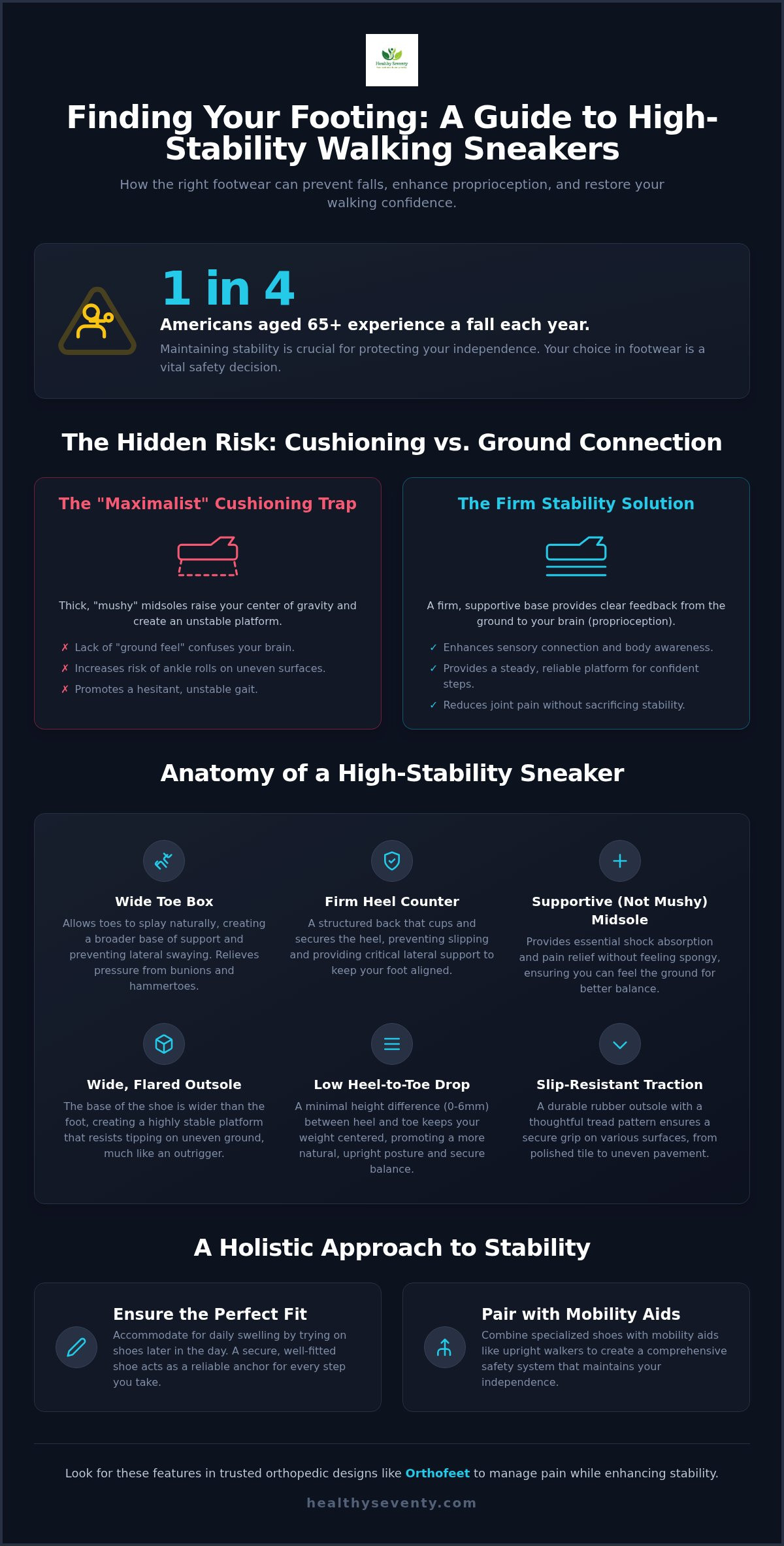
Did you know that one in four Americans aged 65 and older experiences a fall every single year? It's a sobering statistic from June 2026 that highlights why maintaining your stability is more than just a matter of comfort; it's about protecting your precious independence. If you've felt a sudden wobble while crossing the street or hesitated to take your daily walk because the ground feels "far away," you aren't alone. Finding the best walking sneakers for balance is the most effective way to reconnect your feet with the earth and regain that steady, grounded feeling you might've lost.
It's natural to feel frustrated when arthritis or bunions make every step a chore, or when swollen feet make standard shoes feel like a trap. You deserve to move through your day without fear or nagging joint pain. This guide will help you discover the specific footwear features that enhance proprioception and prevent falls, helping you walk with renewed confidence. We'll explore why firm stability now beats "mushy" cushioning and preview the curated options, including trusted orthopedic designs, that prioritize your safety and vitality.
Table of Contents
The Critical Link Between Footwear and Fall Prevention
Your feet are the primary sensory interface between your body and the environment. When you think about staying safe at home or on the go, you might consider grab bars or non-slip mats first. However, your choice of footwear is often the most overlooked tool in a comprehensive guide to fall prevention. If your shoes don't provide a clear "conversation" between the ground and your brain, your risk of a stumble increases. This is why selecting the best walking sneakers for balance is about more than just style; it's a vital safety decision.
Traditional athletic sneakers are frequently designed for high-impact running, focusing on "energy return" and soft, bouncy foam. For a senior seeking stability, these features can actually be counterproductive. The best walking sneakers for balance prioritize a firm, steady platform over a springy one. When your brain receives clear, un-muffled data from the soles of your feet, you naturally walk with more grace and less hesitation. This physical security provides a profound psychological boost, allowing you to focus on the joy of the walk rather than the fear of the floor.
Understanding Proprioception and Aging
Proprioception is your body’s internal GPS. It's the ability to sense where your limbs are in space without having to look at them. As we age, the sensory nerves in our feet can become less sensitive, leading to a wider, more hesitant gait. You might find yourself looking down at your feet more often to confirm where they are landing. High-quality footwear, such as Orthofeet Orthopedic Walking Sneakers, is engineered to address this. By providing a structured environment for the foot, these shoes help "re-awaken" the communication between your nerves and your brain, encouraging a more natural and confident stride.
The Hidden Risks of "Maximalist" Cushioning
It’s a common misconception that more cushion always equals more comfort. While some fitness brands push "maximalist" designs with thick, marshmallow-like midsoles, these can be a hidden trap for those with balance concerns. Excessive stack height raises your center of gravity and creates a "mushy" surface that makes it harder to feel the ground. This lack of "ground feel" can lead to ankle rolls or a loss of stability on uneven surfaces. The ideal shoe offers a "sweet spot" where the midsole is firm enough to provide a stable base but supportive enough to reduce joint pain. You want to feel grounded, not like you are walking on a stack of sponges.
Essential Features of a High-Stability Walking Sneaker
Selecting the best walking sneakers for balance requires looking at the shoe's architecture from the ground up. A wide base of support is your first line of defense. When the outsole is wider than the foot itself, it creates a "flare" that resists tipping. This isn't just about cushioning; it's about geometry. A flared outsole acts like the outriggers on a canoe, providing a stable platform that keeps you steady even when the sidewalk is uneven.
Another critical factor is the heel-to-toe drop. Many traditional shoes have a steep incline that pushes your weight forward onto your toes, which can make you feel precarious. For seniors, a low drop, typically between 0 and 6mm, is much safer. It keeps your weight centered over your midfoot and heel, where your balance is most secure. This alignment is a key recommendation in the National Council on Aging's guide to preventing falls, as it helps maintain a natural, upright posture.
Traction shouldn't be an afterthought. Slip-resistant outsoles provide the grip needed for indoor surfaces like tile or polished wood. This is where many stumbles happen. You want a rubber compound that feels slightly "tacky" to the touch, ensuring you stay connected to the floor regardless of the environment. If you're looking for a shoe that combines all these elements, checking out specialized orthopedic footwear can help you find the right fit for your needs.
The Importance of a Wide Toe Box
Your toes are meant to splay. When they're cramped, you lose a significant portion of your natural balancing ability. A wide toe box allows your toes to spread out, creating a larger "footprint" for better weight distribution. This design also offers relief if you're dealing with bunions or hammertoes, as it eliminates the friction that causes pain. A wide toe box creates a more expansive surface area for the forefoot, which effectively prevents lateral swaying during mid-stride by keeping your center of gravity firmly aligned.
Heel Stability and Lateral Support
The back of the shoe, known as the heel counter, should be firm and reinforced. If you can easily squish the heel of a shoe with your thumb, it won't provide enough support. A stiff counter acts as an anchor for your ankle, preventing the foot from sliding side-to-side inside the shoe. Midfoot shanks, which are rigid inserts in the arch area, also play a role by preventing the shoe from twisting on uneven ground. These "active" stability features work together to keep your foot in a neutral position, providing the structural integrity you need to walk with total confidence.
Top Balance Sneakers for Seniors: 2026 Curated Picks
Finding the right footwear is a specialized task because your needs change as your body evolves. While general fitness brands often focus on speed or high-impact running, the best walking sneakers for balance are designed with a different set of priorities: stability, sensory feedback, and safety. Research from the National Institutes of Health emphasizes that footwear safety for fall prevention relies heavily on a secure fit and slip resistance. For many seniors, the challenge isn't just how the shoe performs while walking, but also how easy it is to put on and take off if dexterity has become a concern.
If you find that heavy shoes make your legs feel fatigued by noon, lightweight balance shoes offer a middle ground. These designs use modern materials to provide a wide, stable base without the "clunky" weight of traditional orthopedic boots. Additionally, hands-free slip-ons have become a favorite in 2026. They allow you to step into the shoe without bending over or struggling with laces, combining ease of entry with a heel that "locks" into place once your foot is inside.
Orthofeet: The Gold Standard for Aging Feet
Orthofeet Orthopedic Walking Sneakers consistently rank as a top choice because they address the specific biomechanical needs of older adults. These shoes feature anatomical arch support that helps realign the foot and leg, which is crucial for maintaining a steady center of gravity. A specialized cushioning heel pad absorbs impact, reducing the strain on your knees and lower back. One of the most thoughtful features is the "Tie-less" lacing system. This design allows you to adjust the tension once and then use a simple fastening mechanism, making them ideal for anyone managing arthritis or limited hand strength. You can explore more about these features in our detailed look at the Best Walking Sneakers for Balance.
Comparing Stability vs. Neutral Walking Shoes
It's vital to understand which category of shoe your foot actually requires. Most seniors find the greatest benefit in "Stability" or "Motion Control" shoes, which are built to prevent the foot from rolling inward or outward excessively. Neutral shoes, by contrast, are designed for those with high arches who don't need help with alignment. You can check your own needs at home by looking at the wear pattern on an old pair of shoes; if the inner edge is more worn, you likely need a stability model.
Stability trainers are particularly effective for those with wide feet or those who experience daily swelling. They often come with extra-depth designs that accommodate custom orthotics or Medicare-approved insoles without making the shoe feel tight or restrictive. By choosing a shoe that matches your specific foot shape, you ensure that your "anchor" to the ground remains firm and reliable.
Ensuring the Perfect Fit for Maximum Safety
Even the best walking sneakers for balance can't protect you if they aren't sized correctly for your unique foot shape. Research published in August 2026 revealed that as many as 72% of senior participants wore shoes that did not fit correctly on both feet. This mismatch isn't just uncomfortable; it's a significant tripping hazard. To ensure your safety, follow the "Rule of Thumb" by leaving about half an inch of space between your longest toe and the end of the shoe. This allows your foot to expand naturally as you step, preventing the cramped conditions that lead to instability.
Measuring for width is just as vital as length, especially if you manage edema or frequent swelling. A shoe that feels perfect in the morning might become a painful vice by the afternoon. Look for brands that offer extended width options, such as 2E or 4E, to accommodate these changes without compromising the shoe's structural integrity. Replacement is another critical factor. Most high-quality walking shoes should be replaced every six months or after 300 to 500 miles, as the supportive foam eventually loses its ability to keep you level. To find your next reliable pair, you can browse our collection of Orthofeet Orthopedic Walking Sneakers designed for lasting support.
The Evening Measurement Strategy
Your feet naturally expand throughout the day due to gravity and activity. Because of this, you should always try on new sneakers in the late afternoon or evening to ensure they'll stay comfortable during your longest walks. Once you have the shoes on, check for heel slippage by walking on a firm surface. Your heel should stay locked in place; if it lifts out of the shoe, your risk of a stumble increases. Follow this seated-to-standing fit test to confirm the size:
Sit down and put on both shoes with the socks you intend to wear.
Stand up to allow your feet to fully splay under your body weight.
Press your thumb at the front of the shoe to ensure that half-inch gap exists while standing.
Walk a few paces to ensure your toes don't touch the front during your stride.
Integrating Orthotics and Support Sleeves
If you use custom orthotics or compression sleeves, your sneakers must have enough internal volume to house them. Always look for shoes with removable insoles so your custom inserts can sit flush against the midsole. This integration is essential for maintaining proprioception, as a poorly placed orthotic can actually tilt your foot and ruin your balance. For a deeper look at how specialized inserts work with your footwear, read our guide on Orthopedic Footwear for Senior Comfort. When your shoes and orthotics work in harmony, you'll feel a renewed sense of connection to the ground beneath you.
Beyond Footwear: A Holistic Approach to Balance
Finding the best walking sneakers for balance is a significant milestone on your journey toward safer movement. However, footwear is most effective when it's part of a broader strategy for independence. Think of your shoes as the reliable foundation and your mobility aids as the protective framework. When these elements work together, they create a comprehensive safety net that allows you to navigate your world with a sense of calm and security.
Your environment also plays a role in how well your footwear performs. Indoors, it's wise to secure loose rugs and ensure that hallways are brightly lit. Outdoors, being mindful of transitions between surfaces, such as moving from a concrete sidewalk to a gravel path, can prevent unexpected stumbles. By being proactive about your surroundings and your gear, you're taking control of your well-being.
The VOCIC Upright Walker Advantage
If you've noticed that you tend to look at the ground while walking, a VOCIC Upright Walker can be a transformative addition to your routine. While the best walking sneakers for balance manage the sensory feedback from the ground, an upright walker helps correct your posture. It allows you to walk within the device’s frame, keeping your spine aligned and your eyes forward. This creates a "dual-defense" system against falls. Your shoes provide the grip and stability you need, while the walker offers a physical anchor to keep you upright. To learn more about how these tools work in harmony, read The Comprehensive Guide to Upright Walkers.
Simple Balance Exercises for Home
Strength is the silent partner of stability. You don't need fancy equipment to improve your balance; simple movements like toe-to-heel raises or standing on one leg can strengthen your ankles and improve your coordination. Performing these exercises while wearing your high-stability sneakers makes the process much safer. The wide outsole and firm heel counter give you a steady platform, reducing the chance of a wobble while you build your strength. If you're ready to upgrade your daily walks and home safety, you can Explore our curated mobility collection to find the products that best fit your lifestyle.
Step Forward with Confidence and Vitality
Your journey toward a more active and independent lifestyle starts with the foundation you provide for your feet. By choosing the best walking sneakers for balance, you're doing more than just buying footwear; you're investing in a safer, more grounded way to experience the world. You've learned how a wide base of support and a firm heel counter act as your personal anchor, and how the right fit accommodates the natural changes your feet experience throughout the day.
When you pair these structural features with a holistic approach, such as using an upright walker or practicing daily ankle exercises, you create a powerful defense against the risk of falls. At Healthy Seventy, we're dedicated to being your partner in this journey. We offer a curated selection of Orthofeet orthopedic sneakers, free expert mobility consultations, and national shipping on all mobility aids. Find Your Perfect Pair of Stability Sneakers at Healthy Seventy
You have the wisdom to make the best choices for your health, and now you have the tools to back them up. Walk tall, stay steady, and embrace every step with the confidence you deserve.
Frequently Asked Questions
Do I really need "balance" sneakers if I don’t have foot pain?
Yes, you absolutely do. While pain relief is a wonderful benefit, the primary goal of balance footwear is fall prevention through enhanced proprioception. Even if your feet feel fine, a shoe with a wide base and firm heel counter helps your brain better understand your position in space. This proactive choice keeps you steady on uneven surfaces, ensuring your safety before an injury or a fall occurs.
How often should seniors replace their walking sneakers for safety?
You should replace your walking shoes approximately every six months if you walk daily, or after 300 to 500 miles of use. Over time, the internal support structures and cushioning foams compress and lose their integrity. Even if the outside looks clean, the invisible breakdown of the midsole can lead to a tilted foot position, which significantly compromises your stability and increases the risk of a stumble.
Can I use running shoes for my daily walks instead?
Running shoes aren't the ideal choice for seniors focused on stability. They're often designed with high-impact, springy midsoles and narrow heels to assist with forward momentum. In contrast, the best walking sneakers for balance feature a flatter, wider outsole. This design provides a more consistent ground feel and a larger base of support, which is much safer for a walking gait that involves a heel-to-toe roll.
What is the best type of closure for seniors with arthritis?
The most effective closures for those with arthritis are hook-and-loop straps or "Tie-less" elastic lacing systems. These designs eliminate the need for fine motor skills and finger strength required by traditional laces. Orthofeet models often feature these adaptive closures, allowing you to achieve a secure, snug fit with a simple motion. This ensures your foot stays firmly anchored in the shoe without the frustration of difficult knots.
Are memory foam insoles good for balance?
Memory foam is often too "mushy" for those prioritizing stability. While it feels soft initially, it can bottom out and fail to provide the firm support your foot needs to stay level. For better balance, look for high-density foam or orthopedic insoles that maintain their shape. These materials offer a more predictable surface, helping your brain receive clear sensory signals from the ground beneath your feet.
Should I choose a sneaker with a high or low heel-to-toe drop?
You should prioritize a low heel-to-toe drop, typically between 0 and 6mm. A high drop tilts your body weight forward onto your toes, which can make you feel precarious and uncentered. A lower drop keeps your foot in a more natural, level position. This alignment helps distribute your weight evenly across the entire foot, providing a much more stable foundation for every step you take.
How do I know if my sneakers are too heavy for me?
Your sneakers are likely too heavy if you experience "heavy leg" fatigue or find yourself shuffling your feet toward the end of a walk. While stability features add some weight, modern materials allow the best walking sneakers for balance to remain relatively light. If lifting your feet feels like a chore, it increases your risk of tripping. Aim for a shoe that feels substantial without causing muscular exhaustion.
Can the right shoes really help with vertigo or dizziness?
While shoes cannot cure the underlying causes of vertigo, they can certainly help you manage the symptoms. High-stability footwear provides a more reliable "anchor" to the ground, which helps your brain compensate for a confused inner ear. By giving your feet a wider, firmer platform, you reduce the physical swaying that often accompanies balance issues, helping you feel more in control of your movements during your daily activities.
Comments