


Best Walking Shoes for Swollen Feet and Ankles: A 2026 Comfort Guide

What if your shoes could expand and contract right along with your body throughout the day? Many people living with edema or chronic swelling find that a pair of sneakers that fits perfectly at breakfast feels like a vice grip by mid-afternoon. This sharp pain from shoe edges cutting into sensitive skin doesn't just hurt; it often steals your independence and makes a simple walk feel like an exhausting chore. Finding the best walking shoes for swollen feet and ankles is about more than just buying a larger size. It requires footwear that is truly transformable, designed to accommodate the dynamic nature of swelling while providing the stability you need to move with confidence.
You deserve to enjoy your daily movement without the constant need to stop and adjust your laces or manage persistent foot discomfort. We understand the frustration when limited ankle mobility makes it difficult to even put your shoes on in the morning. This guide explores the latest 2026 innovations in podiatrist-approved footwear, from hands-free entry systems to advanced stretchable knit uppers found in models like the Asics Gel-Cumulus 28 and Orthofeet orthopedic walking sneakers. We will show you how to find a shoe that performs with medical precision while maintaining the style of a modern sneaker, ensuring you stay active, balanced, and steady on your feet all day long.
Table of Contents
Understanding the Challenge: Why Swollen Feet and Ankles Require Specialized Footwear
Living with persistent swelling isn't just a cosmetic concern; it's a significant barrier to the active lifestyle you cherish. Medical professionals often refer to this fluid retention as Edema, a condition that can stem from various sources like venous insufficiency. When the tiny valves in your veins don't function efficiently, blood struggles to return to your heart, causing fluid to pool around your feet and ankles. For many seniors, this makes finding the best walking shoes for swollen feet and ankles a necessity for daily safety and comfort.
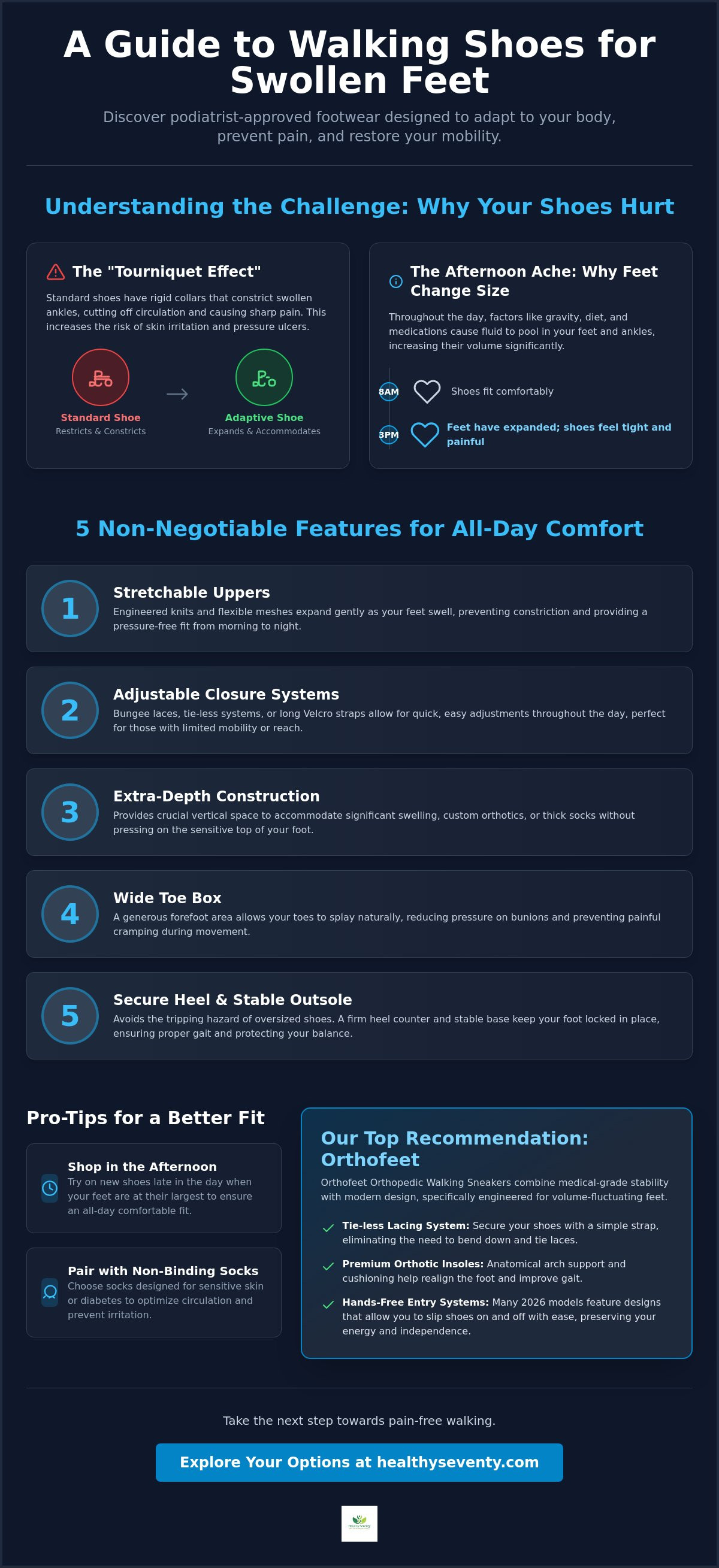
Standard footwear is often built with rigid materials and fixed collars that don't account for these physical changes. This leads to what specialists call the "tourniquet effect," where the shoe's edge acts like a tight band, constricting circulation and cutting into sensitive, stretched skin. Beyond the immediate pain, wearing ill-fitting shoes increases the risk of skin breakdown, pressure ulcers, and dangerous falls. This is why the footwear industry has shifted toward "Volume Fluctuating" designs in 2026. These shoes are engineered to expand and contract throughout the day, ensuring your footwear supports you rather than restricts you.
The Afternoon Ache: Why Your Feet Change Size
Have you noticed that your shoes feel perfectly fine at 8 AM but become unbearable by 3 PM? Gravity is the primary culprit. As you move through your day, fluid naturally migrates downward. Factors like a high-sodium diet or specific medications for blood pressure can also accelerate this volume increase. Pitting edema occurs when pressure applied to the swollen area leaves a persistent indentation, signaling that the tissue is saturated with fluid and highly sensitive to shoe pressure. This fluctuating volume is exactly why your footwear needs to be as dynamic as your body.
The Risk of "Making Do" with Oversized Shoes
It's tempting to simply buy a pair of sneakers two sizes too large to accommodate the swelling. However, this creates a significant tripping hazard. A shoe that is too long lacks proper "heel lockdown," which is essential for stability. When your foot slides around inside a cavernous shoe, your natural gait changes, often leading to secondary pain in your hips or lower back. The best walking shoes for swollen feet and ankles, such as Orthofeet Orthopedic Walking Sneakers, solve this by offering wide toe boxes combined with secure, adjustable heel structures. This design ensures that even when your forefoot expands, your foot remains safely anchored, protecting your balance and your joints.
The 5 Essential Features of the Best Walking Shoes for Edema
Selecting the best walking shoes for swollen feet and ankles requires a shift in perspective. Instead of looking for a static size, you're looking for a dynamic system that adapts to your body's changing needs throughout the day. While traditional footwear relies on rigid structures, specialized shoes for foot, leg, and ankle swelling focus on flexibility and volume management. These five features are non-negotiable for maintaining all-day comfort and skin integrity.
Stretchable Uppers: Modern engineered knits and synthetic meshes have largely replaced stiff leather. These materials allow the shoe to expand gently as volume increases, preventing the painful constriction often felt by mid-afternoon.
Adjustable Closure Systems: Look for "set and forget" technology, bungee laces, or extended Velcro straps. These allow you to modify the fit instantly without struggling with complex knots, which is especially helpful if your reach is limited.
Extra-Depth Construction: Vertical room is just as vital as horizontal width. Extra-depth shoes accommodate customized orthotics or significant swelling without pressing against the sensitive top area of your foot.
Wide Toe Boxes: A generous forefoot allows for natural toe splay. This is essential for relieving pressure on bunions and ensuring your toes aren't cramped during the push-off phase of your stride.
Seamless Interior Linings: Swollen skin is often fragile and prone to irritation. A smooth, seam-free interior eliminates friction points that could otherwise lead to blisters or ulcers.
If you're unsure which combination of these features is right for you, exploring a curated selection of wellness resources can help you identify the footwear that best matches your specific mobility goals.
Anatomy of an Edema-Friendly Sole
The foundation of your shoe must do more than just provide grip. As we age, many experience fat pad atrophy, where the natural cushioning under the heel and ball of the foot thins. High-rebound foam is necessary to absorb impact and protect these sensitive areas. A wide base provides a stable platform, significantly reducing the risk of ankle rolls on uneven pavement. Additionally, rocker-sole geometry helps roll the foot forward naturally. This design is a lifesaver if your ankles feel stiff or have a limited range of motion due to fluid retention.
Materials Matter: Breathability vs. Support
Synthetic meshes are the gold standard for managing fluctuating volume. They offer superior breathability, which is critical for preventing infections in high-moisture environments. Many 2026 models also include antimicrobial properties to keep your feet healthy and dry. To ensure the shoe doesn't become too flimsy, look for structural overlays. These thin, reinforced sections provide the lateral stability you need to stay steady without sacrificing the overall stretch of the shoe's upper.
Comparing Styles: Sneakers, Sandals, and Casual Options
Finding the best walking shoes for swollen feet and ankles often means curating a small collection rather than relying on a single pair. Different activities and varying levels of fluid retention require specific structural responses. While a sneaker offers the most protection, there are days when the volume of swelling makes a closed shoe impractical. Understanding the trade-offs between sneakers, sandals, and the emerging hybrid designs of 2026 will help you stay mobile regardless of how your body feels on a given morning. The goal is to have a solution ready for every "volume version" of your feet.
When to Choose a Walking Sneaker
For your daily exercise or longer excursions, the walking sneaker remains the gold standard. These shoes provide the necessary lateral support and heel stability that lighter styles often lack. When you're looking for the best walking sneakers for balance, prioritize models with padded collars and reinforced heel counters. These features work together to lock the foot in place, preventing the sliding that leads to friction and blisters. If you already use a VOCIC Upright Walker to maintain your posture and safety, a high-quality sneaker ensures your feet can keep up with the steady, confident pace your walker provides. The combination of a stable base and a secure upper is essential for preventing the stumbles that often occur when feet feel heavy or numb.
The Role of Orthopedic Sandals
There are times when edema reaches a stage where even the most stretchable knit upper feels restrictive. In these instances, orthopedic sandals are a vital tool for maintaining your independence. They offer the maximum possible volume by removing the constraints of a traditional toe box and midfoot wrap. However, you shouldn't settle for a basic flip-flop. You must look for designs with at least three points of adjustability: at the toes, the instep, and the heel. A contoured footbed is equally mandatory. Without this built-in arch support, your foot lacks the structure needed to prevent fatigue and secondary joint pain, even during short walks around the house or garden.
Casual slip-ons and the new "Hybrid" styles of 2026 are bridging the gap for quick errands and social gatherings. These hybrids often feature the rugged, cushioned outsole of a high-performance sneaker paired with a highly adjustable, breathable upper that mimics the openness of a sandal. They're perfect for those who want the ease of entry provided by a slip-on but require the significant shock absorption of a medical-grade walking shoe. By matching the shoe style to your specific daily needs, you can ensure that swelling never becomes a reason to stay indoors or miss out on life's important moments.
Practical Tips for Managing Swollen Feet While Walking
Securing the best walking shoes for swollen feet and ankles is a vital first step, but how you manage your footwear throughout the day determines your ultimate comfort. Since swelling is a dynamic process, your approach to wearing and maintaining your shoes must be equally flexible. By adopting a few practical strategies, you can minimize the "afternoon ache" and ensure every stroll is as restorative as possible. It's about creating a personalized routine that respects your body's changing volume.
One of the most important habits you can form is the "Late Afternoon" Fitting Rule. If you're trying on new shoes or adjusting your current pair, always do so after 3 PM. As we discussed earlier, gravity and daily activity cause fluid to pool in the lower extremities as the day progresses. Fitting your shoes when your feet are at their maximum volume ensures you won't face painful constriction later in the day. Additionally, pay close attention to your sock choice. Non-binding socks with loose, non-elastic tops are essential to avoid the "tourniquet effect," while mild compression socks can help move fluid back toward the heart without being too difficult to put on.
Preparation and recovery are just as important as the walk itself. Before you head out, try elevating your feet for 15 to 20 minutes to reduce initial swelling. Staying hydrated also helps your body regulate fluid more efficiently. After your walk, take a moment to monitor your skin health. Look for any red marks, indentations, or warm spots, especially around the ankles and the tops of the feet. These are early warning signs that your shoe might need a volume adjustment before your next outing.
The "Two-Insole" Trick for Variable Swelling
Many high-quality orthopedic shoes come with removable spacers or dual-insole systems. This is a game-changer for managing variable swelling. On days when your feet feel relatively normal, you can keep both insoles in for maximum cushioning. When swelling is more pronounced, removing the bottom spacer creates immediate vertical room without sacrificing the shoe's structural integrity. To ensure a safe fit, you should be able to press your thumb into the space between your longest toe and the end of the shoe without feeling excessive resistance.
Combining Footwear with Other Mobility Aids
Proper shoes don't work in isolation; they are part of a broader ecosystem of mobility aids for seniors designed to keep you active. When your feet are well-supported, you can maintain a more natural gait, which reduces the load on your ankles and knees. This is particularly effective when paired with a walker, as the added stability allows you to focus on your stride rather than your balance. For post-walk recovery, many find that using a home infrared sauna helps improve circulation and provides deep relief to tired joints, making it easier to stay consistent with your exercise routine.
Ready to take the next step toward pain-free movement? Explore our comprehensive wellness guides to find the perfect tools for your active lifestyle.
Why Orthofeet is Our Top Recommendation for Swollen Ankles
After examining the technical requirements for managing edema, it's clear that Orthofeet Orthopedic Walking Sneakers represent the pinnacle of adaptive footwear. These aren't just sneakers; they're meticulously researched tools designed to restore your confidence and independence. One of the most significant hurdles for seniors with swollen ankles is the simple act of putting on shoes. Orthofeet addresses this with their ingenious Tie-less Lacing system. This design allows you to set the tension once and then use hidden hook-and-loop closures for daily entry, which is a perfect solution for those with limited reach or dexterity.
The patented Ortho-Cushion system works in harmony with the extra-depth construction we've highlighted. It features a premium orthotic insole with anatomical arch support and multiple cushioning layers that act as a shock absorber for every step. This technology is vital for protecting your joints from the increased pressure that often accompanies fluid retention. Finding the best walking shoes for swollen feet and ankles often feels like a search for a needle in a haystack because most brands stop at a standard "Wide" fit. Orthofeet breaks this mold by offering sizes from Medium all the way to XX-Wide, ensuring a precise fit for every stage of swelling. To remove the stress of finding the right pair, their 60-day "Wear Test" guarantee lets you walk in them, live in them, and ensure they meet your needs without any financial risk.
Innovative Design for Easy Entry
The 2026 lineup features enhanced hands-free technology that makes starting your day effortless. A specially engineered heel counter allows you to step directly into the shoe without the back collapsing or requiring a shoehorn. This structural integrity is paired with a soft, seam-free interior padded with foam. This creates a gentle environment for sensitive skin, drastically reducing the chances of irritation or "hot spots" that can lead to more serious skin issues. It's a thoughtful approach that prioritizes your comfort from the moment you step in until you take them off at night.
Trust and Reliability in Senior Wellness
Orthofeet has cultivated a deep level of trust among medical professionals and the Healthy Seventy community alike. Their commitment to biomechanical excellence makes them a cornerstone of a holistic health routine. By providing a stable and cushioned foundation, these shoes play a critical role in non-invasive joint pain relief. We encourage you to embrace this opportunity to reclaim your active lifestyle. With the right support beneath you, those afternoon walks can once again become a source of joy and vitality rather than a source of discomfort.
Reclaim Your Mobility and Comfort Today
You now have the tools and knowledge to move beyond the daily frustration of restrictive footwear. The best walking shoes for swollen feet and ankles are those that respect your body's dynamic nature, providing the necessary volume in the afternoon without sacrificing the stability you need in the morning. By prioritizing features like stretchable engineered knits and extra-depth construction, you aren't just buying a shoe; you're investing in your ability to move through the world with confidence and grace.
It's time to experience the relief that comes from podiatrist-recommended designs tailored specifically for your needs. Whether you require the room of an XX-Wide fit for extreme swelling or the ease of a tie-less lacing system, these innovations are designed to support your independence. You can explore these life-changing options with complete peace of mind through a 60-day risk-free wear test. Browse our curated collection of Orthofeet Walking Sneakers and rediscover the joy of a long, comfortable walk. Your journey toward a more active and vibrant lifestyle is just one step away, and we're here to support you every inch of the path.
Frequently Asked Questions
How much wider should shoes be for swollen feet?
Generally, look for one to two widths wider than your standard size to accommodate fluid retention. If your usual size is Medium, starting with Wide or Extra-Wide is a safe baseline. The goal is to ensure the shoe doesn't constrict your foot at its largest point in the late afternoon. This extra space prevents the painful vice feeling often associated with standard footwear while protecting your skin's integrity.
Can walking actually help reduce swelling in my ankles?
Yes, gentle walking acts as a natural pump for your circulatory system. The contraction of your calf muscles helps push pooled blood and fluid back up toward your heart. However, it's vital to wear the best walking shoes for swollen feet and ankles during these walks to prevent skin irritation or joint strain while you remain active. This proactive approach helps manage edema symptoms while maintaining your physical health and vitality.
Are slip-on shoes safe for seniors with edema?
Slip-on shoes are safe as long as they feature a reinforced heel and a secure, non-slip outsole. Many 2026 models include hands-free entry systems that allow you to step into the shoe without bending over. This convenience is excellent for those with limited mobility, provided the shoe still offers enough lateral stability to prevent stumbles. Always ensure the slip-on doesn't feel loose, as a secure fit is vital for fall prevention.
What is the difference between wide (W) and extra-wide (XW) shoe sizing?
Wide (W or D/E) typically adds about 1/4 inch of circumference to the ball of the foot, while Extra-Wide (XW or EE/EEEE) provides even more volume. Some medical-grade brands like Orthofeet offer XX-Wide options to accommodate extreme volume changes. These provide the necessary vertical and horizontal space for significant edema that standard athletic brands often ignore, ensuring you don't have to settle for a shoe that's too long.
Should I wear compression socks with my walking shoes?
Wearing mild compression socks can be highly beneficial when paired with the right footwear. They help manage fluid levels throughout the day and protect your skin from friction. Ensure your shoes have enough extra depth to accommodate the added thickness of the socks without creating new pressure points on the top of your foot. This combination works together to improve circulation and reduce the discomfort often associated with persistent ankle swelling.
How do I know if my shoes are too tight when my feet are swollen?
Use the thumb test to check for adequate space at the end of your toes and along the sides of the shoe. If you see the material of the shoe bulging or if you feel a constant throbbing sensation, the shoe is too tight. You should be able to wiggle your toes freely even at the end of the day. If the edges of the shoe leave deep marks on your skin, it's time for a wider fit.
Can I use my custom orthotics in these specialized walking shoes?
Most high-quality orthopedic walking sneakers are designed with removable insoles specifically to accommodate custom orthotics. This extra-depth construction ensures that your prescribed inserts won't push your foot too high in the shoe. This allows you to maintain proper alignment while enjoying the specialized volume found in the best walking shoes for swollen feet and ankles. It's a seamless way to combine medical support with all-day comfort.
What are the best shoe materials for preventing skin irritation in swollen feet?
Engineered synthetic meshes and soft, seamless knit uppers are the best materials for sensitive, swollen skin. These fabrics offer the necessary stretch to move with your foot and provide superior breathability to keep skin dry. Avoiding rigid leathers and internal seams helps prevent the friction that can lead to painful blisters or ulcers. This is especially important for seniors whose skin may be more fragile due to persistent fluid retention.


Comments