


Healthy Aging Tips for Seniors: A Comprehensive 2026 Guide to Vitality
- healthyseventy3
- Jun 29
- 12 min read

What if the most vibrant years of your life weren't behind you, but waiting just around the corner in your 70s and 80s? It is natural to feel a sense of unease when joint stiffness makes the morning routine feel like a hurdle or when you worry if your memory is as sharp as it once was. You've worked hard to build a life you love, and the thought of losing your independence or the ability to keep up with your grandkids is daunting. Finding reliable healthy aging tips for seniors shouldn't feel like a chore; it should be a path toward waking up without pain and remaining in the home you've cherished for decades.
We believe that the later stages of life are a significant and cherished phase that deserves a focus on proactive living. This guide provides the actionable strategies you need to reclaim your physical strength, sharpen your mental clarity, and rediscover your vitality. We will walk you through the latest 2026 health standards, including the newest "real food" dietary guidelines and the recovery technologies designed to keep you moving with confidence. You don't have to face these changes alone. Consider this your roadmap to a healthier, more independent lifestyle where you feel empowered to thrive every single day.
Table of Contents
What is Healthy Aging? Redefining Vitality in Your 70s
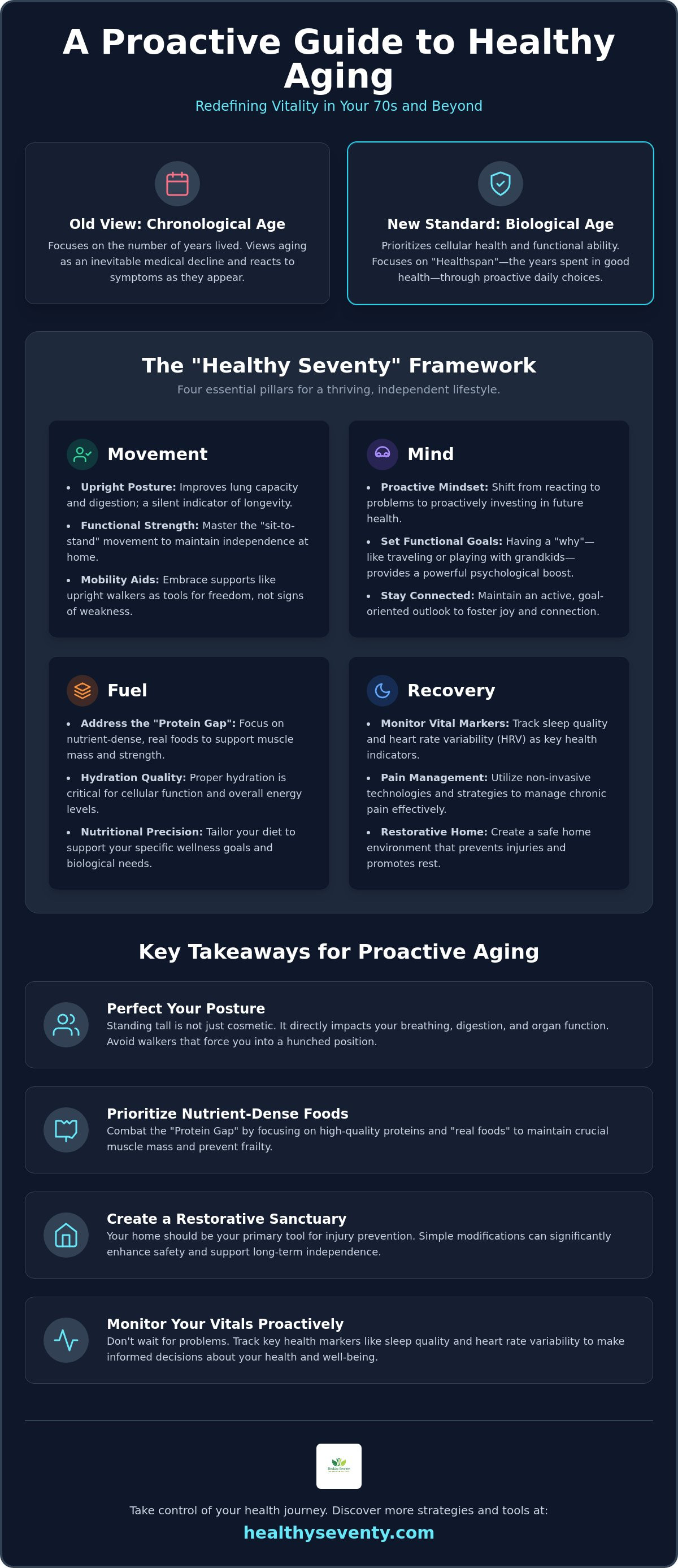
We often view aging as an inevitable decline, but the modern perspective is far more empowering. Healthy aging is the process of developing and maintaining the functional ability that enables well-being in older age. It's about your capacity to do what you value. When we ask What is Aging?, we find it isn't a disease to be cured. Instead, it's a natural phase of life that simply requires specific, thoughtful adjustments. By shifting our focus from the number of years lived to the quality of those years, we can embrace a future filled with vitality.
In 2026, the scientific community has moved toward prioritizing "Biological Age" over "Chronological Age." Your birth certificate might say you're 75, but your cellular health and physical stamina could tell the story of someone much younger. This shift highlights that our daily choices are powerful tools for internal rejuvenation. To help you navigate this, we utilize the "Healthy Seventy" framework. This approach rests on four essential pillars: Movement, Mind, Fuel, and Recovery. These aren't just abstract concepts; they are the practical foundations for implementing healthy aging tips for seniors that actually work.
The Shift from Passive to Proactive Aging
Waiting for symptoms to appear before taking action is the most common mistake. Proactive aging focuses on "healthspan," which is the period of life spent in good health, rather than just "lifespan." If you wait for joint pain to stop you from walking, you're reacting to a problem. If you prioritize mobility today, you're investing in your future independence. Small, daily increments in activity or nutrition lead to massive long-term gains. It's the difference between merely surviving and truly thriving in your later years.
Identifying Your Personal Wellness Goals
It's vital to differentiate between "normal" aging and addressable health challenges. You might think waking up with stiff joints is just part of the package, but often, these are issues we can improve with the right movement and tools. Setting functional goals keeps your spirit high. Whether it's the strength to climb the stairs to a grandkid's bedroom or the stamina to travel abroad, having a specific "why" makes the journey meaningful. Maintaining an active, goal-oriented mindset provides a profound psychological boost, reminding you that your legacy is still being written. These healthy aging tips for seniors are about more than just physical health; they're about the joy of living fully and staying connected to what matters most.
Maintaining Mobility and Posture: Beyond Basic Walking
Posture is often the silent indicator of a senior's overall health and longevity. It isn't just about standing tall for a photo; it’s about the structural integrity of your entire body. When we slouch, we compress our internal organs, which can lead to reduced lung capacity and sluggish digestion. For those seeking a comprehensive guide to healthy aging, understanding these mechanics is essential. Maintaining an upright frame ensures your heart and lungs have the space they need to function at their peak. It’s a simple shift that pays dividends in how you feel every single day.
Beyond standing, we must look at functional power. The "sit-to-stand" movement is a critical marker of independence. Can you rise from a favorite armchair without using your hands? This simple action requires significant lower body strength and core stability. It's one of the most practical healthy aging tips for seniors because it directly impacts your ability to navigate your home safely. If you find this movement becoming difficult, it's a signal to focus on targeted strength building before mobility begins to decline significantly.
Many of us feel a psychological barrier when considering mobility aids. There’s often a fear that using a walker means giving up, but the opposite is true. Choosing the right support is an act of defiance against limitation. It’s a way to stay in the game, keep attending family gatherings, and continue your morning walks. Using a tool to maintain your freedom is a sign of wisdom, not weakness. Embracing these supports early can prevent the falls that often lead to more serious complications.
The Power of Upright Movement
Traditional walkers often force users into a "hunched" position, which can lead to chronic back pain and a restricted gaze. Switching to a VOCIC Upright Walker changes the equation by allowing you to stand within the frame rather than behind it. By enabling a more natural, vertical alignment, upright walkers relieve the spinal pressure caused by traditional rolling walkers that force the body into a forward lean. This simple shift in weight distribution helps realign the spine and opens up the chest for better oxygen intake.
Footwear and Balance: The Foundation of Every Step
Stability begins where your body meets the ground. As we age, the sensory feedback from our feet can diminish, making balance more precarious. High-quality footwear like Orthofeet Orthopedic Walking Sneakers provides the arch support and stability needed to prevent trips and falls. You can also improve your balance at home with the "Stork Stand." Practice standing on one leg while holding onto a sturdy counter; try to increase your time by a few seconds each day. Incorporating these healthy aging tips for seniors into your routine builds the confidence needed to stay active. If you're ready to improve your stride, finding the right pair of shoes is a perfect place to start.
Nutritional Precision and the Hydration Quality Gap
As we mature, our bodies undergo a metabolic shift where we require fewer total calories to maintain weight, yet our need for vitamins and minerals actually increases. This creates a necessity for high nutrient density in every meal. One of the most vital healthy aging tips for seniors is to prioritize quality over quantity, ensuring that every bite serves a purpose for cellular repair and energy. When your meals are packed with the right nutrients, you feel more alert and resilient throughout the day.
We also face what researchers call the "Protein Gap." Maintaining muscle mass becomes harder as we age, a condition known as sarcopenia. To combat this, it's not just about eating more protein; it's about the quality of that protein. Leucine, a specific amino acid found in high-quality sources like eggs and lean meats, acts as a "trigger" for muscle synthesis. Ensuring you get enough leucine at each meal is a proactive way to protect your physical strength and keep up with your daily activities.
Hydration presents a unique challenge called the "Thirst Paradox." The biological sensation of thirst often declines with age, meaning your body might be dehydrated even if you don't feel thirsty. According to the WHO on Healthy Ageing, maintaining functional ability requires a supportive environment, and that starts with internal hydration. Fiber also plays a supporting role here, as it requires adequate water to aid digestion and keep your mind clear. Without enough water, even the healthiest diet can leave you feeling sluggish.
The Importance of Pure Water for Cellular Health
Tap water often contains trace amounts of heavy metals or microplastics that can exacerbate chronic inflammation in older adults. A countertop reverse osmosis water filter provides a simple solution by removing these impurities right at the source. This ensures that the water you use for drinking and cooking is as pure as possible, supporting your body’s natural detoxification processes. Making hydration a seamless part of your routine, like drinking a full glass with every meal, makes a world of difference.
Brain-Boosting Foods and Anti-Inflammatory Diets
Dietary choices also impact cognitive longevity. The MIND diet, which blends Mediterranean and DASH principles, has shown significant promise in delaying neurodegeneration. Focus on "superfoods" like blueberries for antioxidants, walnuts for healthy fats, and fatty fish for omega-3s. Managing your blood sugar is equally critical; researchers often refer to Alzheimer’s as "Type 3 Diabetes" due to the link between insulin resistance and brain health. These healthy aging tips for seniors offer a holistic path toward staying sharp and vibrant for years to come.
Creating a Safe and Restorative Home Environment
Your home should be more than just a place to live; it should be a sanctuary that actively supports your well-being. Statistics from the CDC indicate that the home environment is the greatest predictor of whether a person will remain injury-free as they age. We like to call this the "Restorative Home" concept. Instead of viewing home modifications as clinical or restrictive, we see them as a way to turn your living space into a wellness sanctuary. A safe home doesn't just prevent accidents; it provides the confidence you need to host family gatherings and stay socially connected, which is vital for your mental health.
It's also common to feel a sense of "What If" anxiety when living independently. You might worry about what would happen if you had a slip while no one was around. Modern technology has turned these fears into manageable challenges. By integrating smart home tools and reliable communication devices, you can replace that underlying worry with a sense of profound security. These healthy aging tips for seniors aren't about changing who you are; they're about ensuring your environment is as resilient and supportive as you are.
Fall-Proofing Your Living Space
Creating a safer home starts with a simple three-step audit. First, evaluate your lighting. Replacing dim bulbs with high-lumen LEDs and adding motion-sensor nightlights in hallways can prevent trips in the dark. Second, clear floor obstacles by removing loose rugs or securing them with non-slip backing. Third, focus on the bathroom, where installing sturdy grab bars and non-slip mats can make a world of difference. For 24/7 peace of mind, many find that medical alert systems for seniors provide an essential safety net that allows for true independence. You can even integrate mobility devices into your home safety plan without sacrificing your personal decor by choosing sleek, modern designs that feel like part of the furniture.
The Science of Heat: Infrared Therapy for Recovery
Recovery is a pillar of vitality that is often overlooked. Using home infrared saunas for elderly individuals is a powerful way to improve circulation and soothe joint stiffness from the comfort of your living room. Unlike traditional saunas that use steam and intense heat, infrared models use light to warm the body directly at lower, more comfortable temperatures. Spending just 15 minutes in the gentle warmth of an infrared sauna effectively mimics the physiological benefits of mild cardiovascular exercise by increasing heart rate and improving blood flow. This makes it a safer and more relaxing option for those looking to boost their recovery. If you're looking to upgrade your home wellness routine, you can learn more about restorative heat therapy here.
Proactive Monitoring and Non-Invasive Pain Management
Monitoring your health shouldn't be limited to an annual check-up at the doctor's office. In 2026, tracking "Vital Signs" like sleep quality and Heart Rate Variability (HRV) at home has become a cornerstone of long-term wellness. These metrics offer a window into how well your body is recovering from daily stress and physical activity. When you understand your HRV, you can make better decisions about when to stay active and when your body needs a day of rest. This proactive approach ensures you stay ahead of potential issues before they become limitations.
Chronic pain is frequently the primary barrier to an active lifestyle, making it difficult to enjoy the healthy aging tips for seniors we've discussed. While many have historically relied on NSAIDs for relief, long-term use can lead to digestive complications and kidney strain. Moving toward non-invasive alternatives is a safer, more sustainable path for maintaining comfort. During your next medical consultation, focus your questions on preventive screenings for inflammation markers and bone density to ensure your foundation remains strong. Taking charge of these conversations empowers you to be an active partner in your healthcare journey.
Modern Solutions for Chronic Joint Pain
The landscape of pain management has shifted toward non-invasive joint pain relief technologies that you can use in the comfort of your home. At-home shockwave therapy devices are a prime example; they use acoustic waves to stimulate natural tissue healing and improve blood flow to injured areas. This technology is particularly effective for addressing stubborn conditions like plantar fasciitis and arthritis without the need for surgery or painful injections. By treating the source of the pain rather than just masking the symptoms, you can regain the mobility needed to stay engaged with your favorite hobbies and family activities.
Cognitive Sharpness and Social Legacy
Maintaining a sharp mind is just as much about social connection as it is about mental exercises. The "Social Prescribing" trend highlights that volunteering and community engagement are as vital for your longevity as any vitamin. For cognitive health in your 70s, focus on challenging habits like learning a new language or a complex skill rather than sticking to repetitive puzzles. We also encourage creating a "Legacy Project," such as writing a memoir or organizing a community garden. These projects provide a deep sense of purpose and mental engagement, ensuring your healthy aging tips for seniors include a focus on the wisdom and experience you continue to share with the world.
Embracing Your Most Vibrant Chapter
True vitality in your 70s and beyond is built on the daily choices you make to support your body and mind. By shifting from a passive approach to a proactive one, you've already taken the most important step toward maintaining your independence. We've explored how prioritizing upright posture, refining your nutritional intake, and transforming your home into a restorative sanctuary can fundamentally change your daily experience. These aren't just clinical adjustments; they're investments in your ability to keep up with grandkids and enjoy life on your own terms.
Implementing these healthy aging tips for seniors allows you to wake up with less pain and more confidence in your physical strength. You deserve a lifestyle that celebrates your experience while providing the modern tools necessary for a high quality of life. We're here to act as your partner in this journey, offering expert-vetted wellness advice and products selected for their safety and durability. Our community of active seniors trusts us to provide reliable solutions for every stage of life. Explore our curated selection of senior wellness products to support your healthy aging journey. You've built a beautiful life, and it's time to ensure you have the energy and clarity to enjoy every moment of it.
Common Questions About Vitality and Aging
What are the best healthy aging tips for seniors living alone?
Living alone successfully requires a blend of consistent social engagement and reliable safety systems. One of the best healthy aging tips for seniors in this situation is to schedule regular video calls or community meetups to combat the risks of isolation. Additionally, using a Landline Personal Emergency Alert Device provides an essential safety net. It ensures that help is always a button press away, allowing you to maintain your independence with total confidence.
How much exercise do seniors really need for healthy aging?
Most older adults should aim for at least 150 minutes of moderate-intensity aerobic activity each week. According to 2026 CDC guidelines, you should pair this with muscle-strengthening activities at least two days a week. You don't need to run marathons; even brisk walking or water aerobics makes a significant difference. Consistency is the real key to maintaining your heart health and metabolic function as you age.
Can you reverse signs of aging in your 70s?
While you cannot change your birth year, you can significantly improve your biological age through proactive lifestyle shifts. Research shows that strength training and nutritional adjustments can restore muscle mass and bone density even in your 70s. By focusing on functional ability rather than just a number, you can regain the stamina and clarity typically associated with younger years. It is never too late to start a journey toward renewed vitality.
What is the most important nutrient for seniors to prioritize?
Protein is the most critical nutrient for seniors to prioritize to prevent muscle loss and frailty. Aim for high-quality sources like lean meats, eggs, or legumes at every meal to ensure you're getting enough leucine. This is particularly important because your body becomes less efficient at processing protein as you get older. Prioritizing protein helps you maintain the physical strength needed for daily tasks and long-term independence.
How can I prevent falls in my home as I get older?
Preventing falls starts with a thorough audit of your home environment and the footwear you choose. Ensure all hallways are brightly lit and free of loose rugs or clutter that could cause a trip. Wearing specialized shoes like Orthofeet Orthopedic Walking Sneakers provides the stability and arch support necessary for a confident stride. These simple environmental changes are your first line of defense against injuries that could limit your mobility.
Is it safe for seniors to use an infrared sauna every day?
Using a home infrared sauna daily is generally safe and highly beneficial for most seniors when used at moderate temperatures. These saunas operate at lower heat than traditional steam rooms, making them much easier on your cardiovascular system. Regular sessions can improve circulation and significantly reduce chronic joint stiffness. Just remember to stay hydrated and listen to your body's signals during every session to ensure you don't overexert yourself.
What are the early signs of cognitive decline vs. normal aging?
Normal aging often involves occasionally forgetting a name or misplacing your glasses, but these memories usually return later. Cognitive decline is characterized by more significant challenges, such as getting lost in familiar neighborhoods or struggling with basic tasks like following a favorite recipe. If you notice persistent changes in judgment or personality, it's a good idea to discuss these observations with a healthcare professional for a proactive assessment.
How do upright walkers differ from traditional walkers for posture?
Upright walkers allow you to stand vertically within the frame, whereas traditional walkers often force a forward-leaning, hunched posture. This vertical alignment reduces strain on your back and neck while simultaneously improving your lung capacity. By using a VOCIC Upright Walker, you can maintain eye contact with others and walk with a more natural gait. It's a modern solution that prioritizes both your physical health and your social confidence during daily walks.

Comments