


Infrared Sauna for Improved Skin Health in Seniors: Skin Effects
Combining treatments isn’t automatically better for aging skin. An infrared sauna for improved skin health in seniors may fit alongside a skincare routine, but pairing sauna heat with another skin treatment depends on what that treatment involves and how your skin responds. Heat may influence collagen and elastin, proteins associated with skin firmness and elasticity, but it shouldn’t be treated as a guaranteed way to change them.
It’s understandable to want a routine that supports comfortable, healthy-looking skin without adding unnecessary strain. This guide explains what infrared heat may mean for collagen, elastin, and mature skin, and how a session works. You’ll also learn how to consider sauna use alongside other treatments, choose a gradual routine, and think about how sessions might fit into your wellness habits. The aim is to help you make an informed choice that feels comfortable and practical.
Table of Contents
1. Collagen and elastin production
Collagen provides structural support, while elastin helps skin stretch and return to shape. With age, changes in these proteins can contribute to looser texture and visible lines. One research summary reports collagen production declines approximately 1% per year after age 20. This gradual shift can leave mature skin looking less firm, though individual skin still varies. An infrared sauna for improved skin health in seniors is sometimes considered as part of a wellness routine.
Infrared heat raises body temperature and may stimulate processes linked with collagen production. Sauna heat also widens blood vessels, increasing blood flow to the skin. Researchers have proposed that heat exposure may support collagen and elastin activity. These proteins contribute to firmness and flexibility, but warmth does not ensure that new protein replaces age-related loss. Inflammation and skin condition can also affect how texture and redness look after a session.
One cited study reported a 26% increase in collagen production after 12 weeks. A separate 12-week sauna skin therapy study recorded participants’ reports of fewer wrinkles and crow’s feet. Participants also reported improvements in tone, softness, smoothness, elasticity, clarity, and firmness. These are reported observations, not proof that every senior will see the same effect. Session design, exposure, and starting skin condition influence how such findings apply. For seniors, an infrared sauna for improved skin health may be best understood as a possible support, not a skin treatment.
Skin appearance changes are not immediate. Research describes texture and elasticity improvements as potentially measurable after 8–12 weeks of regular infrared sauna use. That timeframe offers a more considered way to assess progress than judging skin after one visit. Compare the same cheek lines or rough patches under similar lighting. Keep notes on comfort and visible changes. Sauna therapy may support skin wellness, but it shouldn’t replace assessment of persistent inflammation, new lesions, or a changing spot. Heat is a routine, not a skin diagnosis.
2. What’s Really Happening in Your Body During a Sauna Session?
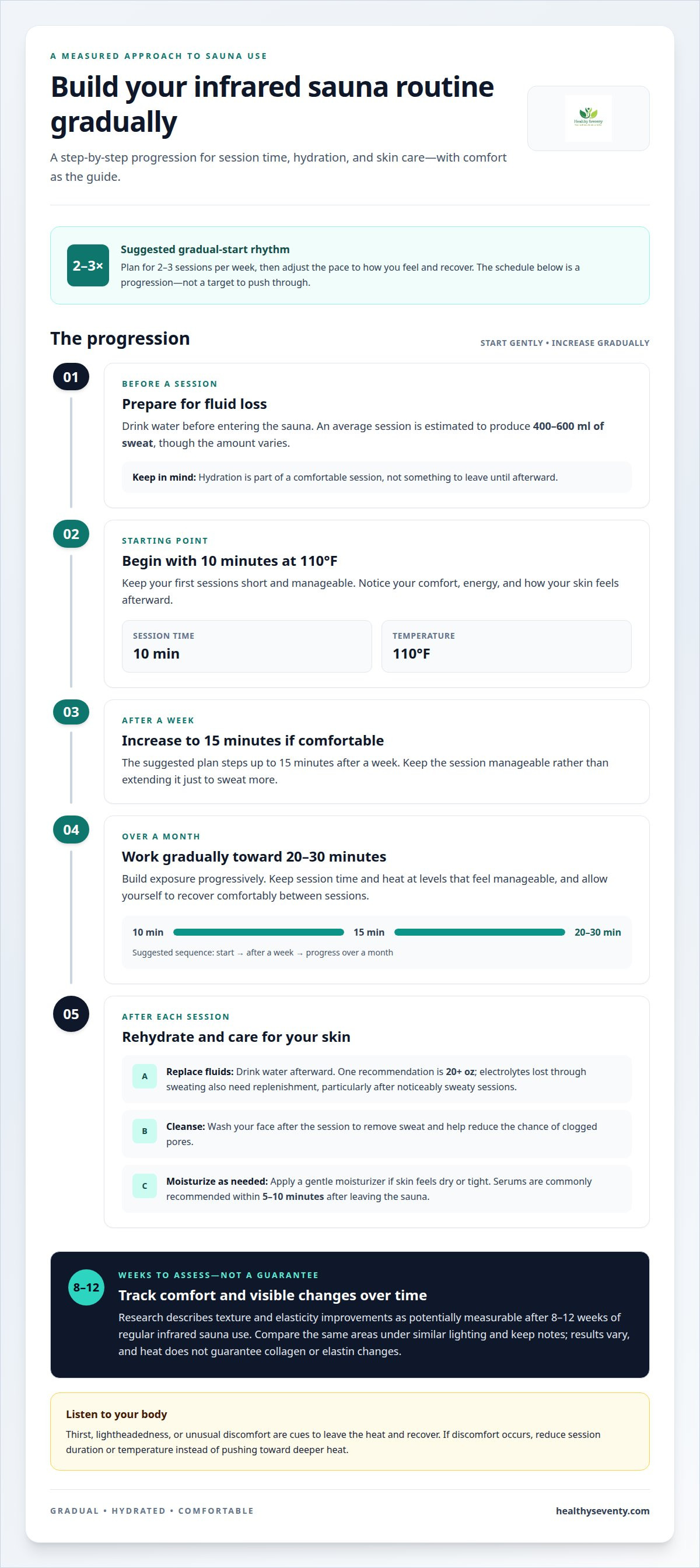
During an infrared sauna session, heat raises body temperature and increases sweating. The resulting fluid loss can affect how you feel afterward, especially if you begin without enough fluids. An average session is estimated to produce 400–600 ml of sweat, though the amount varies. Hydration is part of a comfortable routine, not an afterthought.
Drink water before a session, then replace fluids afterward. Electrolytes lost through sweating also need replenishment, particularly after a session that leaves you noticeably sweaty. One recommendation is to drink 20+ oz of water after sauna use. Treat thirst, lightheadedness, or unusual discomfort as cues to leave the heat and recover. Avoid extending a session just to sweat more.
Start gently rather than expecting your body to adapt at once. A gradual plan begins with 10-minute sessions at 110°F, then increases to 15 minutes after a week. Over a month, the suggested progression works toward 20–30 minutes. These steps give you opportunities to notice how each session affects comfort, hydration, and energy. Keep the heat and duration manageable as you build consistency.
Sweating may leave the skin feeling temporarily refreshed, but it doesn’t replace everyday moisture care. Cleanse your face after a session to remove sweat and help reduce the chance of clogged pores. Apply a gentle moisturizer afterward if your skin feels dry or tight. Serums are commonly recommended within 5–10 minutes after leaving the sauna. Sauna heat may support skin hydration, but results depend on the skin and routine. For a comfortable home routine, explore home sauna sessions and keep hydration and gradual acclimation in view.
3. How often should I use an infrared sauna?
For a gradual start, the suggested schedule is 2–3 sessions per week. Begin with 10 minutes at 110°F, increase to 15 minutes after a week, then work toward 20–30 minutes over a month. These levels build exposure progressively. For ongoing skin maintenance, a regular schedule may suit some people, while less frequent sessions may be more practical for consistent long-term use. Choose a pace that lets you recover comfortably between sessions.
Yes, sauna studies have included older adults, although some findings don’t isolate infrared heat or skin effects. One study of 42 adults over age 60 reported that regular sauna use increased deep sleep by 15%. That result concerns sleep, not collagen or skin appearance. A separate study followed 34 patients with rheumatoid arthritis or ankylosing spondylitis through eight infrared sauna sessions over four weeks. It examined a health condition, not senior skin outcomes.
Home infrared sauna prices in the United States vary with factors such as cabin size, heating setup, controls, and installation, so a single figure won’t fit every model. For seniors, practical considerations include ease of entry, a stable seat, and controls within comfortable reach. These details can make adjusting the temperature and session more manageable. Healthy Seventy offers the Home Infrared Sauna for Relaxation for those considering sauna sessions at home.
Frequency matters less than a schedule you can follow safely and consistently. Two 30-minute sessions per week are another suggested routine, while longevity studies often cite three to four weekly sessions. Those patterns concern sauna use broadly; they don’t establish an ideal skin schedule for every older adult. Skin response, comfort, and the temperature you use all affect how often sessions feel appropriate. Regular use over time is more relevant to assessing skin changes than isolated visits. If you notice discomfort, reduce the session duration or temperature rather than pushing toward deeper heat. Gradual adjustments help you find sustainable levels without turning sauna use into a test of endurance.
4. Infrared sauna heat and how it differs from traditional saunas
Traditional saunas heat the surrounding air, with temperatures described as reaching 180–200°F. Infrared cabins operate at approximately 120–140°F and direct heat toward the body instead. The difference is the heating method, not a guarantee of a stronger skin response. For older adults sensitive to intense heat, a lower-temperature environment can feel more manageable, but comfort still depends on personal response.
Research on possible skin benefits includes reports of improved texture, elasticity, and appearance after sauna or red-light therapy. Some findings rely on participants’ reports, while others examine specific light exposures. They don’t establish that infrared sauna use reliably improves everyone’s skin. Heat also widens blood vessels and increases circulation, but that response alone does not prove lasting improvements in hydration, collagen, or wrinkles in older adults.
Infrared heat is sometimes discussed in connection with heat-shock proteins, which are part of the body’s cellular stress response. That mechanism alone does not demonstrate a skin benefit from sauna use. Treat claims about cellular repair as separate from measured changes in skin appearance. Red light and infrared heat are also different exposures, even when a device combines them.
For inflammatory skin conditions, heat deserves care. Sauna use is described as potentially reducing redness linked with rosacea or general irritation, but heat can also feel uncomfortable on sensitive skin. For psoriasis or rosacea, one recommendation is to start at 120–130°F and with a brief session. Notice whether redness, burning, or discomfort increases, and leave the sauna if symptoms worsen.
If you have heat sensitivity or a health condition that affects your response to warmth, discuss sauna use with your healthcare professional before beginning. Studies have examined sauna use in people with conditions including heart failure, but that does not make sauna therapy suitable for every individual. For a home routine, explore infrared sauna options and prioritize gentle heat over intensity.
Healthy Seventy: Home Infrared Sauna for Relaxation
Healthy Seventy offers the Home Infrared Sauna for Relaxation as a home wellness option for adults considering regular sauna sessions. After learning how heat may affect skin, collagen, and comfort, you can use this information to decide whether a home sauna fits your routine. It’s best viewed as a relaxation product, not a guaranteed treatment for wrinkles, dryness, or other skin concerns. A gradual approach can help you pay attention to how your skin and overall comfort respond. Healthy Seventy also shares wellness guidance for adults aged 60 and older, supporting informed choices about everyday wellbeing. If you’d like to learn more about the Home Infrared Sauna for Relaxation, contact Healthy Seventy.
Choose a Wellness Step That Fits Your Routine
Think of skin care as one part of a routine that supports comfort, confidence, and independence. If you’re considering infrared sauna use to support skin health as a senior, choose a pace that feels manageable and pay attention to your comfort. Skin outcomes vary, and a sauna is not a substitute for professional care when a skin concern persists.
Healthy Seventy’s Home Infrared Sauna for Relaxation may suit adults exploring heat at home. The product range also includes the VOCIC Upright Walker for Seniors and Orthofeet Orthopedic Walking Sneakers, which support different aspects of everyday wellbeing. Explore Healthy Seventy’s wellness information and products to find options that fit your needs.
Contact Healthy Seventy for support, and keep moving toward a routine that feels right for you.
Frequently Asked Questions
Can I combine it with other treatments?
Yes, sauna use can be part of a broader skin-care routine, but timing matters. Heat may make recently treated or already sensitive skin feel more reactive. Avoid scheduling a sauna immediately around a treatment that leaves your skin irritated, and follow that treatment’s aftercare instructions. This information is for educational purposes and does not replace professional medical advice.
How often should I use an infrared sauna?
A gradual schedule, such as two or three sessions a week, can help you notice how your body responds. Keep a simple record of session days and note whether your skin feels tight, unusually warm, or irritated afterward. If a session leaves your skin uncomfortable, allow more recovery time before the next one. Consistency should support a comfortable routine, not become a test of endurance.
What should I wear in the sauna?
Choose light, comfortable clothing that lets you sit and move easily, or use a towel if that feels more comfortable and the sauna’s instructions allow it. Avoid anything that restricts movement or makes the heat harder to tolerate. Remove skincare products that feel uncomfortable as you sweat, and keep a towel nearby. Follow the sauna’s user instructions for clothing and setup.
What’s Really Happening in Your Body During a Sauna Session?
As your body warms, blood vessels widen, circulation increases, and sweating helps cool you. Infrared sauna use is described as raising core temperature by about 3 degrees, though your immediate response can vary. You may notice warmth, a faster heartbeat, and perspiration. Pay attention to these sensations rather than trying to achieve a particular level of sweating, and leave the heat if you feel unwell.
Who Is This Best For?
An infrared sauna may suit adults who enjoy warmth and want a relaxation practice at home. It is not a treatment for skin disease, persistent irritation, or other medical conditions. If your health or medication affects your heat tolerance, consider that before starting and discuss sauna use with a healthcare professional. Healthy Seventy’s information is educational and does not replace professional medical advice or regular care.
How often can seniors safely use an infrared sauna?
There isn’t one schedule that is safe for every older adult. A gradual routine, such as two or three sessions a week, gives you a chance to observe how your body responds. Avoid increasing both heat and session length at the same time. If a health condition or medication affects your heat tolerance, discuss sauna use with a healthcare professional before establishing a routine.
Comments