
Cognitive Health Resources for Seniors: A 2026 Guide to Mental Vitality
- healthyseventy3
- 2 days ago
- 13 min read
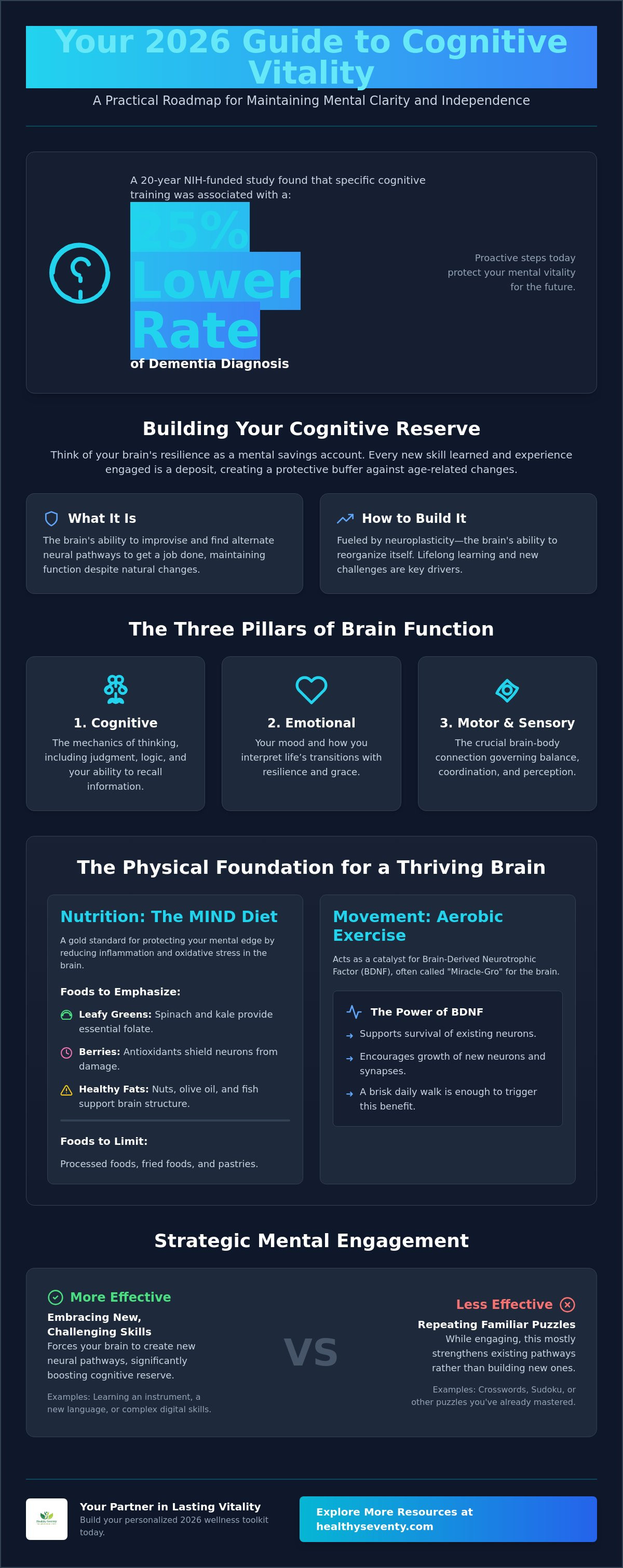
Did you know that a 20-year NIH-funded study found that specific cognitive training was associated with a 25% lower rate of dementia diagnosis? This powerful statistic reminds us that your mental vitality isn't just a matter of luck; it's a result of the proactive steps you take today. We understand the quiet anxiety that can surface when you're overwhelmed by conflicting medical advice or the fear of losing your independence. It's often difficult to find reliable cognitive health resources for seniors amidst the noise of the modern world.
You deserve a clear path forward that values your wisdom and supports your desire to stay sharp. This 2026 guide offers a curated framework of tools, lifestyle shifts, and expert resources designed to maintain your cognitive clarity and independence as you age. We'll walk you through a practical roadmap for daily mental maintenance, explain how physical health directly influences brain function, and highlight the latest community-based and digital tools for staying engaged. From understanding your 2026 Medicare coverage for assessments to choosing the right brain training apps, we are here as your dedicated partner in this journey toward lasting vitality.
Table of Contents
Understanding Cognitive Health: More Than Just Memory
How do we define a life lived with vitality? For many, it's the ability to remain deeply engaged with the world, to share stories with grandchildren, and to navigate daily life with a sense of ease. At its core, cognitive health is your capacity to think, learn, and remember clearly. It's the foundation of your independence and the lens through which you experience every moment. While it's natural to feel a bit of trepidation about aging, shifting your perspective can change everything. Instead of viewing mental wellness as a reactive struggle against decline, we invite you to see it as a proactive journey of cultivation. Finding the right cognitive health resources for seniors is the first step in nurturing this vital part of yourself.
One of the most encouraging concepts in modern science is "Cognitive Reserve." Cognitive reserve is the brain’s ability to improvise and find alternate ways of getting a job done. This reserve acts as a powerful buffer, allowing your mind to stay resilient even when faced with the natural changes that come with time. This resilience is fueled by the brain's ability to reorganize itself by forming new neural pathways. Think of it as a mental savings account; every time you learn something new or engage your senses, you're making a deposit that protects your future clarity.
It's also helpful to distinguish between normal age-related shifts and signs that may require professional attention. We all have moments where a word is on the tip of our tongue or we forget where we placed our glasses. These are typically minor "glitches" in a busy mind. However, if you notice a consistent struggle to follow familiar instructions, difficulty managing routine finances, or getting lost in places you know well, it's a sign to reach out for support. Addressing these concerns early isn't a loss of control. In fact, it's an act of empowerment that ensures you have access to the best cognitive health resources for seniors available today.
The Five Pillars of Brain Function
Cognitive: This involves the mechanics of your thinking, including judgment, logic, and your ability to recall information.
Emotional: This pillar focuses on your mood and how you interpret life’s transitions with resilience and grace.
Motor and Sensory: This is the crucial brain-body connection that governs your physical balance, coordination, and how you perceive the world through your senses.
Why Cognitive Vitality Matters for Independence
Maintaining your mental edge is directly tied to your personal freedom. When your mind is clear, you can confidently manage your household, drive safely, and stay active in your community. This sense of being "sharp" also has profound psychological benefits; it fosters a deeper connection with loved ones and allows you to continue building your legacy. By focusing on your cognitive health now, you're choosing a path that values your wisdom and protects your ability to live life on your own terms.
The Physical Foundation: Nutrition, Movement, and Rest
Building on the idea of cognitive reserve mentioned earlier, we must look at the biological machinery that supports it. Your brain requires a high-performance environment to function at its peak. This means prioritizing nutrition, movement, and rest as the non-negotiable pillars of your daily routine. Finding reliable cognitive health resources for seniors often starts with understanding this physical foundation. Cognitive health is deeply intertwined with your physical state. When you treat your body with care, you're directly investing in your mental clarity.
The MIND diet has emerged as a gold standard for those seeking to protect their mental edge. It emphasizes leafy greens, berries, and healthy fats while limiting processed foods. These aren't just "health foods"; they're specific tools that reduce inflammation and oxidative stress in the brain. Leafy greens like spinach and kale provide essential folate, while the antioxidants in berries help shield your neurons from damage. Every meal is an opportunity to fuel your legacy.
Physical activity does more than just keep your heart strong. Aerobic exercise acts as a catalyst for Brain-Derived Neurotrophic Factor (BDNF). Scientists often refer to BDNF as "Miracle-Gro" for the brain because it supports the survival of existing neurons and encourages the growth of new ones. Even a brisk daily walk can trigger this biological spark. It's a simple, powerful way to maintain your independence and keep your mind agile.
Rest is where the "cleaning" happens. During deep sleep, your glymphatic system becomes active, effectively washing away metabolic waste that accumulates during the day. Without this nightly rinse, your brain can feel foggy and sluggish. Managing conditions like high blood pressure and diabetes is also vital. These issues can restrict blood flow to the brain, making it harder for your mind to perform its best. Taking control of these factors is a major victory for your long-term vitality.
Feeding the Aging Brain
To keep your mind sharp, focus on nutrients like Omega-3 fatty acids found in fish, Vitamin B12, and a variety of antioxidants. Hydration is equally critical. Even mild dehydration can lead to confusion and fatigue. Exploring senior friendly water filtration systems ensures you have access to pure, clean water throughout the day. A countertop reverse osmosis water filter is a simple way to make hydration a seamless part of your wellness plan.
Restorative Habits for Mental Clarity
Consistency is your best friend for a healthy sleep cycle. Going to bed and waking up at the same time helps your brain consolidate memories more effectively. Relaxation techniques also play a role in lowering cortisol, the stress hormone that can impair thinking. Many find that home infrared saunas are excellent cognitive health resources for seniors, as the gentle heat promotes circulation and deep relaxation. It's a wonderful way to wind down and prepare your mind for restorative rest.
Strategic Mental Engagement: Challenging the Aging Brain
While a healthy body provides the fuel, your mind needs active, strategic engagement to truly flourish. Scientists once believed the brain stopped developing in early adulthood, but we now know the truth is much more inspiring. Neuroplasticity ensures that your brain continues to grow and rewire itself well into your 70s, 80s, and beyond. This means you have the power to strengthen your mental architecture every single day. By intentionally seeking out new cognitive health resources for seniors, you're giving your mind the variety it craves to stay resilient.
For a comprehensive look at how these habits fit into a larger wellness plan, the National Institute on Aging's guide to cognitive health offers a trusted foundation for proactive living. It's not just about keeping busy; it's about the quality of the challenge. While repetitive puzzles like Sudoku are enjoyable, they often become a form of mental maintenance rather than growth. To truly spark new neural connections, you should aim for lifelong learning. Picking up a new skill, such as learning a second language or mastering a musical instrument, forces the brain to build entirely new pathways.
Effective Brain Training Resources
Modern technology has opened doors to sophisticated mental exercises. In 2026, digital apps like BrainHQ (approximately $14 per month) and Lumosity (around $12 per month) are popular choices for targeted stimulation. Elevate also offers a free version with three games per day, making it an accessible entry point. These tools are excellent additions to your library of cognitive health resources for seniors because they provide measurable feedback. A 20-year NIH-funded study even found that specific speed-of-processing training was associated with a 25% lower rate of dementia diagnosis. Beyond the screen, consider volunteer opportunities that require executive function. Managing a community project challenges your ability to plan and organize complex tasks.
Combatting Social Isolation
The "Social Brain" concept highlights how vital human connection is for mental clarity. Meaningful conversation is one of the most complex cognitive tasks you can perform. It requires you to listen, interpret nuance, and formulate a response in real time. Research indicates that social isolation can lead to a faster rate of cognitive decline, making community engagement a necessity for your vitality. Senior centers, local book clubs, and intergenerational programs provide the perfect environment for this stimulation. Sharing your wisdom with younger generations doesn't just benefit them; it keeps your own mind agile and vibrant.
The Link Between Mobility, Safety, and Cognitive Function
We often treat the mind and body as separate entities, but they are deeply interconnected. When your physical stability is compromised, your brain must work overtime to manage basic movements. This creates a significant "cognitive load," where mental energy that should be used for conversation or memory is instead diverted to the constant, subconscious task of not falling. By addressing physical safety, you are actually utilizing one of the most effective cognitive health resources for seniors: the gift of mental bandwidth. When your body feels secure, your mind is finally free to focus on the things that truly matter.
The fear of injury can be just as taxing as a physical ailment. This "balance anxiety" often leads to a quiet withdrawal from social activities and the community. If you are worried about navigating a busy restaurant or a park path, you might choose to stay home. As we discussed in the previous section, this isolation leads to cognitive atrophy. Breaking this cycle requires a shift in how we view mobility aids. Rather than seeing them as signs of decline, we can embrace them as cognitive enhancers that restore your confidence and keep your social world expansive.
Reducing the Mental Burden of Movement
Traditional walkers often cause users to hunch forward, which can negatively impact both breathing and spatial awareness. Upright walkers, such as the VOCIC Upright Walker for Seniors, allow you to walk with a natural, tall posture. This alignment reduces the brain’s constant "threat assessment" regarding balance, allowing you to look around and engage with your environment. Pairing stable movement with supportive footwear like Orthofeet Orthopedic Walking Sneakers provides the sensory feedback your brain needs to feel grounded. When you move with ease, your mental energy stays where it belongs: in the present moment.
Creating a Stress-Free Cognitive Environment
Your home should be a sanctuary that supports a relaxed, high-functioning mind. Simple modifications can prevent "decision fatigue" and the constant stress of navigating hazards. Removing trip hazards and improving lighting are essential steps. Additionally, the peace of mind provided by medical alert systems cannot be overstated. Knowing that help is available at the touch of a button removes a layer of background anxiety that many seniors carry daily. When the body feels safe, the brain is free to engage in higher-level thinking. Investing in these cognitive health resources for seniors creates a foundation where your mental vitality can truly flourish. Explore our curated mobility solutions to find the right tools for your independent lifestyle.
Curating Your 2026 Cognitive Wellness Toolkit
Knowledge becomes a true catalyst for change only when it's transformed into a daily practice. As we have explored, maintaining your mental edge is a holistic endeavor that blends physical safety, nutrition, and social connection. Now it's time to assemble these elements into a personalized library of cognitive health resources for seniors that fits your unique lifestyle. You don't need to overhaul your entire life in a single day. Instead, focus on building a sustainable framework that empowers you to track your progress without feeling overwhelmed by data or complex technology.
While proactive habits are powerful, professional guidance remains a cornerstone of a sound wellness plan. If you notice persistent changes in your memory or mood, reaching out to a geriatrician or neurologist is an act of strength. In 2026, Medicare Part B continues to cover cognitive assessments as part of your Annual Wellness Visit at no out of pocket cost. These specialists can provide clinical clarity and help you refine your toolkit based on your specific health history. They act as expert partners who ensure your roadmap is both safe and effective.
Step-by-Step Implementation
Step 1: Conduct a Cognitive Audit. Take an honest look at your current habits. Are you getting restorative rest? Is your diet rich in the brain-supporting nutrients we discussed? Identifying these baseline patterns allows you to see exactly where small shifts can make the biggest impact.
Step 2: Choose One 90-Day Challenge. Select a new skill to master, such as basic photography or a new language. Commit to this mental engagement for the next three months. This timeframe is long enough to spark neuroplasticity but short enough to keep you motivated.
Step 3: Audit Your Physical Environment. Look for barriers to movement or safety hazards in your home. Reducing "balance anxiety" by integrating supportive tools ensures your brain remains free to focus on higher-level thinking rather than the fear of a fall.
Trusted Resources for Continued Growth
Staying informed with reliable information is vital for your long-term vitality. National organizations like the National Institute on Aging (NIA) and the Alzheimer’s Association provide excellent clinical updates and research-backed advice. For those seeking a more personal touch, the Healthy Seventy community offers peer support and access to curated wellness products designed specifically for your stage of life. We believe that every individual has a unique legacy to protect, and we are honored to be your partner in that journey.
Your journey toward mental vitality is not a race; it's a series of small, consistent choices that honor your wisdom and experience. By utilizing these cognitive health resources for seniors, you're taking a stand for your independence and your future. Start with one simple change today. Whether it's drinking more purified water or scheduling a social visit, each step reinforces your commitment to a life lived with clarity and joy.
Empowering Your Mental Legacy in 2026
Your journey toward a sharper, more vibrant mind is a testament to your wisdom and your commitment to a life well lived. We've explored how cognitive vitality isn't a static trait but a "reserve" you can build through purposeful movement, strategic social engagement, and a home environment that prioritizes your safety. By integrating these cognitive health resources for seniors into your daily routine, you're choosing to protect your independence and your legacy. You don't have to navigate this path alone. At Healthy Seventy, we provide expert-vetted wellness advice and curated products for aging in place to ensure you feel supported at every turn.
Explore our curated selection of mobility and wellness aids to support your independence and join our empowering community of active seniors. Every small step you take today strengthens the foundation of your mental clarity for tomorrow. Trust in your ability to thrive; your best chapters are still being written.
Frequently Asked Questions
What are the best free cognitive health resources for seniors?
The most reliable free cognitive health resources for seniors include the National Institute on Aging (NIA) website and your local public library, which often hosts workshops on digital literacy and new hobbies. It is also important to remember that Medicare Part B covers a cognitive assessment during your Annual Wellness Visit at no out of pocket cost. These community and government programs provide high quality information and screenings without the burden of a subscription fee.
Can brain games really prevent dementia or Alzheimer’s?
Brain games are effective tools for building cognitive reserve rather than a guaranteed way to prevent these conditions. While digital exercises can sharpen specific skills like processing speed, the most significant benefits come from variety. If you only play one type of puzzle, your brain becomes efficient at that specific task but eventually stops growing. Engaging in diverse mental challenges helps your mind stay flexible and resilient against age-related changes.
How does physical exercise specifically improve my brain health?
Physical exercise improves brain health by increasing blood flow and reducing the chronic inflammation that can damage neurons. It also stimulates the release of growth factors that support the survival of existing brain cells and the creation of new ones. Regular movement, even a 20-minute daily walk, helps clear metabolic waste more efficiently. This creates a healthier physical environment for your mind to process information and store new memories.
Is there a specific diet that is best for senior cognitive health?
The MIND diet is widely considered the most effective nutritional framework for maintaining long-term mental vitality. This approach combines the best elements of the Mediterranean and DASH diets, focusing specifically on berries, nuts, and leafy greens while minimizing red meat and sweets. This nutritional combination is designed to lower the risk of cognitive impairment by providing the brain with essential antioxidants and healthy fats that reduce neural stress.
What are the early warning signs of cognitive decline vs. normal aging?
Normal aging typically involves occasional forgetfulness, such as misplacing your glasses or forgetting a name that eventually comes back to you. In contrast, early warning signs of decline include getting lost in familiar neighborhoods or struggling to manage routine household finances. If you notice persistent difficulty with planning, solving problems, or following familiar instructions, it is a wise and proactive step to consult with a healthcare professional for a baseline screening.
How can I stay socially active if I have limited mobility?
You can stay socially connected through digital platforms like video calls and online community forums dedicated to your specific hobbies or interests. Many senior centers now offer "hybrid" book clubs and classes that you can join comfortably from home. Additionally, utilizing mobility aids like a foldable scooter or upright walker can provide the stability you need to attend local events confidently. Staying engaged with others is one of the best cognitive health resources for seniors available.
Are there any supplements that are proven to help with memory?
No single supplement is a "magic pill" for memory, and it is always best to prioritize nutrients from whole food sources first. While Omega-3 fatty acids and Vitamin B12 are crucial for neural health, you should consult your geriatrician before starting any new supplement regimen. They can help you determine if a specific deficiency exists and ensure that any addition to your routine does not interfere with your current medications or health conditions.
How often should I challenge my brain with new activities?
You should aim to engage your mind in something new or challenging every single day to maximize the benefits of neuroplasticity. This does not mean you need to master a complex skill daily; it can be as simple as taking a different route on your walk or trying a new recipe. The goal is to move beyond passive activities like watching television and instead participate in tasks that require active thought, focus, and problem solving.
Comments