
How to Improve Mobility in Seniors: A Holistic Guide to Independence in 2026
- healthyseventy3
- 2 days ago
- 13 min read
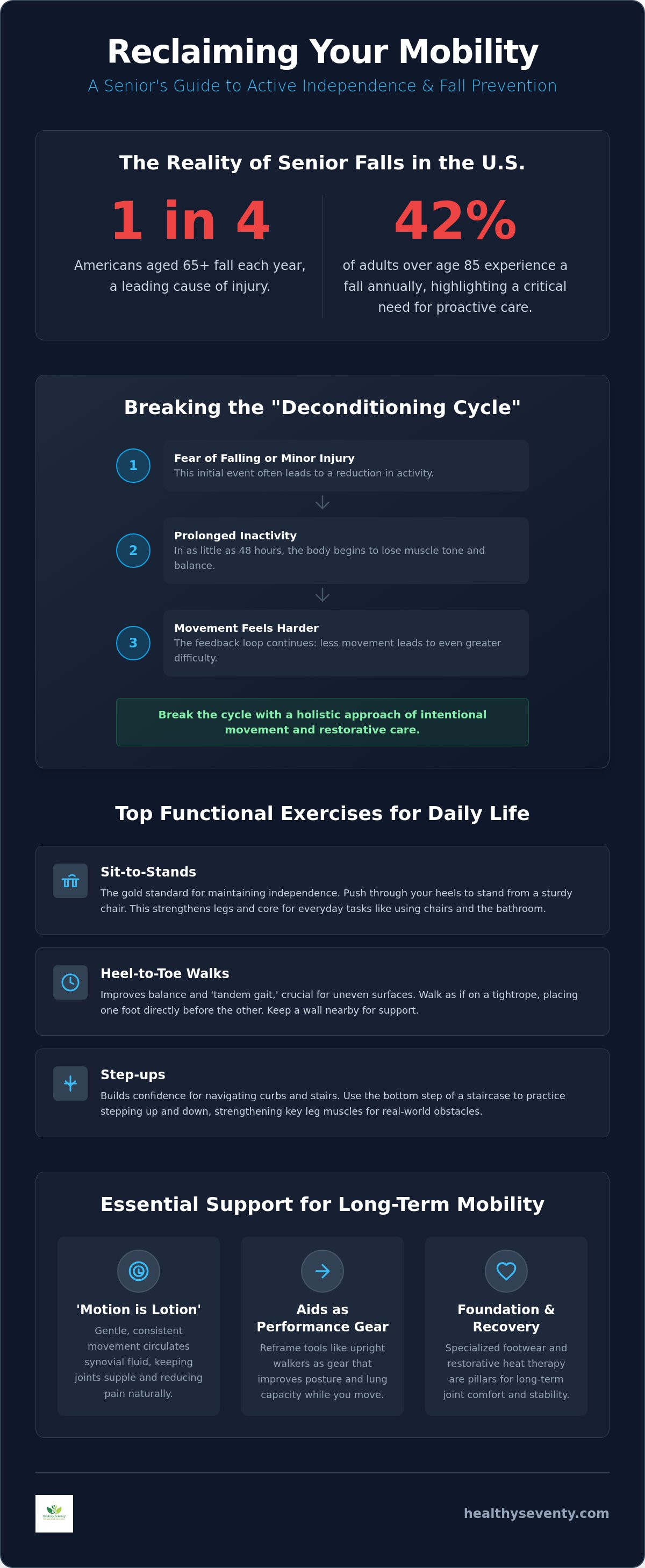
Did you know that one in four Americans aged 65 and older falls each year? For those over 85, that rate increases to 42%, which often leads many to wonder exactly how to improve mobility in seniors to stay safe. It's frustrating when joint stiffness turns a simple walk to the mailbox into a painful chore or when the fear of falling keeps you from the garden. You likely believe that staying in your own home and maintaining your legacy of independence is the highest priority, and you're right to feel that way.
We're here to show you that a declining range of motion doesn't have to be your story. This guide offers a comprehensive, research-backed framework for reclaiming your vitality through a synergy of intentional movement and restorative care. You'll discover how to blend the 150 minutes of weekly activity recommended by health experts with supportive tools like posture-correcting walkers and infrared therapy. We'll explore a proactive path toward pain-free days, ensuring you have the confidence to keep playing with your grandchildren and enjoying every corner of your home.
Table of Contents
Understanding Senior Mobility: More Than Just Moving
Have you ever felt that your world was shrinking because of a stiff hip or a heavy leg? In 2026, we view mobility as much more than just walking; it's the vital intersection of joint range, muscle strength, and neurological balance. It's the ability to reach for a high shelf or step off a curb with total certainty. Understanding Age-related mobility disability is the first step in reclaiming that freedom. When we discuss how to improve mobility in seniors, we're really talking about preserving your legacy of independence and your ability to stay connected with the people you love.
We often see seniors trapped in the 'Deconditioning Cycle.' This happens when a fear of falling or a minor injury leads to prolonged inactivity. In as little as 48 hours, the body begins to lose muscle tone and balance. This inactivity creates a feedback loop where moving feels harder, so we move less, leading to a rapid loss of function. Breaking this cycle requires a holistic approach that addresses both your physical frame and your confidence. It's helpful to distinguish between two types of movement:
Joint Mobility: This is the specific range of motion in a single joint, like how far your knee can bend or your shoulder can rotate.
Functional Mobility: This is the total-body ability to move through your environment, such as getting in and out of a car or walking to a neighbor's house.
Maintaining both is essential for your emotional and cognitive health. Research shows that seniors who move more frequently often experience better mental clarity and lower rates of social isolation. When you can walk to the park or the store, you stay engaged with the world, which is the best defense against the loneliness that sometimes accompanies aging.
The Science of Aging Joints and Muscles
As we age, our bodies undergo biological shifts. Sarcopenia, the natural loss of muscle mass, can lead to a significant decline in strength every decade if left unaddressed. Meanwhile, the synovial fluid that cushions our joints can become thinner or less abundant, leading to that 'rusty' feeling in the morning. Proprioception is your body's ability to sense its own position in space, acting as an internal GPS that is vital for preventing falls in 2026.
Why 'Motion is Lotion' for the Senior Body
The old advice to 'just take it easy' is often counterproductive. While rest has its place, movement is what actually builds bone density and keeps joints supple. We now follow the 'Active Aging' standard, which treats low-impact movement as a non-negotiable part of daily life. Think of your joints like a door hinge; if you don't swing them, they'll eventually seize up. Gentle, consistent motion keeps the 'lotion' of synovial fluid circulating, reducing pain naturally. Learning how to improve mobility in seniors isn't about running marathons; it's about keeping the body's natural machinery well-oiled and ready for the day's adventures.
The 5 Best Exercises to Improve Senior Mobility Safely
If you're looking for practical ways on how to improve mobility in seniors, the answer lies in functional fitness. These are movements that mimic the tasks you perform every single day. By focusing on muscle groups that help you stand up, step over curbs, and reach for groceries, you build a body that's ready for real life. It's not about how much weight you can lift; it's about maintaining the freedom to move through your own home without hesitation.
Safety is our priority, so we recommend starting slowly. If your range of motion feels limited, don't be discouraged. Small, consistent efforts lead to significant gains in stability. Remember that your core is the anchor for all these movements. Keeping your midsection gently engaged during exercise will help protect your spine and improve your overall balance.
Lower Body Strength: The Foundation of Stability
Your legs are the pillars of your independence. To keep them strong and reliable, focus on these three essential movements:
Sit-to-Stands: This is the gold standard for maintaining the ability to use the bathroom and chairs independently. Start by sitting on a sturdy chair with your feet flat. Lean forward slightly and push through your heels to stand up. If you're just starting, use the armrests for support.
Heel-to-Toe Walks: This improves your 'tandem gait,' which is crucial for staying steady on uneven surfaces. Imagine walking on a tightrope, placing one foot directly in front of the other. Keep a wall nearby for a light touch if your balance feels off.
Step-ups: Navigating curbs and stairs requires confidence. Use the bottom step of a staircase and practice stepping up with one foot, then the other. This builds the power needed to explore the world outside your front door.
Flexibility and Range of Motion: Unlocking the Joints
Strength is only half the battle; your joints also need the room to move. Ankle mobility is often the 'secret' to better balance because it allows your body to adjust to small trips before they become falls. Try gentle ankle circles while seated to keep the joint lubricated. For those who still drive or enjoy walking in busy areas, gentle torso twists help you look behind you safely. Finally, wall slides are excellent for improving shoulder mobility, making it easier to reach those overhead cabinets without strain.
These exercises work best when paired with the right support. For example, wearing Orthofeet Orthopedic Walking Sneakers can provide the heel stability needed to perform these movements safely. If you find yourself needing more than just a wall for balance, exploring various Mobility Aids can offer the extra security required to stay active. Mastering how to improve mobility in seniors is a journey that begins with these small, intentional steps.
Leveraging Mobility Aids for Active Independence
Think of a mobility aid as a set of high-performance hiking boots or a specialized tennis racket. It's gear designed to help you reach your goals. When exploring how to improve mobility in seniors, we must shift our perspective from "disability" to "capability." These tools are not signs of a declining range of motion; they are the keys to expanding your world. By choosing the right equipment, you are making a proactive choice to stay engaged with your community and your family.
There is often a lingering stigma associated with using walkers or scooters, but this hesitation can be counterproductive. Research suggests that using appropriate support early can actually prevent the need for more intensive care later by reducing the risk of falls. In 2026, we view these devices as "performance gear" for the senior athlete of daily life. Understanding how to improve mobility in seniors often involves choosing the right hardware to complement your physical efforts and your desire to age in place.
The Posture Revolution: Benefits of Upright Walkers
Traditional rollators often force users into a "hunched" position, which can lead to back pain and a downward gaze. A modern upright walker, such as the VOCIC Upright Walker, fundamentally changes this dynamic. By shifting your center of gravity and allowing you to stand tall, these designs offer several clinical and lifestyle benefits:
Improved Gaze: Looking forward instead of at the floor significantly reduces the risk of stumbling over small obstacles.
Lung Capacity: Standing upright opens the chest cavity, allowing for deeper, more restorative breaths while walking.
Wrist and Back Comfort: The ergonomic armrests distribute weight through the forearms, relieving the pressure on wrists and the lower back that standard walkers often cause.
When to Consider a Mobility Scooter
A Foldable Mobility Scooter for Seniors is not a replacement for walking; it's a strategic tool for energy conservation. We often recommend scooters for "long-distance" social mobility. If a trip to a national park or a large family wedding feels daunting because of the distance, a portable scooter ensures you don't miss out on the memories. These devices are designed to be lightweight and travel-ready, fitting easily into a car trunk. By using a scooter for high-fatigue environments, you save your physical energy for the functional exercises and daily movements that keep your body strong at home. It's about matching the device to your specific lifestyle needs, whether you're navigating a narrow hallway or an outdoor adventure.
Foundational Support: Footwear and Recovery Techniques
Every movement you make begins with your feet. If your foundation is unsteady or painful, your natural instinct is to move less, which triggers the deconditioning cycle we discussed earlier. Many seniors rely on standard sneakers, but these often lack the specific arch support and heel stability required for an aging frame. When you're looking for how to improve mobility in seniors, you must start from the ground up. Pain in the feet can cause you to change your gait, which eventually leads to secondary issues in your knees, hips, and lower back.
To ensure your footwear is working for you rather than against you, look for these specific "Senior-Safe" features:
Wide Toe Box: This allows your toes to spread naturally, improving your base of support.
Firm Heel Counter: A stiff back to the shoe helps prevent the heel from sliding, which is vital for ankle stability.
Slip-Resistant Soles: High-traction rubber is a non-negotiable requirement for navigating kitchen tiles or damp sidewalks.
Anatomic Arch Support: Proper alignment reduces the strain on your plantar fascia and helps distribute your weight evenly.
Choosing the Right Walking Shoes for Balance
The right pair of shoes can be the difference between staying home and enjoying a walk in the park. We recommend looking for the best walking sneakers for balance to ensure every step is secure. Orthopedic designs, such as those from Orthofeet, are specifically engineered to reduce impact on your joints through advanced cushioning. Additionally, consider shoes with "easy-on" features. Hands-free designs or Velcro closures remove the barrier of struggling with laces, which encourages you to get up and move more frequently throughout the day.
Restorative Care: The Power of Infrared Heat
Movement is essential, but how you recover is just as important for maintaining your independence. Using a home infrared sauna for elderly users can be a transformative addition to your wellness routine. Unlike traditional saunas, infrared heat penetrates deep into the muscle tissue and joints. This deep-core warming helps alleviate the chronic stiffness that often makes the first few steps of the morning so difficult. It also boosts circulation, which is particularly beneficial for seniors who may have limited movement.
Safety is paramount when using heat therapy. We suggest keeping sessions to 15 or 20 minutes and always hydrating before and after. This restorative care prepares your muscles for your daily exercises and soothes them afterward, creating a sustainable cycle of activity. Truly understanding how to improve mobility in seniors involves looking beyond the gym and into your daily recovery routine. To find the right tools for your journey, explore our premium mobility footwear and recovery tools.
Creating Your 2026 Custom Mobility Plan
Building a plan for your physical health shouldn't feel like a chore. Instead, think of it as a living document that grows with you. The most successful strategies for how to improve mobility in seniors involve "habit stacking," which is the practice of attaching a new movement to something you already do every day. For example, you might perform ten calf raises while you're brushing your teeth or practice standing up and sitting down three times before you leave the dining table. These small, intentional moments add up to significant gains in strength without requiring a trip to the gym.
A successful plan also requires a supportive environment. We recommend conducting a "Home Safety Audit" to identify and remove obstacles that might discourage you from moving. This could mean securing loose rugs, improving lighting in hallways, or clearing paths to the garden. When your home feels safe, you're more likely to explore it. Remember that the goal is consistent progress, not perfection. If you miss a day, simply start again tomorrow. You're building a lifestyle of vitality, and every step counts toward your legacy of independence.
The Daily Mobility Ritual
Structuring your day around movement ensures that your joints stay lubricated and your muscles remain engaged. We suggest a simple three part ritual:
Morning: Start with gentle bed stretches and a full glass of water to hydrate your tissues and "wake up" your joints before you even stand up.
Afternoon: This is the ideal time for a dedicated functional movement session or a walk through the neighborhood. If you feel unsteady, don't hesitate to use a mobility aid for seniors to ensure you're getting the most out of your time outdoors.
Evening: Focus on recovery. This is the time for the infrared heat therapy or foot care we discussed earlier, allowing your body to repair itself while you rest.
Safety First: When to Consult a Doctor
While self-managed care is powerful, it's vital to know when to seek professional guidance. If you experience "Red Flag" symptoms like sudden dizziness, sharp joint pain, or a significant change in your balance, consult your physician immediately. When you do speak with your doctor, try to frame the conversation around your goals rather than just your symptoms. Instead of saying "my hip hurts," try saying "I want to be able to walk to the park comfortably; what steps should we take to get there?"
For those who prefer to exercise alone at home, medical alert systems for seniors act as a vital safety net that provides peace of mind for both you and your family. If your mobility challenges feel complex, a physical therapist can provide a personalized roadmap that complements your efforts. Learning how to improve mobility in seniors is a partnership between your own dedication and the expert resources available to you in 2026. With the right plan in place, your best years of movement are still ahead.
Embrace Your Legacy of Active Independence
Reclaiming your range of motion is a journey that combines the right exercises with the right support. We've explored how to improve mobility in seniors by integrating functional movements into your daily rituals and utilizing posture-correcting technology. By addressing your foundation with orthopedic footwear and prioritizing deep-tissue recovery through infrared heat, you can break the cycle of inactivity for good. This holistic approach ensures that you aren't just moving; you're moving with confidence and clarity.
At Healthy Seventy, we are dedicated researchers who curate expert-vetted products specifically for those over 70. Our mission is to provide non-invasive, drug-free wellness solutions that empower your independence through smart technology. Whether you need a stable base for your morning walk or a restorative evening in a home sauna, we are here as your partner in this significant phase of life. We believe that vitality is a choice you make every single day.
Explore our curated collection of mobility aids and wellness gear to reclaim your independence today.
You have the wisdom and the tools; now it's time to take that first confident step toward the life you deserve. Stay active, stay connected, and continue to cherish every moment of your journey.
Frequently Asked Questions
Can mobility really be improved after age 70?
Yes, mobility can absolutely be improved after age 70 because the human body remains remarkably adaptable to consistent, gentle movement. Many seniors find that targeted strength and balance training helps them regain independence they thought was lost forever. By understanding how to improve mobility in seniors through small, daily habits, you can see significant progress in your range of motion and confidence within just a few weeks of starting a plan.
What is the best exercise for a senior with limited balance?
Sit-to-stands are often considered the best exercise for seniors with limited balance because they provide a stable base while building essential leg strength. This functional movement mimics getting out of a chair or using the restroom, which are critical tasks for daily independence. If you feel unsteady, you can perform this exercise while holding onto a sturdy table or using chair armrests for extra support until your strength improves.
How often should an older adult perform mobility exercises?
Current health guidelines from late 2024 recommend at least 150 minutes of moderate-intensity physical activity per week for older adults. Ideally, you should incorporate balance and strength exercises into your routine at least two or three times a week. However, performing very short, gentle stretching sessions daily is the most effective way to keep your joints lubricated and prevent the morning stiffness that often leads to a cycle of inactivity.
Do I need a prescription for an upright walker or orthopedic shoes?
You don't need a prescription to purchase an upright walker or orthopedic sneakers for your personal use. However, if you're seeking reimbursement through Medicare or private insurance, a doctor’s prescription and a Certificate of Medical Necessity are typically required. In 2026, many insurers have expanded coverage for durable medical equipment, so it's wise to check your specific policy benefits before making a purchase to reduce your out-of-pocket costs.
Is walking enough to maintain mobility as I age?
Walking is an excellent foundation for cardiovascular health, but it's usually not enough on its own to maintain full mobility as you age. To stay truly steady, your routine should also include specific strength training and balance work to combat natural muscle loss. Combining walking with the functional exercises mentioned in this guide ensures that your muscles are strong enough to support your joints during every step you take outdoors.
What should I do if I feel dizzy while exercising?
If you feel dizzy while exercising, you should stop immediately and sit down in a safe, sturdy chair. Dizziness can be a side effect of certain medications or a sign of simple dehydration, so it's important to rest and drink some water. If the feeling persists or happens frequently, you should consult your healthcare provider to review your medications and ensure your exercise plan is safe for your specific health needs.
Are home infrared saunas safe for seniors with heart conditions?
Home infrared saunas are generally considered a gentle recovery tool, but seniors with heart conditions must consult their physician before use. The soothing heat can cause a temporary increase in heart rate and changes in blood pressure, which may not be suitable for everyone. Once cleared by a doctor, many find that short, 15 minute sessions provide deep relief for joint stiffness without the intense heat found in a traditional steam sauna.
How can I make my home safer to encourage more movement?
Making your home safer involves a thorough audit to remove common trip hazards like loose throw rugs and cluttered walkways. You should also ensure that all areas of your home are well-lit, especially staircases and the paths you take to the bathroom at night. When your environment feels secure, you'll feel more confident about moving around frequently, which is a key part of how to improve mobility in seniors.

Comments