
Thinning Hair Solutions for Older Adults: A 2026 Guide to Vitality
- healthyseventy3
- 5 hours ago
- 12 min read
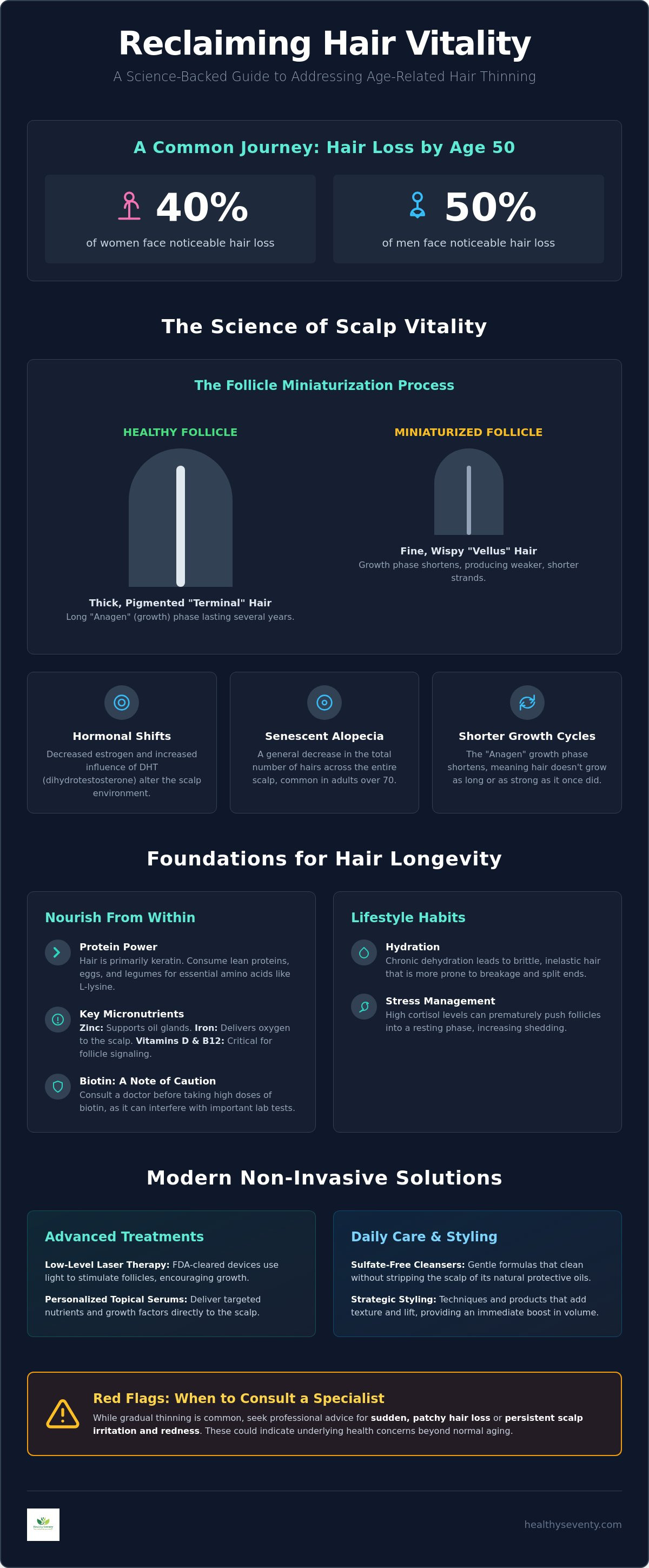
By the age of 50, roughly 40% of women and 50% of men already face noticeable hair loss, making the search for effective thinning hair solutions for older adults a top priority for maintaining confidence. It's a quiet, personal frustration when you notice your scalp peeking through or feel your hair losing its once-vibrant texture. You've spent decades building your legacy, and it's natural to want your appearance to reflect that same sense of vitality. We understand that this transition can feel like a loss of identity, but it doesn't have to be a permanent one.
This 2026 guide focuses on science-backed, non-invasive methods that prioritize your comfort and long-term well-being. You'll discover how the latest advancements in FDA-cleared low-level laser therapy and personalized combination treatments can slow shedding and improve hair diameter. We'll walk through a clear, methodical path to help you regain your confidence in social settings and embrace this cherished phase of life with a renewed sense of self-assurance.
Table of Contents
Why Hair Thins as We Age: The Science of Scalp Vitality
Seeing your hair change in your 60s or 70s can feel like an unexpected shift in your personal story. It's a phase of life where we value wisdom and experience, yet the physical reflection in the mirror sometimes tells a different tale. Understanding the biological reasons behind these changes is the first step toward finding effective thinning hair solutions for older adults. For many, the primary culprit is a process known as follicle miniaturization, which alters the very foundation of hair growth.
Hormonal shifts also play a significant role in this transition. As estrogen levels decrease in women and the relative influence of androgens like dihydrotestosterone (DHT) becomes more pronounced in both genders, the scalp environment changes. Gaining a deeper perspective on the Science of Scalp Vitality helps us distinguish between standard aging and androgenetic alopecia. While pattern baldness follows specific paths, many individuals over 70 experience "senescent alopecia." This is a unique challenge characterized by a general decrease in the number of hairs across the entire scalp, rather than the localized thinning seen in younger years.
The Miniaturization Process Explained
Follicle miniaturization is the biological process where hair follicles gradually shrink over time, producing progressively thinner, shorter, and less pigmented strands. During our youth, hair stays in the "anagen" or growth phase for several years. As we age, this phase shortens significantly. You might notice your hair doesn't seem to grow as long as it once did. Eventually, robust "terminal" hairs, which are thick and deep-rooted, are replaced by "vellus" hairs. These are the fine, wispy strands that lack the volume and strength of your original hair texture.
When to Consult a Professional
While gradual thinning is a common part of the aging journey, certain "red flags" suggest it's time to speak with a specialist. If you experience sudden, patchy hair loss or persistent scalp irritation and redness, these may indicate underlying health concerns rather than simple aging. It is also helpful to distinguish between permanent thinning and telogen effluvium, a temporary condition often triggered by surgery, high stress, or nutritional deficiencies. Taking a proactive approach to your scalp health is an empowering act of self-care. It ensures you have the clarity needed to choose the right thinning hair solutions for older adults that align with your lifestyle and health goals.
Nutritional and Lifestyle Foundations for Hair Longevity
Nourishing your body is often the most overlooked aspect of maintaining a full head of hair. While we often look for external treatments, the building blocks of every strand begin with what you eat. For those seeking thinning hair solutions for older adults, a holistic approach that includes nutrition and lifestyle is essential for lasting results. Your hair is primarily made of a protein called keratin. Without adequate intake of high-quality proteins and amino acids like L-lysine and L-methionine, your follicles simply don't have the resources to produce strong, resilient strands. Incorporating lean proteins, eggs, and legumes into your meals provides the raw materials your body needs for repair.
Micronutrients act as the support staff for these proteins. Zinc helps keep the oil glands around the follicles working properly, while iron ensures that oxygen reaches the scalp to fuel growth. Chronic dehydration can lead to brittle hair that lacks elasticity, making it more prone to breakage and split ends. Managing stress is equally vital for maintaining density. High levels of cortisol can push hair follicles into a resting phase prematurely, leading to increased shedding. By prioritizing relaxation through meditation or gentle movement, you create a scalp environment where hair can thrive. Understanding Why Hair Thins as We Age allows us to address these internal needs with precision and care.
Essential Vitamins for Mature Hair
Many seniors experience deficiencies in Vitamin D and B12, both of which are critical for follicle signaling and healthy red blood cell production. Low ferritin levels, which reflect your body's iron stores, are also strongly linked to increased shedding in adults over 60. Checking these levels with a professional is a wise first step before starting a new regimen. While biotin is a popular supplement, you should consult your doctor before starting high doses. High levels of biotin can interfere with certain lab tests, including heart health screenings, so a balanced, medically-supervised approach is always best.
Lifestyle Habits for Follicle Health
Simple daily habits can make a surprising difference in hair density and texture. Gentle scalp massage for just five minutes a day can boost circulation, bringing fresh nutrients directly to the root. Quality sleep is another pillar of wellness, as this is when your body focuses on cellular repair and the production of growth hormones. Even the water you use to wash your hair matters more than you might think. Using senior friendly water filtration systems can remove harsh minerals like calcium and chlorine that strip hair of its natural oils and weight. For more curated advice on maintaining your independence and well-being, explore the resources at Healthy Seventy, where we focus on the unique needs of your silver years.
Modern Non-Invasive Solutions: From Topicals to Technology
The way we approach hair restoration has shifted dramatically in recent years, moving away from invasive procedures toward gentle, effective technology you can use at home. For many in their 60s and 70s, the goal isn't just growth; it's about maintaining vitality and feeling like yourself again. Modern thinning hair solutions for older adults now blend the reliability of clinical science with the comfort of a daily wellness routine. We no longer have to choose between harsh chemicals and doing nothing. Instead, we can use targeted energy and refined topicals to support the scalp's natural ability to thrive.
While clinical treatments like Platelet-Rich Plasma (PRP) therapy are available, the real revolution for the 70+ demographic is the rise of at-home maintenance. Consistency often beats intensity when it comes to long-term results. A single high-powered treatment at a clinic rarely matches the cumulative benefit of a steady, low-impact routine. By integrating proven topicals with light-based technology, you create a multi-layered approach that addresses thinning from several angles at once. This methodical progression ensures your hair receives the constant support it needs without the stress of frequent medical appointments.
The Science of Laser Hair Growth Caps
Low-Level Laser Therapy (LLLT) has become a cornerstone of modern hair care because it is entirely non-invasive and painless. When you use an FDA-Cleared Laser Hair Growth Cap, specific wavelengths of red light penetrate the scalp to stimulate cellular metabolism. This process increases blood flow to the follicles, delivering the oxygen and nutrients discussed in our previous sections. It's an ideal solution for seniors because it requires no downtime and can be worn while reading or relaxing. This technology works by encouraging follicles to stay in the growth phase longer, which helps reverse the miniaturization process naturally.
Topical Solutions for Sensitive Scalps
If you've tried topical treatments in the past and found them irritating, you're not alone. Older skin can be more sensitive to the alcohols found in traditional formulas. Today, you can find alcohol-free formulations of Minoxidil and caffeine-based serums that are much gentler on a mature scalp. To get the most out of these thinning hair solutions for older adults, consider these steps:
Use a gentle, scalp-clearing shampoo to remove buildup and maximize serum absorption.
Apply treatments to a dry or slightly damp scalp for better penetration.
Commit to the process for at least 3 to 6 months to see visible changes in diameter and density.
Patience is your greatest ally here. Because the hair growth cycle is a slow, natural progression, the most significant improvements often appear after several months of dedicated use. Embracing this steady pace allows you to enjoy the journey toward restored confidence without feeling rushed or overwhelmed.
Daily Scalp Care and Styling Strategies for Instant Confidence
Confidence is a daily practice. While the biological and technological thinning hair solutions for older adults we've discussed work behind the scenes, your daily care routine offers an immediate boost. Managing aging hair requires a shift in perspective. Your strands are likely finer and more porous than they were a decade ago, meaning they need a gentler touch to avoid mechanical breakage and chemical stress. By selecting products that prioritize the delicate nature of aging strands, you can maintain a polished look that reflects your inner vitality while you wait for long-term treatments to take effect.
Choosing the right cleanser is your first line of defense. Sulfate-free shampoos are non-negotiable because they preserve the natural oils that keep mature hair from becoming brittle. When it comes to color, look for ammonia-free or semi-permanent options. These formulations respect the fragile cuticle of aging hair, allowing you to cover grays without sacrificing the structural integrity of your strands. By keeping your scalp clean and free from inflammatory buildup, you ensure that new growth has a healthy environment to emerge and thrive.
Styling for Volume and Texture
The right haircut can be transformative. Shorter, layered styles, often called the "Senior Cut," prevent long hair from looking weighed down and sparse. These layers create movement and the illusion of natural density. To enhance this effect, use root-lifting sprays that provide hold without a sticky residue. When detangling, always reach for a wide-tooth comb. This simple switch reduces the tension on your roots and prevents the snapping of delicate hairs that are already in a shortened growth phase.
Scalp Health as Skin Care
It's helpful to treat your scalp with the same empathy you show your facial skin. Gentle exfoliation once a week removes dead skin cells and product residue, ensuring your follicles remain unobstructed. Sun protection is equally vital. If your hair is thinning, your scalp is more exposed to UV damage, which can further degrade follicle health. Wearing a wide-brimmed hat or using a scalp-specific SPF is a proactive step in your wellness journey. Feeling secure in your appearance often leads to a more active lifestyle. Just as the right best walking sneakers for balance give you the stability to explore the world, a confident hairstyle empowers you to engage fully in social settings. For more curated wellness resources tailored to your 60s and 70s, visit Healthy Seventy to discover products that support your independence and vitality.
Choosing the Right Path for Your Hair Restoration Journey
Embarking on a path toward better hair density is about more than just aesthetics; it's an investment in your daily confidence and well-being. As you evaluate various thinning hair solutions for older adults, it's essential to set realistic expectations for this stage of life. In your 70s and beyond, success often looks like a significant reduction in shedding, an improvement in individual hair diameter, and a healthier scalp environment. While we may not return to the hair density of our 20s, achieving a look that feels full and vibrant is a completely attainable goal. This journey is a marathon, not a sprint, and it requires a shift in mindset to view hair care as a rewarding act of self-care.
Creating a sustainable routine is the secret to long-term vitality. If a regimen feels like a chore, it's much harder to maintain. We encourage you to integrate your hair wellness into existing habits, such as using your laser cap while enjoying your morning coffee or applying serums right after your evening skincare. Healthy Seventy serves as your dedicated researcher in this process. We scour the market to curate only the most reliable, high-quality resources, ensuring you don't have to navigate the overwhelming sea of marketing claims alone. We believe that every choice you make for your health should feel empowering and clear.
Building Your Restoration Toolkit
A successful strategy typically follows a three-pronged approach. First, you provide the internal building blocks through targeted nutrition. Second, you protect and stimulate the surface with gentle topicals. Finally, you use advanced technology like the FDA-Cleared Laser Hair Growth Cap to energize follicles at a cellular level. To stay encouraged, we recommend tracking your progress with photos taken once a month. Daily mirror checks often make it hard to see the gradual, positive shifts in texture and volume. Remember that your hair is just one part of your holistic wellness. Maintaining your independence also means addressing physical comfort, such as exploring non invasive joint pain relief to stay active and engaged with the world.
Final Encouragement for the Journey
It is never too late to prioritize how you look and feel. Your silver years are a time of legacy and wisdom, and your appearance should reflect the energy you bring to your life every day. Whether you're just starting to notice thinning or have been searching for answers for years, there's always a path forward that respects your health and your time. We invite you to explore our carefully selected thinning hair solutions for older adults and take the next step toward a more confident you. Explore our curated wellness solutions for seniors.
Embracing Your Path to Renewed Vitality
You've explored the biological shifts behind follicle miniaturization and the essential role that nutrition plays in maintaining scalp health. From strategic styling techniques that offer immediate volume to the transformative potential of light therapy, you now possess a comprehensive toolkit for restoration. Finding effective thinning hair solutions for older adults is a deeply personal journey that honors both your wisdom and your desire to look as vibrant as you feel. It's about more than just aesthetics; it's an empowering act of self-care that celebrates this cherished phase of your life.
At Healthy Seventy, we act as your dedicated researchers, offering expert-vetted wellness advice specifically for the 60+ community. Our focus is on high-safety, non-invasive standards that support your independence and confidence. Whether you're interested in our curated selection of FDA-cleared hair growth technology or looking for daily wellness tips, we're here to guide you with empathy and professional authority. You deserve a path forward that feels clear, steady, and supportive. Discover our curated hair restoration and wellness tools for seniors.
Your journey toward improved hair density is a testament to your proactive spirit. It's never too late to invest in yourself and embrace the vitality that defines your legacy.
Frequently Asked Questions
Is it normal for hair to thin significantly after age 70?
Yes, it's very common to experience noticeable thinning after age 70 as part of the natural aging process. This is often referred to as senescent alopecia, a condition where the number of active hair follicles naturally decreases across the entire scalp. While it's a normal part of life, understanding your options for thinning hair solutions for older adults can help you manage these changes with confidence and proactive care.
Can an FDA-cleared laser hair growth cap really regrow hair for seniors?
An FDA-Cleared Laser Hair Growth Cap can indeed help restore density by using low-level laser therapy to stimulate cellular activity in dormant follicles. This technology increases blood flow and nutrient delivery to the scalp, which helps reverse the miniaturization process. For seniors, it's a particularly effective option because it's non-invasive, painless, and can be used easily in the comfort of your own home while you relax.
How long does it take to see results from thinning hair treatments?
Most people begin to see visible results from hair restoration treatments within 3 to 6 months of consistent use. Hair grows in cycles, so it takes time for revitalized follicles to produce new, thicker strands that reach the surface of the scalp. Patience is essential, and tracking your progress with monthly photos can help you stay motivated as you notice gradual improvements in both texture and volume.
Are there any side effects to using Minoxidil as an older adult?
Older adults may experience minor side effects like scalp dryness or irritation when using topical Minoxidil, especially if the formula contains alcohol. Because mature skin is often more delicate, choosing an alcohol-free version can significantly reduce these discomforts. It's always a good idea to perform a small patch test first or consult with a healthcare professional to ensure the treatment aligns with your overall wellness needs.
What are the best vitamins to take for thinning hair in your 70s?
The most critical nutrients for hair health in your 70s include Vitamin D, Vitamin B12, and Iron, as deficiencies in these are common among seniors. Zinc and Biotin also support the production of keratin, the protein that makes up your hair strands. Before starting high-dose supplements, check with your doctor to ensure they don't interfere with other medications or heart health screenings you may have scheduled.
Will cutting my hair shorter make it look thicker?
Yes, opting for a shorter, layered haircut can immediately create the illusion of thicker, more voluminous hair. Long hair often weighs down the roots and makes thinning areas more visible, whereas shorter styles provide natural lift and movement. This approach is one of the most effective immediate thinning hair solutions for older adults who want to boost their confidence while waiting for long-term treatments to show results.
Can stress from aging-related issues cause sudden hair loss?
Stress from health changes or major life transitions can trigger sudden shedding, a condition known as telogen effluvium. This type of loss is usually temporary and occurs when a high number of follicles enter the resting phase at once. Managing stress through gentle movement and relaxation techniques can help stabilize your scalp health and encourage your hair to return to its normal growth cycle over time.
Do I need a prescription for most thinning hair solutions?
You don't need a prescription for many effective treatments, including topical Minoxidil and the FDA-Cleared Laser Hair Growth Cap. These over-the-counter and at-home technology options allow you to start your restoration journey independently and with ease. However, if you're interested in oral medications or specialized pharmaceutical treatments, you'll need to consult with a healthcare provider to discuss the best path for your specific health profile.


Comments