


Infrared Sauna Benefits for Longevity, Safety and Use
Daily infrared sauna use is not an established way to extend life. The potential benefits of daily infrared sauna use for longevity remain uncertain. Studies have linked frequent sauna bathing with lower mortality, but some involved traditional saunas, and an association does not prove that sauna use causes a longer life.
It’s understandable to be drawn to a comfortable-feeling heat session for relaxation and wellbeing, especially when comfort and safety matter. Infrared saunas use light to heat the body directly, typically at lower temperatures than traditional saunas, but that does not make daily sessions right for everyone. This article explains how infrared saunas work, what research suggests about possible health and relaxation benefits, how to approach frequency and session length, and which precautions can help you use heat more safely.
Table of Contents
What Are the Health Benefits of a Sauna?
Sauna studies report possible brain, mood, and cardiovascular benefits, but the findings do not prove sauna use extends life. The distinction between traditional and infrared heat also matters.
Mood and Brain Health
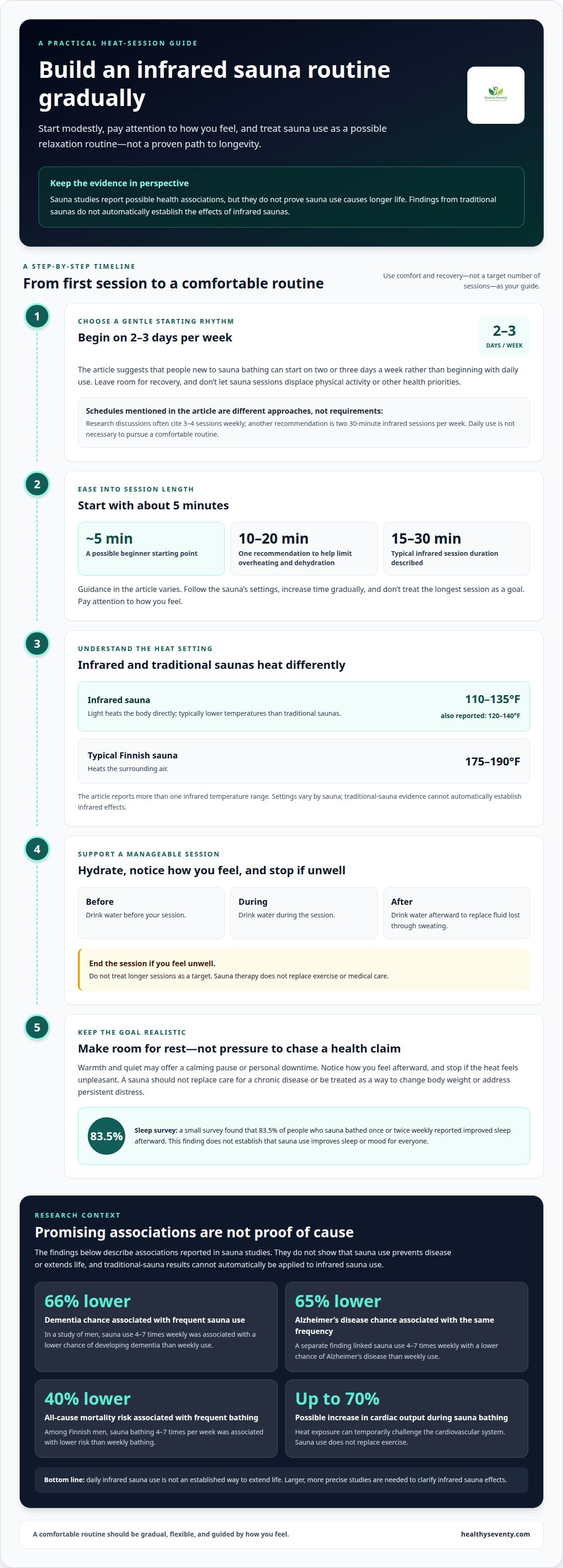
Sauna use may support mood and brain health, areas that matter for wellbeing and independence. In a study of men, using a sauna four to seven times weekly was associated with a 66% lower chance of developing dementia than weekly use. A separate finding linked the same frequency with a 65% lower chance of Alzheimer’s disease. These associations are promising, but they don’t establish that sauna exposure prevents either condition.
Cardiovascular Health and Circulation
Heat exposure temporarily challenges the cardiovascular system: sweating and a faster heart rate can resemble responses to moderate exercise. During sauna bathing, cardiac output may increase by as much as 70%. A 2018 study found that more frequent and longer sauna bathing was strongly inversely associated with fatal cardiovascular disease events in men and women. This reported connection is not proof of prevention, and sauna use doesn’t replace exercise.
Sauna Use and Healthspan
Healthspan means maintaining health and function as you age, rather than focusing only on lifespan. In a large study of Finnish men, sauna bathing four to seven times per week was associated with a 40% lower risk of all-cause mortality than weekly bathing. The benefits of daily infrared sauna use for longevity remain uncertain because this association doesn’t prove causation or establish daily infrared sauna effects. Sweating also doesn’t establish lasting weight loss.
Evidence and Sauna Types
Traditional Finnish saunas heat the surrounding air; infrared saunas use light to heat the body directly, usually at lower temperatures. Infrared sauna temperatures typically range from 120 to 140 degrees Fahrenheit, compared with 175 to 190 degrees Fahrenheit in typical Finnish saunas. How does infrared sauna compare for health and longevity? The heating method and temperature differ, but evidence from traditional saunas can’t automatically establish infrared effects. Clinical research has examined infrared heat for conditions including high blood pressure, heart failure, dementia, and arthritis; larger, more precise studies are needed. Claims about the benefits of daily infrared sauna use for longevity should account for this evidence gap.
Recommended sauna frequency and session duration
A suitable sauna routine depends on your familiarity with heat, comfort, and the setting. Start modestly, then let your response guide any gradual increase.
Sauna Frequency
Sauna frequency is how often sessions fit into a weekly wellness routine. People new to sauna bathing can begin on two or three days per week rather than starting with daily use. Research discussions often cite three to four sessions weekly, while another recommendation is two 30-minute infrared sessions per week. These schedules describe different approaches, not a requirement to reach a particular frequency. The benefits of daily infrared sauna use for longevity remain uncertain, so daily use isn’t necessary to pursue a comfortable routine. Choose a pattern that leaves time to recover and doesn’t displace physical activity or other health priorities.
Session Duration and Temperature
Session duration and temperature together determine how much heat exposure a session involves. A typical infrared sauna session lasts 15 to 30 minutes, while people new to sauna bathing can start with about five minutes. Reported infrared sauna temperatures range from 110 to 135 degrees Fahrenheit; another reported operating range is 120 to 140 degrees Fahrenheit. In practical terms, sessions commonly last 15 to 30 minutes, with the temperature varying by sauna. Follow the sauna’s settings and increase time gradually, rather than aiming immediately for the longest session.
Safe Sessions and Hydration
Hydration and a conservative time limit help make sauna use more manageable. Drink water before, during, and after sessions to replace fluid lost through sweating. One recommendation limits most sauna sessions to 10 to 20 minutes to help prevent overheating and dehydration. This is shorter than the typical infrared-session range, so pay attention to how you feel instead of treating a longer duration as a goal. Claims about the benefits of daily infrared sauna use for longevity shouldn’t turn session frequency into a target. End a session if you feel unwell, and remember sauna therapy doesn’t replace exercise or medical care.
Relaxation and stress
An infrared sauna can offer a quiet pause within a wellness routine. A small survey found that 83.5% of people who sauna bathed once or twice weekly reported improved sleep afterward.
Stress Reduction
Stress relief can mean using a calming experience to take a pause from daily demands. For some people, the warmth and quiet of an infrared sauna offer that pause, making relaxation a practical goal without claiming to treat chronic stress. For example, someone might choose a session as dedicated rest after a busy day, rather than expecting it to resolve a specific health concern.
Keep the purpose realistic. A sauna session can be part of personal downtime, alongside restorative activities such as gentle exercise or time with loved ones. It should not replace care for a chronic disease or be treated as a way to reduce inflammation, change body weight, or address persistent distress. Those goals require more than heat exposure.
Mood Effects
Mood effects describe how a relaxing activity may influence a person’s sense of wellbeing. The reported sleep improvement in the small survey is one example of a potential benefit, but it does not establish that sauna use improves mood for everyone. Sleep, stress, and mood can interact, so noticing how you feel after a session may help you decide whether it belongs in your routine.
Make the session restful rather than demanding: choose a comfortable setting, allow time to unwind, and stop if the heat feels unpleasant. Relaxed muscles or a calmer moment can be worthwhile on their own, without promises about longevity or disease prevention. Sauna use also does not replace exercise, and sweating is not evidence of weight loss. Treat relaxation as the immediate aim, not proof of a broader health effect.
Infrared sauna safety advice
Heat affects circulation and can lower blood pressure, so sauna safety matters alongside possible health benefits. Treat symptoms as a clear signal: leave immediately if you feel dizzy or nauseated, then cool down and drink water. Avoid alcohol before sauna use because it can increase the risk of dehydration and abnormal heart rhythm.
Some health situations call for extra caution. People with low blood pressure may face additional risk when heat lowers it further. If you have a pre-existing medical condition, discuss sauna use with a healthcare provider before starting a routine. People with multiple sclerosis should use caution because heat may temporarily worsen symptoms; avoid sauna exposure if it triggers problems. Do not use a sauna to sweat out a fever or infectious illness, since heat can add strain when you’re sick.
Pregnancy requires particular care. The American College of Obstetricians and Gynecologists warns that sauna use, especially early in pregnancy, can harm the fetus and may cause congenital disabilities. People trying to conceive are also advised to avoid saunas because prolonged heat exposure may temporarily affect sperm count and sperm health. These concerns are distinct from general studies exploring cardiovascular effects in other populations.
During a session, keep the focus on comfort rather than chasing a longer exposure. Drink fluids before, during, and after sauna use, and leave if you feel unwell. Infrared saunas commonly operate at 110 to 135 degrees Fahrenheit, but a lower setting doesn’t remove the need to notice symptoms. A rash called erythema ab igne can develop with repeated heat exposure; mild cases typically fade within a few months after removing the heat source. Stop using the heat source if a rash appears, and seek medical advice if symptoms persist or concern you. Safety comes first, even when a sauna feels relaxing.
Healthy Seventy: Home Infrared Sauna for Relaxation
Healthy Seventy’s Home Infrared Sauna for Relaxation offers an at-home option for people seeking a dedicated space to unwind. It may suit readers who value the calming experience of heat and want relaxation to be part of a thoughtful wellness routine. It isn’t a proven way to extend life or a replacement for exercise or medical care. The research discussed above also makes clear that potential benefits should be considered alongside individual safety needs, especially for people with health conditions or concerns about heat exposure. Choose sauna use for comfort, not as a promise of a particular health outcome. If you’d like to explore this relaxation-focused option, contact Healthy Seventy.
Make Your Next Wellness Choice Deliberately
A lasting wellness routine is built around choices you can sustain, not a single device or ritual. Before making sauna use part of everyday life, consider what you want from it: a calming pause, a comfortable heat experience, or support for a broader approach to wellbeing. The potential benefits of daily infrared sauna use for longevity remain uncertain, so it’s sensible to value relaxation without treating sauna sessions as a promise of longer life. Keep your priorities balanced, and make room for movement, rest, and healthcare guidance suited to your needs.
Your next step can be a simple one: decide whether an at-home sauna fits your comfort and wellness goals, then explore the option thoughtfully. Healthy Seventy offers wellness products for adults seeking practical ways to support daily living. For help exploring your next step, contact Healthy Seventy. Choose at your own pace, with confidence in the questions you’ve considered and the habits that matter to you.
Frequently Asked Questions
What Is an Infrared Sauna, and How Does It Work?
An infrared sauna uses light to warm the body directly, rather than relying on heated room air. This creates heat exposure at a lower surrounding-air temperature than a traditional Finnish sauna. The practical difference is the source of warmth, not proof of superior longevity effects. When choosing a session, comfort and your response matter more than selecting a sauna based on longevity claims.
Can Sauna Use Contribute to Longevity?
Sauna use has been associated with longevity in some studies, but those findings do not establish cause and effect. Group-level results cannot predict an individual’s outcome, and research involving traditional sauna use does not automatically show what infrared sauna use does. Consider sauna a relaxation choice, not a substitute for physical activity, balanced health habits, or professional care.
Did the Sauna Change My Life?
There’s no single answer; people may value sauna for relaxation, but it hasn’t been shown to change everyone’s health or lifespan. I can’t speak from personal experience. You can reflect on your own response by noticing whether a session leaves you feeling comfortable and relaxed, or whether the heat feels unpleasant. That distinction can help you decide whether sauna belongs in your routine.
How Does This Impact Your Body?
During sauna use, your body responds to heat with sweating and an increased heart rate. These immediate reactions do not by themselves demonstrate weight loss or lasting cardiovascular improvement. Sweating also removes only small amounts of toxins; the liver and kidneys perform most of the body’s detoxification work. Think of the session as heat exposure, not a detox treatment or exercise replacement.
What’s Really Happening in Your Body During a Sauna Session?
Your body is responding to heat, and sweating is one visible part of that response. It does not mean the session is removing a meaningful amount of toxins: the liver and kidneys handle most detoxification, while sweat removes only small amounts. This distinction helps separate an expected physical response from claims that sauna use cleanses the body or treats disease.
Does daily infrared sauna use increase lifespan or reduce mortality?
Current findings do not establish that daily infrared sauna use increases lifespan or reduces mortality. Some longevity research examines sauna bathing generally, including traditional sauna use, so its findings cannot automatically be applied to daily infrared sessions. Sauna may still be a personal relaxation choice. This information is for educational and informational purposes and does not replace professional medical advice.
Comments