
Shockwave Therapy for Seniors: 2026 Chronic Pain Guide
- healthyseventy3
- 1 day ago
- 12 min read
What if the secret to walking without that sharp, morning heel pain isn't found in a pill bottle or on an operating table, but in the power of sound? You've likely spent years managing persistent joint stiffness, perhaps worrying that your world is slowly shrinking as every step becomes a chore rather than a joy. It's completely natural to feel hesitant about invasive surgeries or medications that often come with unwanted side effects.
We believe that your later years should be a time of vitality, not a period defined by physical limitations. This guide explores how shockwave therapy for chronic pain uses non-invasive acoustic technology to act as a biological reset button for your body. By stimulating your own natural healing processes, this treatment offers a path toward lasting relief and helps you regain the independence you deserve.
In the following sections, we'll break down the science of acoustic waves and compare the different types of devices available today. You'll gain a clear understanding of how this innovative approach can restore your mobility and help you return to the activities you love most.
Table of Contents
Understanding Shockwave Therapy for Chronic Pain Management
You've likely spent years looking for a way to quiet the persistent aches that make your morning walk a challenge. It's easy to feel overwhelmed by the medical jargon surrounding modern treatments. At its core, shockwave therapy for chronic pain is a simple yet profound technology. Formally known as Extracorporeal shockwave therapy (ESWT), this method uses high-energy acoustic pulses to jumpstart your body's internal repair system.
While the technology might feel new, its roots go back decades. Doctors first used these powerful sound waves to break up kidney stones without surgery. Over time, they noticed an incredible side effect; the patients' surrounding tissues were healing faster and stronger. Today, this discovery has evolved into a cornerstone of senior wellness. The primary goal is no longer just 'managing' your discomfort with temporary fixes. Instead, we're looking at resolving the underlying tissue issues that limit your mobility.
The Shift Toward Non-Invasive Senior Wellness
Many of us have grown cautious about the long-term use of pain medications. While NSAIDs can offer quick relief, they often come with concerns about digestive health or kidney function as we age. In 2026, the focus has shifted toward regenerative medicine. This approach views your body as a capable healer. By choosing non-invasive options, you're prioritizing your long-term independence. Utilizing shockwave therapy for chronic pain fits perfectly into a holistic longevity plan, offering a way to stay active and engaged with your family without the lengthy recovery times associated with surgery.
Common Misconceptions About 'Shock' Therapy
The word 'shock' often brings to mind electrical currents or sudden jolts. Let's clear that up right away. This therapy uses acoustic energy, not electricity. In the world of physics, a 'shock' is simply a rapid change in pressure, much like a tiny, focused sonic boom. This energy penetrates deep into your muscles and tendons to stimulate blood flow and cellular repair.
What does it actually feel like? Most people describe the sensation as a rhythmic tapping or a deep pulsing. It isn't a passive, spa-like experience; you'll certainly feel the energy working on the targeted area. However, it's a productive sensation. It tells your nervous system and your cells that help is on the way. Understanding that this is sound, not electricity, helps many seniors approach their first session with a sense of calm and curiosity.
The Science of Healing: How Acoustic Waves Stimulate Recovery
When you experience the rhythmic pulses of a treatment, your body is doing far more than just reacting to sound. It's engaging in a complex biological conversation. One of the most immediate benefits of shockwave therapy for chronic pain is the disruption of pain pathways. The acoustic waves overstimulate local nerve fibers, which can lead to a significant decrease in the transmission of pain signals to your brain. This often provides a welcome window of relief even before the deeper structural healing begins. For seniors, this immediate ease of movement is vital for staying mobile during the recovery phase.
Beyond the nerves, the treatment focuses heavily on the production of new collagen. As we age, our tendons can become brittle and less elastic, making them prone to recurring injuries. The acoustic energy encourages your body to synthesize fresh collagen fibers, which are the building blocks of healthy connective tissue. A detailed look at how shockwave therapy stimulates healing shows that these benefits extend deep into the cellular level, effectively reinforcing the structural integrity of your joints and muscles.
Mechanotransduction: Turning Sound into Cellular Action
The core of this technology lies in a concept called mechanotransduction. Mechanotransduction is the process where cells convert mechanical stimulus into chemical activity. When the acoustic waves pass through your tissues, they create tiny, controlled micro-traumas. While "trauma" might sound concerning, this is actually a positive signal to your immune system. It acts as a beacon, drawing in specialized cells like osteoblasts for bone repair and fibroblasts for soft tissue regeneration. These cells work together to clear away damaged debris and replace it with strong, resilient tissue. If you're curious about bringing this technology into your daily routine, a quality Shockwave Therapy Device for Pain Relief can be a transformative addition to your home wellness toolkit.
Neovascularization and Improved Blood Flow
One of the biggest hurdles to healing in our later years is reduced circulation. Without a robust blood supply, damaged areas simply don't receive the oxygen and nutrients they need to recover. Shockwave therapy for chronic pain addresses this by triggering neovascularization, which is the growth of new capillaries. These tiny new blood vessels "jumpstart" the healing process by flushing out inflammatory markers that cause stiffness. This improved blood flow ensures that your muscles and tendons have a steady stream of resources, helping you move with greater ease and less discomfort during your daily walks or household activities.
Targeted Relief: Common Senior Conditions Treated by Shockwave
Understanding the mechanics of healing is one thing, but seeing how it applies to your favorite afternoon walk or a morning spent in the garden is where the true value lies. For many, shockwave therapy for chronic pain is the key to unlocking a more active lifestyle that once felt out of reach. It's not just about reducing a number on a pain scale. It's about being able to stand up from a chair without wincing or reaching for a high shelf with confidence. By targeting specific areas where the body has struggled to heal on its own, this technology provides a second chance for your muscles and joints.
Focus on Plantar Fasciitis and Foot Health
Plantar fasciitis remains the most common cause of heel pain among seniors, often making those first few steps out of bed feel like walking on glass. Over time, the thick band of tissue on the bottom of your foot loses its natural elasticity. This leads to micro-tears and the buildup of stubborn scar tissue that rarely resolves with rest alone. Shockwave therapy effectively breaks up these adhesions, encouraging the body to replace them with flexible, healthy tissue. To maintain these results and prevent future strain, pairing your treatment with the best walking sneakers for balance ensures your feet have the structural support they need for every mile ahead.
Overcoming 'Frozen' Shoulders and Tennis Elbow
Upper body mobility is equally vital for maintaining your independence. Conditions like calcific tendonitis of the shoulder can make simple tasks like dressing or combing your hair feel nearly impossible. This happens when calcium deposits form within the rotator cuff, leading to a "frozen" sensation and sharp discomfort. The acoustic pulses help dissolve these deposits and reduce inflammation in the elbow, often referred to as tennis elbow. Regaining this range of motion doesn't just help with daily chores; it also provides the upper body strength and comfort needed to safely use mobility aids like upright walkers, which help you maintain an erect, healthy posture while you explore your neighborhood.
Chronic hip and knee pain often stem from years of wear and tear on the tendons surrounding the joints. While shockwave therapy isn't a replacement for surgery in severe cases of bone-on-bone arthritis, it's incredibly effective at treating the soft tissue pain that often accompanies these conditions. By improving the health of the supporting tendons, you gain better joint stability. This proactive approach to shockwave therapy for chronic pain helps you stay mobile longer, ensuring that a quick trip to the grocery store or a walk through the park remains a pleasant part of your daily routine rather than a source of stress.
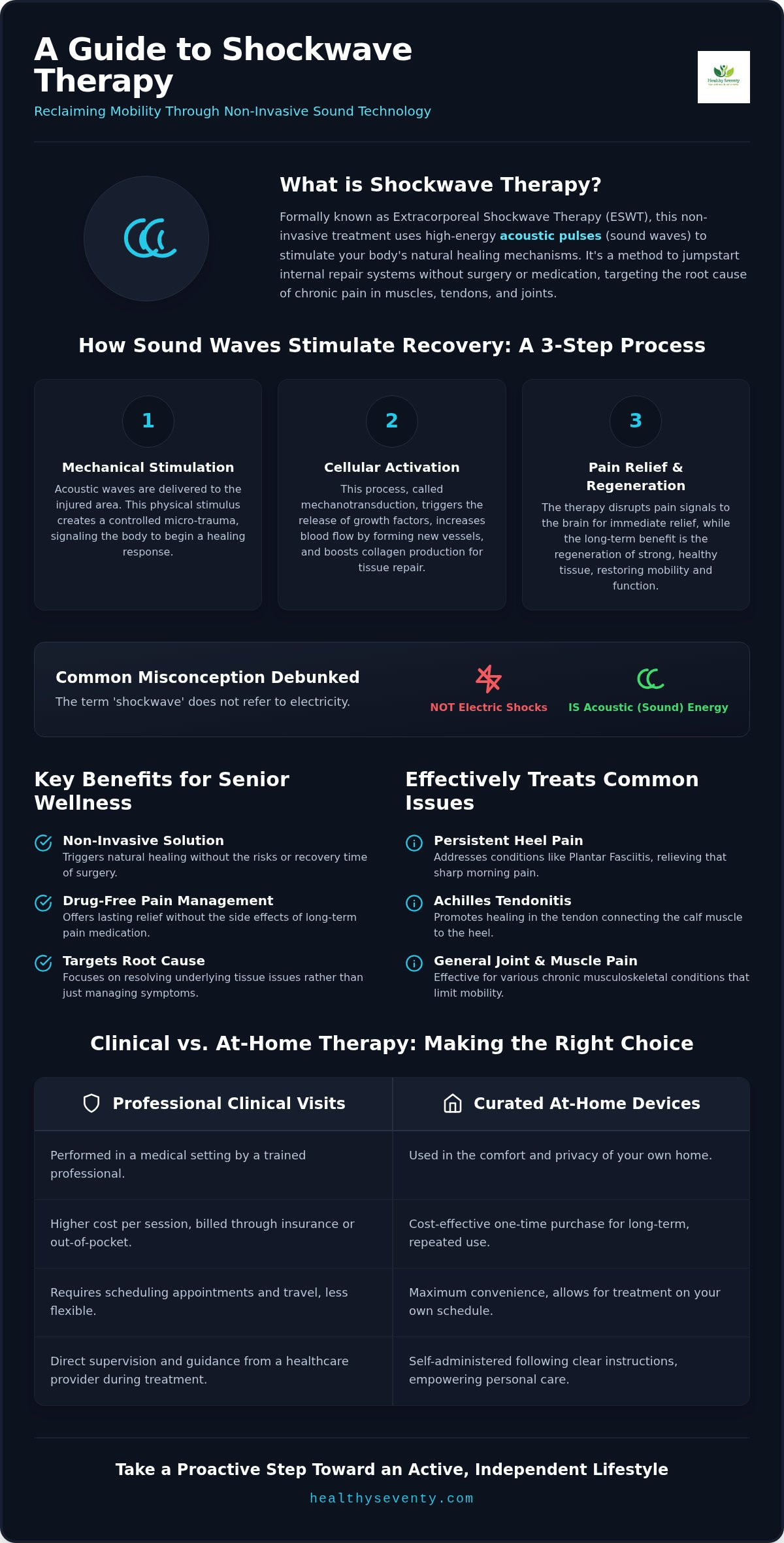
Clinical vs. At-Home Shockwave Therapy: Making the Right Choice
Deciding between professional clinical treatments and the convenience of your own living room is a significant step in your wellness journey. In years past, high-energy acoustic technology was exclusively found in specialized medical centers. However, the landscape of 2026 has shifted. Advancements in engineering mean that effective shockwave therapy for chronic pain is now accessible through portable, consumer-grade devices. While clinical visits offer the direct oversight of a specialist, at-home therapy provides a level of consistency that is often difficult to maintain with scheduled appointments and travel requirements.
Radial vs. Focused Waves: What You Need to Know
It's helpful to understand the two primary types of technology you'll encounter. Radial Pressure Waves (RPW) are the most common variety found in at-home devices. These waves disperse energy over a broader, more superficial area. This makes them excellent for treating muscle tension and common tendon issues like the heel pain discussed earlier. In contrast, Focused Shockwaves (FSW) penetrate much deeper into the body to target bone-related conditions. FSW equipment is typically larger and more complex, usually requiring a clinical setting. For the majority of seniors managing daily joint stiffness or muscle aches, radial technology offers a safe and highly effective solution.
Evaluating At-Home Shockwave Devices
If you feel that at-home care best fits your lifestyle, a few key features deserve your attention. First, always prioritize devices with clear FDA clearance. This ensures the equipment meets rigorous safety and performance standards. You should also look for adjustable intensity settings. Since your comfort levels can vary from day to day, having the ability to customize the pulse strength is essential for a positive experience. An ergonomic design is another vital factor, especially if you plan to treat hard-to-reach areas like the lower back or the back of the shoulder.
Consistency is perhaps the greatest advantage of owning your own equipment. Healing is a steady process rather than a one-time event. Using your device regularly allows for a continuous "biological reset" without the high cumulative costs of repeated office visits. Integrating this technology into a broader plan for non invasive joint pain relief creates a powerful foundation for your long-term independence. To begin your journey with a tool designed specifically for ease of use and reliability, explore our curated Shockwave Therapy Device for Pain Relief today. Taking this proactive step ensures you remain the architect of your own mobility and comfort.
Your Journey to Mobility: Next Steps with Healthy Seventy
Reclaiming your vitality starts with a shift in perspective. Don't settle for the idea that persistent discomfort is an inevitable part of growing older. While it's true that our bodies change, your later years should be defined by your experiences, not your limitations. Choosing shockwave therapy for chronic pain is a proactive step toward a more independent lifestyle. Before you start any new treatment, you should consult with your healthcare provider to ensure this technology is the right fit for your unique medical history. This partnership with your doctor ensures your path to recovery is both safe and effective.
True wellness is rarely the result of a single tool. It's a holistic endeavor that involves how you move, what you eat, and how you hydrate. Proper hydration is a cornerstone of tissue health; using senior friendly water filtration ensures your body has the pure water it needs to flush out inflammatory markers. When your cells are well-hydrated and nourished, they're much better equipped to respond to the regenerative signals sent by acoustic waves.
Creating a Comprehensive Wellness Routine
To maximize your results, we recommend pairing your therapy with gentle stretching and low-impact mobility exercises. This helps maintain the flexibility you're gaining and strengthens the muscles supporting your joints. Healing is a gradual process, and it's helpful to monitor your progress over a 4 to 12 week period. You might notice small wins at first, like standing up with less effort or walking further before feeling tired. We define success as a measurable increase in daily step count and reduced morning stiffness.
Week 1-3: Focus on consistency and identifying your comfort zones with the device.
Week 4-8: Look for a decrease in the intensity of "flare-ups" after activity.
Week 9-12: Evaluate your ability to perform daily tasks without relying on temporary pain relief.
Trusting the Research
At Healthy Seventy, we act as your dedicated researcher. We've scoured the latest 2026 health data to present only the most reliable, senior-specific technology. Our commitment is to provide you with a curated path toward wellness that respects your wisdom and your time. If you're looking for real-world insights, we invite you to join our community forum where other users share their personal experiences with non-invasive recovery. You don't have to navigate this journey alone; we're here to act as a bridge between complex health information and your everyday lifestyle choices.
Your future is waiting, and it looks much brighter when you're moving without fear. Explore our curated Shockwave Therapy Device for Pain Relief to start your recovery and rediscover the joy of an active, independent life. By embracing shockwave therapy for chronic pain, you're choosing a science-backed method to restore your mobility and protect your legacy of vitality.
Reclaiming Your Active Lifestyle with Confidence
You've seen how sound waves can do more than just mask discomfort. They can actually stimulate your body's natural ability to repair itself. By choosing shockwave therapy for chronic pain, you're moving away from temporary fixes and toward a lifestyle defined by movement and independence. Whether you're addressing persistent heel pain or a stiff shoulder, the path to recovery is now more accessible than ever through safe, at-home technology.
Our mission is to act as your partner in this journey toward lasting vitality. We provide solutions that are expertly researched for the 60+ community, focusing on non-surgical ways to maintain your freedom. Every resource we share is curated for safety and ease of use; this ensures you feel empowered to take charge of your own well-being. Your legacy of health is worth the investment. It's time to step forward into a more comfortable future where your mobility is no longer a source of worry.
Discover the Best Shockwave Therapy Devices for Senior Pain Relief at Healthy Seventy
Frequently Asked Questions
Is shockwave therapy for chronic pain safe for seniors with heart conditions?
Shockwave therapy is generally safe for seniors with heart conditions because it utilizes sound waves rather than electrical currents. It's a non-invasive approach that doesn't put stress on the cardiovascular system. However, you must consult your cardiologist if you have a pacemaker or an implanted defibrillator. The acoustic pulses shouldn't be directed near these devices to ensure there's no interference with their electronic components.
How many sessions of shockwave therapy are usually needed to see results?
Most seniors require between 3 and 5 sessions to achieve lasting results for musculoskeletal conditions. While you might feel a subtle decrease in stiffness after the first treatment, the most significant improvements usually appear 8 to 12 weeks after the course is finished. This duration gives your body enough time to complete the cellular repair process and grow the new blood vessels needed for permanent healing.
Can I use an at-home shockwave device on my own every day?
You shouldn't use an at-home shockwave device every day because your body requires time to process the healing signals. The therapy works by triggering a controlled inflammatory response that jumpstarts your natural repair cycle. Most wellness experts recommend waiting at least 3 to 7 days between sessions. This resting period is essential for your tissues to regenerate and strengthen without being overstimulated.
Does insurance or Medicare typically cover shockwave therapy in 2026?
Medicare and private insurance coverage for shockwave therapy remains inconsistent in 2026 and depends largely on your specific plan and location. Some Medicare contractors cover the treatment for chronic injuries that haven't responded to traditional care, while others still view it as an adjunct service. It's helpful to know that shockwave therapy is an eligible expense for Health Savings Accounts (HSA) and Flexible Spending Accounts (FSA) under current guidelines.
What are the side effects of shockwave therapy for older adults?
Side effects are typically mild and may include temporary redness, slight swelling, or a dull ache in the treated area. These sensations are actually positive indicators that your immune system is responding to the acoustic energy. Most older adults find that these minor symptoms fade within 24 to 48 hours. If you have sensitive skin, using a lower intensity setting on your device can help you stay comfortable during the process.
Is shockwave therapy more effective than cortisone injections for joint pain?
Shockwave therapy for chronic pain is often preferred over cortisone because it focuses on healing the tissue rather than just masking the symptoms. While cortisone provides rapid relief by suppressing inflammation, repeated injections can sometimes weaken tendons as we age. Shockwave therapy takes a more proactive approach by stimulating blood flow and collagen production. This results in a stronger, more resilient joint that supports your long-term independence.
What should I feel during a shockwave therapy session?
During a session, you'll feel a rhythmic tapping or a deep pulsing sensation as the acoustic waves reach the targeted tissue. It feels similar to a very focused, intense massage that reaches deep beneath the skin. While the sensation can be slightly uncomfortable when treating a tender spot, it shouldn't be painful. Many seniors find the feeling reassuring because it confirms the energy is reaching the exact location where the repair is needed.
Can shockwave therapy help with arthritis in the hands or knees?
Shockwave therapy for chronic pain is highly effective at managing the discomfort associated with arthritis in the hands or knees. Although it doesn't replace the worn-out cartilage in the bone, it significantly improves the health of the surrounding tendons and ligaments. By reducing inflammation in these supporting structures, you can experience better joint stability and a measurable increase in your range of motion for daily activities.
Comments