
Shockwave Therapy for Chronic Pain: A Senior’s Guide to Non-Invasive Relief
- healthyseventy3
- 2 hours ago
- 12 min read
What if the secret to revitalizing your mobility wasn't found in a prescription bottle or on an operating table, but through a gentle acoustic wave that restarts your body's natural healing? Many seniors find themselves sidelined by nagging discomfort in their feet or joints, feeling frustrated when conventional treatments fail to provide lasting relief. It's a common experience to fear that surgery is the only remaining option, yet shockwave therapy for chronic pain offers a sophisticated, non-invasive alternative that respects your body's pace and your desire for independence.
You don't have to accept persistent pain as an inevitable part of aging. This guide will show you how this innovative technology can help you return to the activities you love, from morning walks to gardening, without the need for injections or long recovery times. We'll walk through exactly how these acoustic waves stimulate recovery, why they're safe for your specific needs, and what you should look for when choosing a device to ensure you're using the most reliable, professional technology for your journey toward better health.
Table of Contents
What is Shockwave Therapy for Chronic Pain?
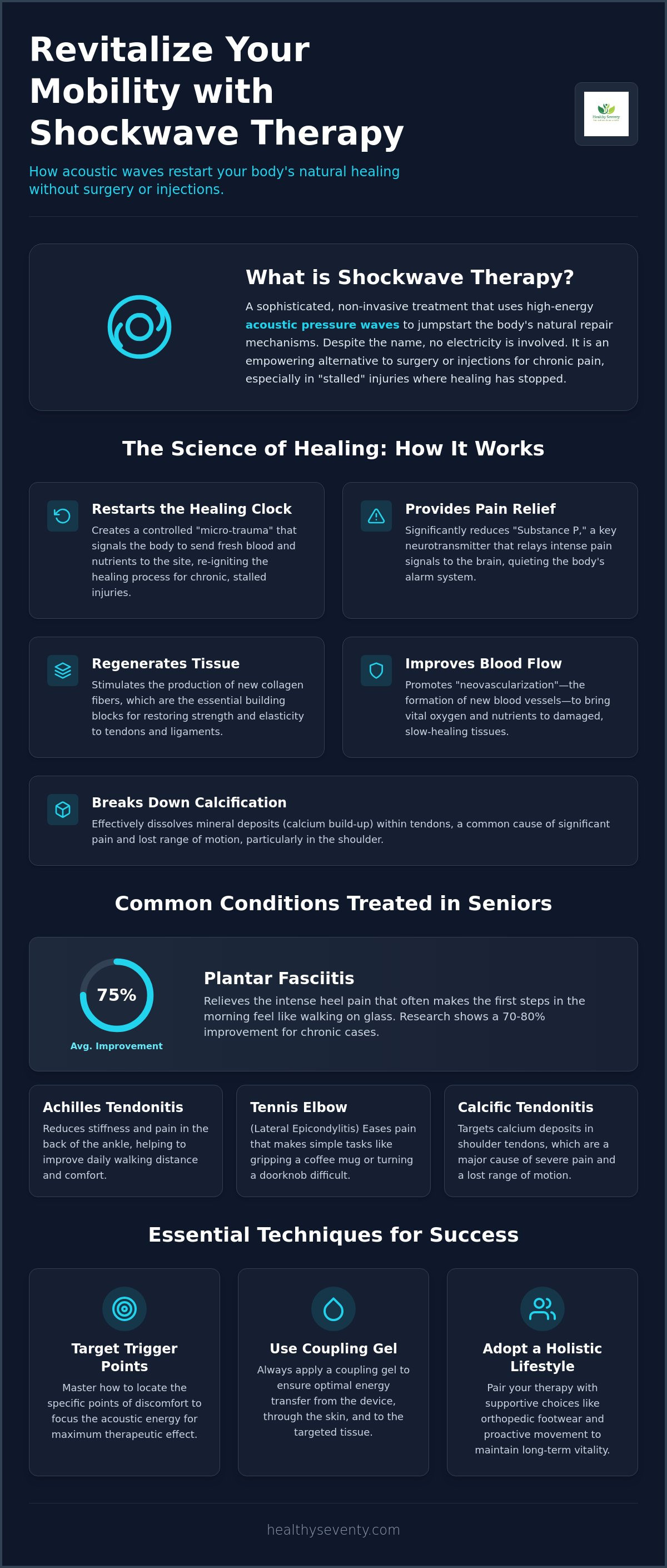
Have you ever felt like your body has simply given up on a specific injury? Perhaps it's a heel that has ached for months or a shoulder that refuses to rotate fully despite your best efforts at stretching. This is a common frustration for many seniors, but there is a sophisticated way to restart that internal recovery process. Extracorporeal shockwave therapy (ESWT) is a non-invasive treatment that uses high-energy acoustic waves to jumpstart the body's natural repair mechanisms. Despite the name, there's no electricity involved. The "shock" refers to a physical pressure wave, much like the ripple in a pond or the vibration you might feel from a deep bass note at a concert.
For those over 60, using shockwave therapy for chronic pain is becoming a preferred choice because it addresses the root cause of discomfort without the risks associated with surgery. It's an empowering alternative to corticosteroid injections, which often provide only temporary relief. This technology is particularly effective for "stalled" injuries. These are situations where your body's inflammatory response has gone quiet even though the tissue hasn't fully healed, leaving you in a state of persistent, nagging discomfort. By delivering targeted energy to these areas, the therapy signals your system to resume its vital work.
The Difference Between Acute and Chronic Relief
Chronic pain isn't just a long-lasting version of acute pain; it's a state where the healing process has effectively hit a dead end. While an acute injury involves active swelling and immediate repair, chronic conditions often involve degenerated tissue or poor blood flow that prevents recovery. Shockwave therapy creates a controlled "micro-trauma" in the affected area. This clever mechanism convinces your body to send fresh blood and nutrients to the site, essentially restarting the healing clock. Ultimately, shockwave therapy for chronic pain acts as a vital catalyst for cellular repair and regeneration in aging tissues.
Common Conditions Treated in Seniors
This therapy is highly versatile, offering relief for several conditions that frequently impact independence and mobility in later life. Some of the most common applications include:
Plantar fasciitis: This intense heel pain often makes those first steps in the morning feel like walking on glass. Research shows a 70-80% improvement for chronic cases following treatment.
Achilles tendonitis: Stiffness and pain in the back of the ankle can severely limit your daily walking distance.
Lateral epicondylitis: Commonly known as tennis elbow, this condition can make simple tasks like gripping a coffee mug or turning a doorknob difficult.
Calcific tendonitis: This involves calcium deposits in the shoulder tendons, which often leads to significant pain and a lost range of motion.
By targeting these specific areas, you can regain the freedom to enjoy your favorite hobbies without the constant shadow of physical limitation.
The Science of Sound: How ESWT Triggers Natural Healing
Understanding how sound waves translate into physical relief requires a look beneath the surface of the skin. When you use shockwave therapy for chronic pain, the device emits high-pressure acoustic pulses that travel through soft tissue to reach the site of your discomfort. This isn't merely a surface-level sensation. At a cellular level, these waves trigger several biological responses that work in harmony to repair what has been damaged. One of the most immediate effects is the significant reduction of Substance P. This specific neurotransmitter is responsible for relaying intense pain signals to your central nervous system. By lowering the concentration of Substance P, the therapy helps quiet the "alarm system" in your joints, providing a clearer path toward recovery.
Beyond immediate pain signaling, the energy from these waves stimulates the production of collagen. Think of collagen as the structural foundation of your tendons and ligaments. As the years pass, our natural collagen production slows, which can lead to stiffness and a loss of elasticity in our movements. By encouraging the body to synthesize new fibers, shockwave therapy helps restore the resilience of your connective tissues. Recent clinical reviews regarding the Efficacy and safety of ESWT highlight that this biological "reset" is both a safe and effective way to improve long-term function without relying on invasive measures.
Neovascularization: Bringing Life Back to Stiff Joints
One of the primary reasons injuries become chronic as we age is a decrease in localized blood flow. This lack of circulation means that the essential nutrients and oxygen required for repair simply aren't reaching the affected area. The micro-trauma created by acoustic waves acts as a biological signal, prompting the body to grow new micro-capillaries. This process, known as neovascularization, effectively "re-maps" the blood supply to your stiffest joints. This fresh influx of blood carries growth factors that are vital for tissue regeneration. If you're ready to explore how this technology can fit into your daily routine, a dedicated Shockwave Therapy Device for Pain Relief can be a sophisticated addition to your home wellness toolkit.
Breaking the Cycle of Inflammation
Many people find themselves stuck in a loop of taking anti-inflammatory drugs (NSAIDs) that only offer temporary relief while potentially causing stomach upset. Shockwave therapy for chronic pain offers a different path by shifting the tissue from a state of stagnant, chronic inflammation into a phase of active healing. It also helps break down calcified deposits—small, painful "pebbles" of calcium that can form in tendons over time. You might wonder if these waves are too intense for your bones. Rest assured that when used correctly, the energy is focused on soft tissues. It's designed to interact with the denser calcifications and damaged fibers without compromising the integrity of your skeletal structure, making it a reliable choice for maintaining a proactive and independent lifestyle.
Clinical vs. At-Home Shockwave Therapy: Evaluating Your Options
How do you decide which path to take when you're ready to address your discomfort? Choosing between a clinical setting and the comfort of your own home involves weighing several factors, from logistical ease to long-term wellness goals. Clinical environments typically utilize high-energy, focused waves that penetrate deep into the tissue. While these are powerful, they often require multiple trips to a medical office, which can be a significant hurdle if mobility is currently a challenge or if arranging transportation is difficult. A standard clinical course usually consists of three to five sessions, and for many, the cumulative cost of these professional appointments can quickly match the investment of owning a personal device.
Using shockwave therapy for chronic pain within your home offers a different, more flexible advantage. Home-based devices generally employ radial pressure waves. These waves are designed to be more superficial and spread over a larger area, making them exceptionally safe and comfortable for self-administration. Instead of relying on a few high-intensity clinical visits, a home device allows for consistent, low-intensity maintenance. This approach is particularly beneficial for managing recurring stiffness and ensuring that your joints stay supple as part of your daily routine. It transforms recovery from a series of appointments into a proactive lifestyle choice that you control.
When to See a Specialist First
While home therapy is a powerful tool for independence, it's vital to begin with a clear understanding of your physical health. If you experience "red flags" such as sudden, severe swelling, pain that disrupts your sleep at night, or any visible deformity in the joint, a professional orthopedic evaluation is essential. A specialist can rule out acute fractures or tears that require different interventions. For those who want to explore the full spectrum of their choices, our guide to non-invasive joint pain relief provides a comprehensive look at how to navigate these early diagnostic steps safely.
The Rise of Senior-Friendly Home Devices
Modern engineering has made professional-grade relief more accessible than ever. When you're selecting a device for your home, prioritize features like FDA clearance and simple, intuitive controls that don't require a medical degree to operate. Radial waves are the preferred technology for home use because they offer a gentler sensation while still effectively triggering the healing responses we discussed earlier. This steady approach respects your body's natural pace. By integrating shockwave therapy for chronic pain into your weekly schedule, you create a reliable foundation for maintaining your vitality and continuing the activities that bring you joy.
Safety and Success: Implementing Therapy into Your Routine
Once you have decided to use shockwave therapy for chronic pain, the next step is establishing a safe and effective routine. It's not just about turning on a machine; it's about listening to your body and following a methodical approach to ensure the best possible outcome. This technology is designed to be user-friendly, but a few specific steps will help you maximize the regenerative benefits of each session. By taking a proactive role in your recovery, you can ensure that every minute spent in treatment contributes to your long-term mobility and independence.
Locate the trigger point: First, you must identify the area of maximum tenderness. Use your fingers to gently press around the painful joint or tendon until you find the "hot spot" that requires attention.
Apply coupling gel: Next, apply a generous layer of coupling gel to the skin. This medium is vital because it allows the acoustic waves to travel efficiently into your tissues; without it, the energy simply reflects off the surface of your skin.
Gradually increase intensity: Start your device at the lowest setting. As you become accustomed to the sensation, you can slowly increase the intensity to a level that feels therapeutic but remains within your comfort zone.
Post-treatment care: Resist the urge to apply ice immediately after your session. Because we are trying to stimulate a natural inflammatory healing response, ice can actually blunt the beneficial effects of the treatment.
Scheduling for repair: Finally, remember that rest days are just as important as the treatment itself. Allow five to seven days between sessions on the same area to give your body the time it needs for tissue repair and neovascularization.
Who Should Avoid Shockwave Therapy?
While this technology is exceptionally safe for most seniors, there are specific contraindications to keep in mind. If you have a pacemaker, are taking prescription blood-thinning medications, or have been diagnosed with an active tumor in the treatment area, you should avoid this therapy. Those with severe osteoporosis should also proceed with caution and consult their physician first. Additionally, it's best to wait if you have a local skin infection or an open wound where you intend to apply the device. To start your journey toward a more active lifestyle with a trusted tool, consider investing in a professional-grade Shockwave Therapy Device for Pain Relief designed for home use.
Managing Expectations: What Does It Feel Like?
If you're wondering about the sensation, most people describe it as a rhythmic tapping or a steady pulsing against the skin. It's quite different from an electric shock. You might feel a mild level of discomfort during the treatment, but this is actually a positive sign; it indicates that the acoustic waves are hitting the targeted area and stimulating the necessary biological response. You are always in control of the device, so you can adjust the settings to ensure the experience feels empowering rather than overwhelming. Over time, as your tissues heal, you'll likely find that the same areas become less sensitive during your sessions.
Embracing a Pain-Free Future: Beyond the Treatment
Reclaiming your mobility is a journey that extends far beyond the treatment room. While shockwave therapy for chronic pain provides the biological spark needed to restart healing, its true power is realized when you integrate it into a holistic "Healthy Seventy" lifestyle. There is a profound psychological benefit to taking an active role in your own recovery. Instead of waiting for a clinical appointment, you're making daily choices that prioritize your vitality. This shift from being a passive patient to an active participant in your wellness builds a sense of agency that is vital for long-term independence.
To maintain the progress you've made, it's essential to combine your therapy sessions with gentle, consistent movement. This ensures that the new collagen and improved blood flow we discussed earlier are put to good use, keeping your joints flexible and strong. When you feel less discomfort, you naturally move more. This creates a positive cycle where movement leads to even greater ease of motion. Prioritizing your physical well-being isn't just about avoiding pain; it's about making sure you can continue to enjoy the social and mental activities that give life its richness.
Supporting Your Mobility with the Right Tools
Healing is most effective when your body feels supported and safe. As your pain decreases, you'll likely notice an improvement in your posture and general confidence. To protect these gains, consider the synergy between pain relief and stability aids. For example, using an upright walker can help you maintain a tall, healthy stance while you regain your strength. Similarly, investing in the best walking sneakers for balance provides the necessary foundation to prevent re-injury and keep you steady on your feet during your daily walks.
Your Next Steps Toward Relief
If you're ready to explore how shockwave therapy for chronic pain can revitalize your daily life, your next step should be a conversation with your healthcare provider. Discussing the treatment with your physician ensures that it aligns perfectly with your overall health profile. We invite you to explore the curated wellness resources available on the Healthy Seventy platform, where we've gathered the most reliable tools to support your journey. Remember, persistent pain is not an inevitable part of the aging process. It is a challenge that we can meet head-on with modern technology, a proactive mindset, and a commitment to your own lasting vitality.
Your Path to Renewed Vitality and Movement
Choosing to address persistent discomfort with modern technology is a powerful step toward maintaining your independence. We've seen how acoustic energy can effectively restart the body's natural repair mechanisms and why home-based radial waves provide a safe, convenient alternative to frequent clinic visits. By integrating shockwave therapy for chronic pain into your weekly wellness routine, you're choosing a proactive path that respects your body's potential for recovery at any age. It's about moving beyond temporary fixes and embracing a strategy that supports your long-term mobility.
At Healthy Seventy, we've been empowering seniors since 2024 by providing expert-vetted wellness technology that focuses on non-invasive independence. You don't have to let joint or tendon stiffness dictate your daily schedule or keep you from the hobbies you love. Explore our curated Shockwave Therapy Devices for at-home relief to find a solution that fits your unique needs and lifestyle. Your journey toward a more active, vibrant future starts with a single, informed choice. Embrace the freedom to move with confidence and joy once more.
Frequently Asked Questions
Is shockwave therapy for chronic pain painful for seniors?
Most seniors describe the sensation as a rhythmic tapping or pulsing rather than a sharp or stinging pain. While you might feel some mild discomfort as the acoustic waves hit the targeted area, it shouldn't be unbearable. You're always in control of the device's intensity, allowing you to start at a gentle level and gradually increase it as your comfort grows.
How many sessions of shockwave therapy are needed to see results?
A standard course of treatment typically involves 3 to 12 sessions, depending on the specific condition and how long you've been experiencing discomfort. Many individuals begin to notice a significant improvement in mobility after just 3 or 4 treatments. It's vital to allow for rest days between sessions to give your tissues the necessary time to repair and regenerate.
Can I use a shockwave therapy device at home by myself?
Yes, many modern devices are specifically engineered for safe and intuitive use by seniors in a home setting. These units typically utilize radial waves, which are designed to be gentler and more superficial than clinical-grade focused waves. As long as you use an FDA-cleared device and follow the instructions for applying coupling gel, it's a reliable way to manage your recovery independently.
Is shockwave therapy covered by Medicare or private insurance?
Currently, Medicare and most private insurance providers consider shockwave therapy for chronic pain to be experimental, so coverage is often denied. Because of this inconsistent reimbursement, many patients find that investing in a personal device is a more cost-effective long-term solution. It avoids the high out-of-pocket costs and transportation hurdles associated with paying for individual clinical sessions over several months.
What is the difference between shockwave therapy and ultrasound?
Ultrasound uses high-frequency sound waves primarily for diagnostic imaging or gentle tissue heating, while shockwave therapy uses high-energy acoustic pulses to trigger a healing response. Shockwaves are much more powerful and are designed to create "micro-trauma" that restarts the body's stalled repair process. While ultrasound is excellent for relaxation, shockwaves are specifically meant for regenerating damaged tendons and breaking down calcifications.
Are there any side effects to shockwave therapy for older adults?
Side effects are generally mild and temporary, typically consisting of slight bruising, redness, or minor swelling at the treatment site. These symptoms usually resolve within a few days as your body begins the healing process. Because the therapy is non-invasive, it avoids the systemic risks and long recovery times often associated with surgical procedures or pharmaceutical interventions.
Can shockwave therapy help with arthritis in the knees?
Shockwave therapy is increasingly used to manage the persistent discomfort and stiffness associated with knee arthritis. By stimulating blood flow and reducing localized inflammation in the soft tissues around the joint, it helps improve overall function and mobility. This can make it much easier to perform daily activities, such as climbing stairs or taking walks, with a greater sense of confidence.
How long does a typical at-home shockwave session take?
A standard session usually takes between 5 and 10 minutes per treatment area. This efficiency makes it very easy to fit into your existing daily routine without feeling overwhelmed. Since the devices are portable and easy to handle, you can comfortably administer your treatment while relaxing at home, ensuring that your path to relief is both steady and stress-free.
Comments