


Wide Toe Box Walking Shoes for Elderly: Which Features Matter
A wider shoe isn’t always the answer: what matters is giving your toes room to move without feeling squeezed. Wide toe box walking shoes for elderly walkers provide extra space around the toes, while a wide-width shoe adds room across more of the shoe. The right option depends on where your foot needs space and how the shoe feels as you walk.
It’s understandable to want a comfortable fit without sacrificing support or cushioning. Toe pressure, a slipping heel, or a sole that feels too firm can make comparisons confusing, especially when several features matter at once.
This guide explains how to assess toe room, arch support, cushioning, and impact absorption, and how to compare shoes for seniors with wide feet. Use the practical fit checks to focus on your walking needs and make a more confident choice.
Table of Contents
Arch support
For steadier walking, look beyond arch support alone: the Centers for Disease Control and Prevention identifies a firm heel collar, broad flared heel, textured sole, thin firm midsole, and secure laces or straps as useful shoe features. Together, these features can support stability by helping the foot stay secure and the sole maintain contact with the ground.
Arch support should meet your foot comfortably, not press sharply into the arch. During a short fitting walk, notice whether the shoe feels stable with each step and whether your heel shifts inside it. If the arch feels like a hard bump or your toes tighten, the shape may not suit your foot. A lightweight shoe can still feel supportive when its heel and midsole hold your foot securely.
Compare named models by fit rather than assuming their support will feel the same on every foot. With the Ryka Podflow, assess whether its fit leaves comfortable space around the forefoot while keeping the arch supported. For the Kuru Atom 2, pay particular attention to heel support: check for heel movement, rubbing, or pressure during a walk. If hammertoes need extra room, avoid a fit that pushes the toes upward or together.
Choose the option that feels supportive without creating pressure, and test it on a short, level walk before longer outings. For example, if the Kuru Atom 2 holds your heel but presses beneath your arch, that fit may not be comfortable for your walk.
Do You Need a Wide Toe Box Walking Shoe?
A good fit depends on where your foot needs space, not just the width label. Compare the shoe’s shape, length, and fastening with the fit around your toes and heel.
Choosing Shoe Size and Width
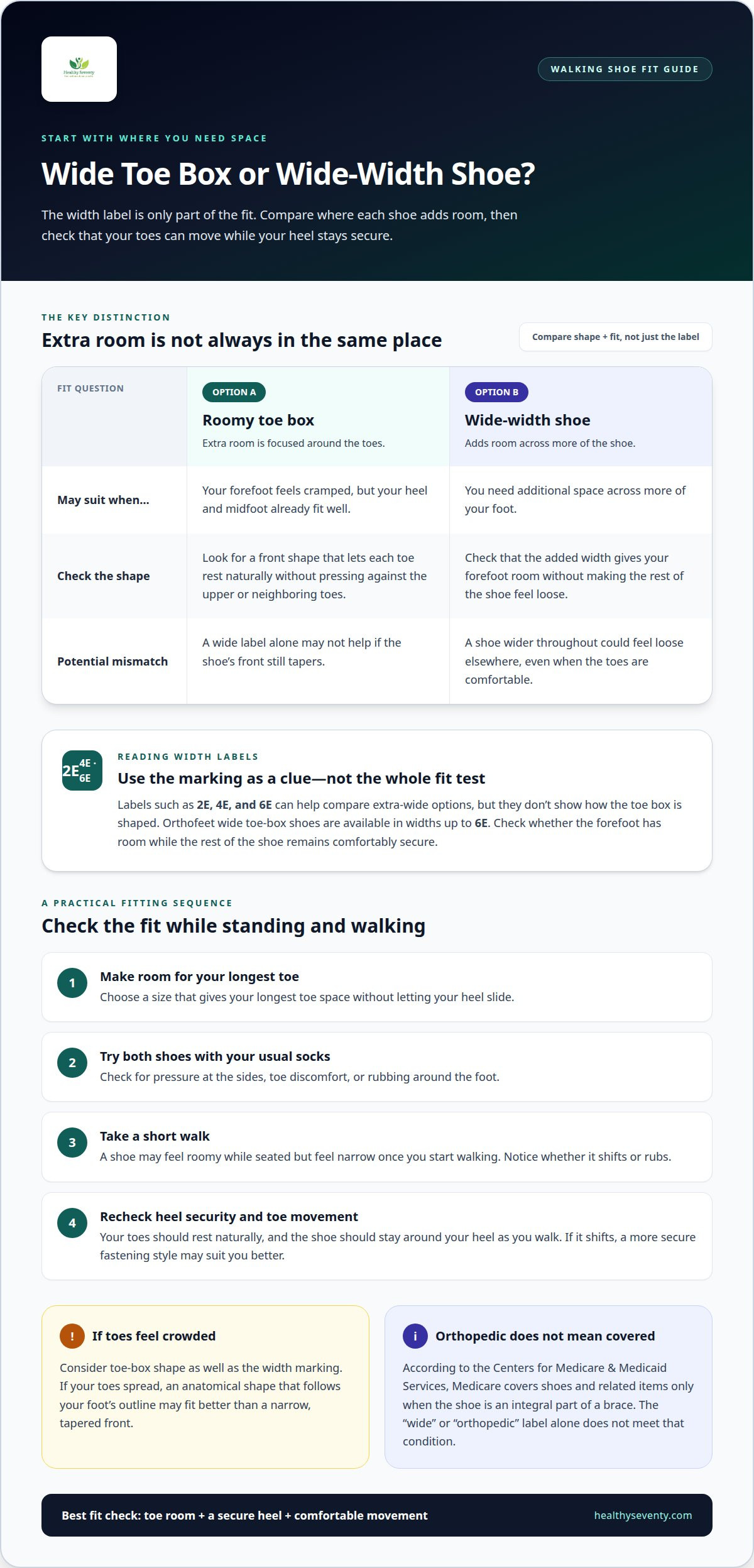
Try a size that gives your longest toe room without letting your heel slide. Test both shoes with the socks you expect to wear, then walk a short distance. Notice pressure at the sides, toe discomfort, or rubbing that could lead to blisters. A shoe that feels roomy while seated may feel narrow once you start walking.
Slip-ons may feel convenient, but convenience alone doesn’t guarantee a secure fit. Choose a pair that stays around your heel and doesn’t slide as you walk. If it shifts, a fastening style that holds your foot more securely may suit you better.
Wide Toe Boxes and Wide Widths
A wide-width shoe adds space across more of the shoe, while a roomy toe box focuses extra room around the toes. This distinction matters if your forefoot feels cramped but your heel and midfoot already fit well. A shoe that is wider throughout could feel loose elsewhere, even if your toes are comfortable.
Toe shape matters, too. If your toes spread, an anatomical shape that follows your foot’s outline may fit better than a narrow, tapered front. Check that each toe can rest naturally without pressing against the upper or neighboring toes.
Extra-Wide Shoe Options
Width labels such as 2E, 4E, and 6E can help compare extra-wide options, but the label alone doesn’t show how a shoe’s toe box is shaped. Orthofeet wide toe-box shoes are available in widths up to 6E. The useful comparison is whether that width gives your forefoot space while keeping the rest of the shoe comfortably secure.
If your toes feel crowded but your heel already slips in standard shoes, consider toe-box shape as well as the width marking. A wider label won’t solve every fit concern if the shoe’s front still tapers.
Orthopedic and Medicare-Covered Shoes
“Orthopedic” describes a shoe designed with features intended to support fit or comfort. It doesn’t mean every style is automatically covered by Medicare. Regular wide walking shoes address width and walking needs, while orthopedic styles may be designed with additional fit considerations.
Coverage has a specific limit: according to the Centers for Medicare & Medicaid Services, Medicare covers shoes and related items only when the shoe is an integral part of a brace. The label “wide” or “orthopedic” alone doesn’t meet that stated condition. Compare the shoe’s actual fit and purpose, not just its category name.
Cushioning and shock absorption
Cushioning describes the feel underfoot; shock absorption describes how the sole softens impact during a step. They work together, but more cushioning doesn’t automatically make a shoe comfortable or stable. On a short walk, notice whether each step feels protected without the sole feeling soft or uncertain. A firmer feel may suit someone who prefers clear ground contact, while a softer feel may be more comfortable underfoot.
Test cushioning on a surface you use often, such as a paved path or indoor floor. Walk at your usual pace, then notice whether your heel and forefoot remain comfortable over repeated steps. To assess all-day comfort, consider how the shoe feels after wearing it for a while, not just during the first few steps. Running shoes may feel and function differently from walking shoes, so compare them against your everyday walking needs.
For the Topo Atmos, assess the fit and cushioning directly rather than relying on the model name. Check that the toe area doesn’t press on bunions, and notice whether the heel stays in place as you walk. The shoe should allow natural toe movement, with an underfoot feel that suits your pace. A short, familiar route is a practical way to judge both without treating softness as the only measure.
Use this simple comparison during a fitting:
Step feel: Is the cushioning comfortable under the heel and forefoot?
Stability: Does the sole feel controlled, rather than overly soft?
Fit: Do bunions or other pressure points meet the upper?
Repeat test: Does the same comfort remain after walking the route again?
Choose based on fit, cushioning, and control together. If a plush shoe feels comfortable at first but less stable when you turn, compare it with a firmer-feeling option on the same path. Testing both in similar conditions can help you decide which feels more suitable for regular walking.
Walking shoes for seniors with wide feet
When comparing wide toe box walking shoes for elderly adults, start by identifying where the shoe creates pressure. A suitable fit gives the forefoot room to spread while keeping the heel secure. Compare the shoe’s shape and how the upper touches your foot, then assess both during a familiar walk.
Shoes for Bunions, Hammertoes, and Swelling
For bunions or hammertoes, look for a front shape that leaves room around the affected toes instead of pressing against them. If swelling changes the fit, try shoes later in the day and while standing. A pair that feels comfortable while seated may feel tighter once your feet bear weight.
If a bunion rubs against the side of the shoe with each step, the toe-box shape may not suit your foot. Check as you walk that the upper doesn’t press on the bunion or hammertoe.
Features for Elderly People with Wide Toes
Wide toe box walking shoes for elderly adults should let the toes rest naturally without allowing the foot to slide. Consider the forefoot shape, a fastening that holds the shoe in place, and a sole that feels controlled during turns. A textured outsole and firm heel collar are among the features the Centers for Disease Control and Prevention identifies as useful in a safe shoe.
Compare the cost of specific models and their construction rather than assuming every wide-fit shoe costs the same. Keep fit and walking comfort at the center of your decision.
Places to Try On or Buy Shoes
In the United States, seniors can try wide-fit walking shoes at footwear retailers that carry multiple widths. An in-person fitting lets you notice rubbing and pressure while standing or walking. Online retailers and shoe brands also sell wide-fit options, which can help when a particular shape is hard to find locally.
Whether you shop in person or online, compare the listed width and toe-box shape, then assess the fit during a short walk. Choose a pair that lets your forefoot spread without heel slippage.
Healthy Seventy: Orthofeet Orthopedic Walking Sneakers
Healthy Seventy offers Orthofeet Orthopedic Walking Sneakers as an option to consider when comparing walking shoes for wide feet. Orthofeet wide toe-box shoes are available in widths up to 6E, and the shoes have lightweight, stretchable uppers and customizable insoles. These features may help you compare width and fit preferences alongside the criteria discussed above.
Judge the shoe by how it fits your forefoot and heel and suits your walking needs, not by its width label alone. If you’re comparing Orthofeet with other options, use the fit points in this guide to make a considered choice.
For help exploring the Orthofeet Orthopedic Walking Sneakers, contact Healthy Seventy.
Take Your Next Step Toward Comfortable Walking
Choosing wide toe box walking shoes for elderly walkers is a personal fit decision, so assess comfort during the activities you want to keep enjoying. Let your everyday walking needs guide your choice, whether you take short strolls or go out regularly. A shoe should suit your feet, not simply match a label or recommendation.
If you’re still weighing options, Healthy Seventy offers Orthofeet Orthopedic Walking Sneakers and the VOCIC Upright Walker for Seniors as separate mobility-related choices. The right next step depends on whether you’re looking for footwear or walking support. Take time to consider what fits your routine and priorities.
For help exploring these options, contact Healthy Seventy. A thoughtful choice can help you move forward with greater confidence and keep making room for the walks that matter to you.
Frequently Asked Questions
What Brands Have Wide Toe Boxes?
Examples discussed in this guide include Orthofeet, Ryka, Kuru, and Topo. Models differ, so a brand name alone can’t tell you whether a particular shoe will suit your foot. Compare the specific model’s width choices and shape, then consider how it feels with your usual walking socks. A comfortable fit matters more than choosing a brand based on reputation alone.
What is the difference between wide shoes and wide-toe box shoes?
A wide shoe generally adds room across more of the foot, while a wide-toe-box style focuses space at the front. Someone whose forefoot feels crowded but whose heel feels secure may prefer a toe-box-focused shape. If pressure extends through the midfoot, width across a broader area may be a better fit. Match the shoe to where you feel pressure.
Why Roomy Toe Box?
A roomy toe box lets your toes rest naturally instead of pressing against the front or sides of the shoe. This can matter while walking, as the forefoot spreads with each step. If your toes feel crowded on a familiar route, a differently shaped front may feel more comfortable. The goal is freedom of movement, not so much space that your foot slides.
What are the best wide toe box walking shoes for seniors in 2026?
There isn’t one best choice for every senior. Orthofeet, Ryka, Kuru, and Topo models are among the options discussed here, but your fit should guide the decision. Compare the shoe with your daily walking routine, preferred fastening, and areas that need more room. A model that feels comfortable during your usual walk is more useful than a general “best” label.
How should seniors measure foot width and choose the correct shoe size?
Measure each foot while standing, since feet spread under body weight. Place a foot on paper, trace its outline, then measure across the widest part of the forefoot. Repeat for the other foot and use the larger measurement when comparing it with a brand’s sizing chart. Try shoes with your usual walking socks and assess the fit both standing and seated.
How should wide walking shoes fit, and what signs indicate they are too tight or too loose?
A suitable pair should feel secure without squeezing or letting your foot shift. Toe pressure, rubbing, or toes pressing against the upper can signal tightness; heel movement or sliding inside the shoe can indicate excess space. Walk, turn, and pause to notice any changes in fit. This information is for educational and informational purposes and does not replace professional medical advice.
Comments