


Non-Slip Walking Shoes for Seniors and a Secure Fit
A secure walking shoe is about fit, not age. Men don’t automatically need a separate kind of shoe as they grow older; the right choice depends on how well it fits and feels. Non-slip walking shoes for seniors should provide steady footing without pinching, slipping at the heel, or feeling difficult to fasten.
It’s understandable to wonder whether shoes made for older adults are truly different from regular men’s shoes. Often, the key differences are practical: room for the toes, a secure fit, and features suited to changing comfort or mobility needs.
This guide explains what to look for in walking shoes and sneakers, how to assess fit and outsole condition, and when adaptive options may help men and women. You’ll find clear, practical ways to choose footwear for comfortable, confident steps.
Table of Contents
Are Shoes for Elderly Men Different From Regular Shoes?
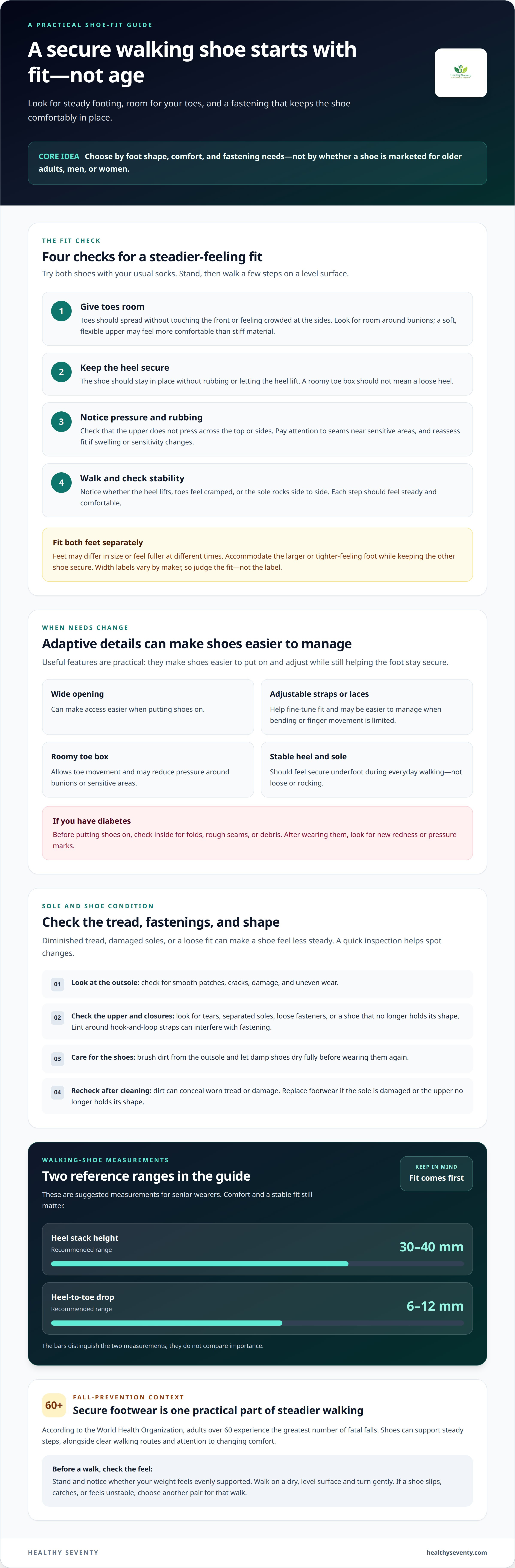
Not necessarily. Age alone doesn’t determine the right shoe; foot shape, comfort, and fastening needs matter more. A man with broad forefeet, for example, may need a wider fit, while someone with narrow heels may need a different shape. A secure shoe should feel stable without squeezing the toes or letting the heel lift.
Feet can swell or feel sensitive, so extra-wide shoes may be more comfortable for some people. Width labels vary by maker, so focus on the fit rather than the label. Try shoes with your usual socks and check that the upper doesn’t press across the top or sides of your foot. Laces or adjustable straps can help fine-tune the fit.
When trying wide-width shoes for swelling, assess each foot separately. Stand in the shoes and check that your toes can spread without touching the front or feeling crowded at the sides. Walk a few steps on a level surface: the shoes should stay in place without rubbing. If one foot feels tighter, accommodate the larger foot while ensuring the other shoe still feels secure.
Wide shoes for bunions should leave room around the prominent joint near the base of the big toe. A soft, flexible upper may feel more comfortable there than stiff material that presses on the area. Check seam placement, too, since a seam crossing the sensitive spot can cause friction. Compare the fit while standing and walking, not just while seated.
Reassess the fit if swelling or sensitivity changes how a familiar pair feels.
Try adjustable closures when you need to loosen or secure the shoe through the day.
Choose a shape that accommodates bunions without allowing the heel to slip.
These checks apply to women’s shoes, too. A well-fitting pair depends on the wearer’s feet, not whether the shoe is marketed for men or women.
Men’s and women’s adaptive footwear
Adaptive footwear prioritizes easy access, adjustability, and a fit suited to the wearer’s foot shape. Men’s and women’s styles may differ in proportion, but useful features are similar: a wide opening, adjustable straps or laces, and a stable heel. For example, a strap closure may be easier to manage when bending or finger movement is limited. The shoe should still hold the foot securely during everyday walking.
For swelling or edema, try shoes when your feet feel fuller. Check that the upper doesn’t press across the top of your foot and that your toes can move without crowding. A roomy toe box can reduce pressure around bunions or sensitive areas. If you have diabetes, inspect the inside of each shoe before putting it on for folds, rough seams, or debris that could rub your skin. After wearing the shoes, check for new redness or pressure marks.
Footwear care helps preserve fit and traction. Brush dirt from the outsole, then look for worn or smooth patches where tread has diminished. Let damp shoes dry fully before wearing them again, and replace a pair if the sole is damaged or the upper no longer holds its shape. Clean closures, too: lint around hook-and-loop straps can interfere with a secure fastening.
If you have knee pain, prioritize a shoe that feels stable and comfortable during a short walk. A loose heel or unevenly worn outsole can affect how your foot meets the ground. Try the shoes on both feet, walk across a level surface, and notice whether each step feels steady. Footwear may support walking comfort, but it doesn’t treat the cause of knee pain.
Choose closures that are easy to adjust and keep secure.
Inspect the shoe interior and your skin when sensitivity is a concern.
Review outsole wear as part of routine shoe care.
For another practical reference while considering fit and walking needs, see walking footwear guidance.
Fall prevention and secure footing
Adults over 60 experience the greatest number of fatal falls, according to the World Health Organization. Secure footwear is one practical part of walking more confidently indoors and outside.
Balance, Comfort, and Foot Support
Choose a shoe that feels stable underfoot, holds your heel, and stays comfortable while walking. Try both shoes with your usual socks, then walk several steps on a level surface. Notice whether your heel lifts, your toes feel cramped, or the sole rocks from side to side. A broad, stable base and supportive upper can help keep your foot aligned without forcing an uncomfortable fit.
Risks of Poorly Fitting or Worn Shoes
Poorly fitting shoes can rub, pinch, or let the foot slide inside, making each step less steady. Worn tread or a damaged sole can reduce contact with the floor, while uneven wear may make the shoe feel tilted. Check for loose fasteners, separated soles, smooth patches, and torn uppers. Replace footwear that no longer holds the foot securely or causes discomfort during ordinary walking.
Use a simple fit-and-condition check before walking. Stand in each shoe and notice whether your weight feels evenly supported. Then walk across a dry, level floor and turn gently. If a shoe slips, catches, or feels unstable, choose another pair for that walk. Repeat the check after cleaning, because dirt can conceal worn tread or damage.
Inspect the outsole for smooth areas, cracks, or uneven wear.
Fasten laces or straps so the shoe stays secure without pressure.
Choose shoes suited to the surface, such as a level indoor floor or paved path.
For extra peace of mind, keep walking routes clear of loose rugs, cords, and clutter. Shoes can support steady steps, but they work best alongside an uncluttered path and attention to changing comfort.
Walking shoes and sneakers
A walking shoe should feel stable through a full step, not simply soft underfoot. Assess the heel, sole, upper, and fastening together: even a cushioned shoe can feel unsteady if its base rocks or its heel slips. For an initial fit check, walk on a level surface and notice whether the shoe stays centered beneath your foot.
Heel dimensions offer one comparison point. A heel stack height of 30-40 mm and a heel-to-toe drop of 6-12 mm are recommended for senior wearers. These measurements describe sole height at the heel and the height difference between heel and forefoot. They don’t replace a comfort test. Try the shoe with your usual socks, then see whether the heel feels stable and the forefoot bends comfortably as you walk.
Inspect the outsole instead of relying on the words “non-slip” alone. Look for visible tread where the shoe contacts the ground, and check whether the rubber is smooth, cracked, or unevenly worn. A shoe that grips well on one surface may feel different on another, so consider where you walk most, such as indoor floors or paved paths. Keep the sole clean so dirt doesn’t cover the tread.
When trying on shoes, compare both and take several steps, including a gentle turn. Check for pressure, rubbing, heel movement, or a sole that catches. If you use an insole, try the shoe with it in place; added thickness can change the fit. Orthopedic walking sneakers may be worth considering if everyday styles don’t feel supportive or comfortable.
Compare the sole shape and tread, then test the shoe while walking.
Choose a secure heel and comfortable forefoot movement over softness alone.
Reassess traction and fit when the outsole becomes smooth or uneven.
To explore an option focused on walking comfort, view orthopedic walking sneakers.
Healthy Seventy: Orthofeet Orthopedic Walking Sneakers
Healthy Seventy offers Orthofeet Orthopedic Walking Sneakers as an option for seniors considering supportive walking footwear. Consider them when comparing walking sneakers and assessing how a specific pair feels for your needs. A product name alone can’t determine fit, so use the same practical checks: comfort while walking, secure footing, and suitability for everyday use.
Try the sneakers with your usual socks and notice how they feel during a short walk. Check for rubbing, slipping, or pressure, then assess whether they fit both feet. These steps help you make a considered choice without assuming one shoe suits everyone.
Contact Healthy Seventy with questions about Orthofeet Orthopedic Walking Sneakers.
Make Your Next Step a Confident One
Choosing non-slip walking shoes for seniors can help make everyday routines more comfortable and manageable. Let your plans guide the decision: a short stroll, errands, and time indoors may call for different considerations. Notice how your footwear feels as your routine changes, and take time to choose thoughtfully. Confidence grows through choices that fit your life, not by rushing toward a particular style.
Healthy Seventy offers Orthofeet Orthopedic Walking Sneakers, along with the VOCIC Upright Walker for Seniors and Home Infrared Sauna for Relaxation. These are distinct options for different needs, so focus on the one that relates to your next step. If you’d like to continue the conversation about available offerings, contact Healthy Seventy. A considered choice can support your independence and help you keep moving toward the activities that matter to you.
Frequently Asked Questions
What features make walking shoes non-slip and safe for seniors?
Look for a sole with visible tread, an upper that fastens securely, and a heel that stays in place as you walk. Non-slip walking shoes for seniors should also suit the surface and activity, since a shoe that feels stable indoors may feel different outdoors. Treat “slip-resistant” as a product description, not a promise of safety on every floor or in every condition.
What shoe outsole materials and tread patterns provide the best grip?
No single outsole material or tread pattern guarantees the best grip on every surface. Rubber outsoles and patterned tread are common features to compare, but both shoe design and the surface affect how a shoe feels underfoot. Check the maker’s description for intended use, then consider whether the tread appears suited to your usual routes. A short walk on a dry, level surface can help you assess comfort, but it can’t prove performance in every condition.
What are the best non-slip walking shoes for seniors with wide feet or bunions?
The right pair accommodates your widest or most sensitive area without letting your foot move around. For a bunion, pay attention to pressure near the big-toe joint; for broad feet, check comfort across the forefoot. If your feet tend to swell, try shoes later in the day and compare how both feel before deciding.
Are slip-resistant walking shoes effective on wet floors, ice, and uneven ground?
Slip-resistant shoes can’t guarantee secure footing on wet floors, ice, or uneven ground. These conditions affect contact between the sole and the surface, and ice can be especially difficult to navigate in ordinary walking shoes. On a wet floor, slow down and avoid abrupt turns. Outdoors, choose a clear, even route when possible, and don’t rely on a shoe label to protect you from every hazard.
How can seniors check shoe fit and know when to replace walking shoes?
Check fit by walking through a familiar indoor route and noticing any rubbing, pressure, or movement inside the shoe. Reassess if your feet change shape or feel different; remeasure foot length at least once every 2 years. Replace shoes when the outsole is damaged, tread is visibly worn, or the pair no longer feels stable. This information is educational and doesn’t replace professional medical advice.
Comments