


Orthopedic Shoes for Diabetic Neuropathy: A Guide to Comfort and Safety in 2026

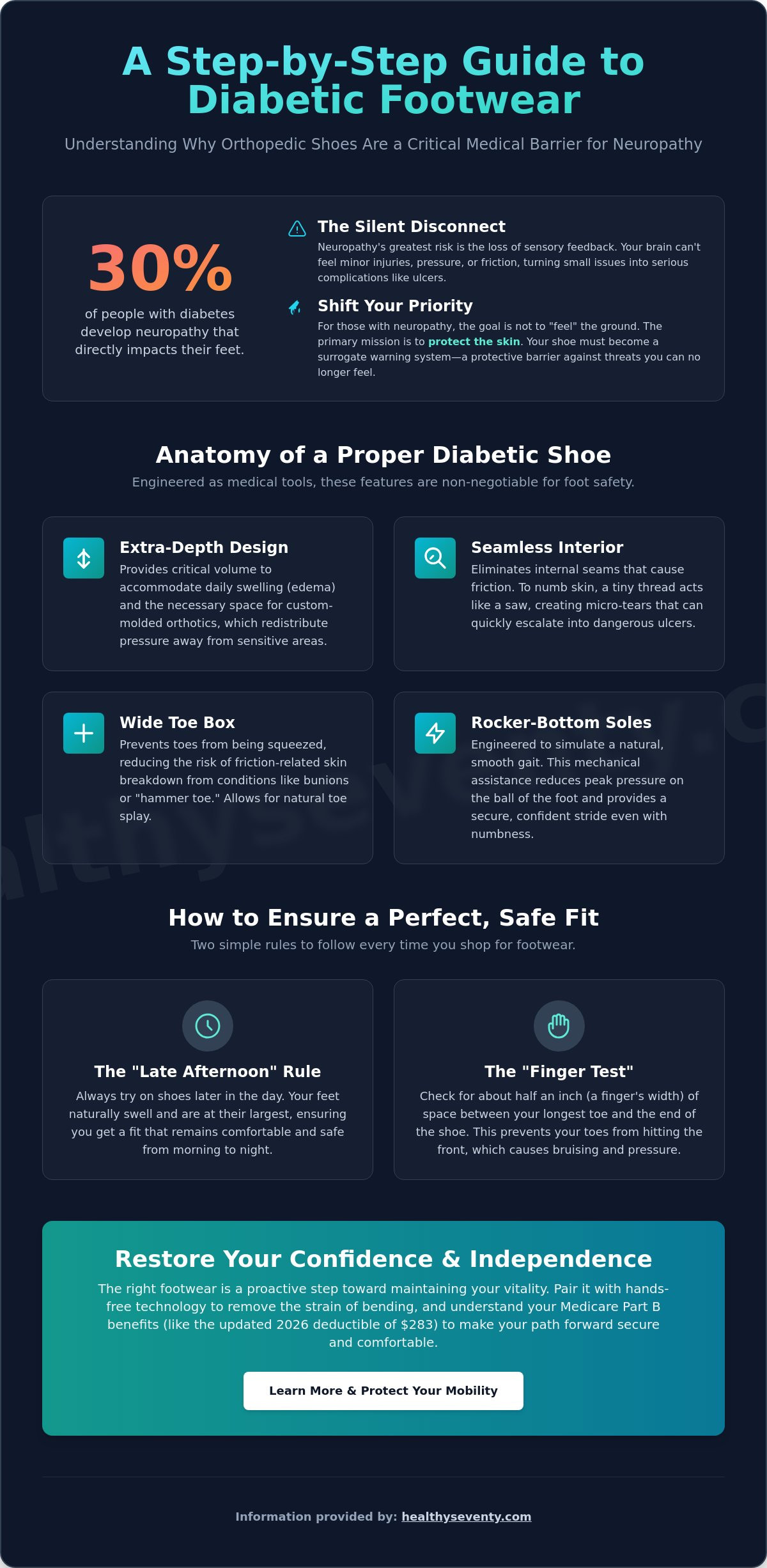
Did you know that approximately 30% of people living with diabetes develop neuropathy that directly impacts their feet? For many, this isn't just a clinical statistic; it's the daily reality of managing sharp, burning sensations or the quiet anxiety that a small, unfelt injury could lead to a serious complication. You likely understand the frustration of finding footwear that accommodates swelling or the exhaustion that comes when a simple walk feels like a significant challenge. It's only natural to seek a solution that prioritizes both your physical safety and your sense of independence. Selecting the right orthopedic shoes for diabetic neuropathy is more than a style choice; it's a vital medical barrier that compensates for lost sensory feedback.
This guide will show you how curated footwear can shield your feet, soothe neuropathic pain, and restore your confidence in every step. We'll explore the essential features to look for in 2026 and explain how to navigate your Medicare benefits, including the updated $283 Part B deductible, to ensure your path forward is both comfortable and secure. By understanding your options, you can protect your mobility and maintain the vibrant, active lifestyle you deserve.
Key Takeaways
Learn why prioritizing a protective barrier over "feeling" the ground is the most critical shift you can make for foot health.
Discover how the extra-depth design of orthopedic shoes for diabetic neuropathy provides the necessary space for custom orthotics and daily swelling.
Master the "Late Afternoon" rule and the "Finger Test" to ensure your footwear offers a precise, safe fit every time you shop.
Explore how innovative hands-free technology can restore your independence by removing the physical strain of bending over to tie laces.
Understand the specific anatomical advantages of leading orthopedic sneakers designed to prevent the friction that leads to skin breakdown.
Table of Contents
Understanding the Role of Footwear in Managing Neuropathy
Diabetic neuropathy is essentially a silent disconnect between your feet and your brain. While many people focus on the burning or stabbing sensations that often accompany this condition, the most significant risk is the gradual loss of sensory feedback. When your nerves can't send clear signals, you lose the ability to feel the ground beneath you or detect changes in pressure. For most adults, "feeling" the terrain is a vital part of balance, but for those living with neuropathy, the priority shifts entirely. Protecting the skin becomes the primary mission. In this state, the shoe must act as a surrogate warning system, shielding your body from threats you can no longer feel.
In 2026, statistics show that nearly 16 million people in the U.S. live with diabetes, and about 25% of them will develop foot problems during their lifetime. Approximately 30% develop neuropathy specifically, which places them at a high risk for ulcers and other complications. These aren't just medical figures; they represent a potential challenge to your independence and mobility. Choosing high-quality orthopedic shoes for diabetic neuropathy is a proactive step toward maintaining your vitality. It's about ensuring you can stay active, run errands, and enjoy your community without the constant fear of an undetected injury.
The Danger of Silent Injuries
Standard sneakers are typically designed for fashion or high-impact athletics, and they often fail the neuropathy safety test. They frequently contain internal seams that cause friction, which is the primary enemy of neuropathic skin. Because you might not feel a blister forming, a minor irritation can quickly escalate into a deep ulcer. Properly designed footwear creates a stable, "sterile" environment for the foot. It acts as a rigid shield, preventing external debris and internal friction from causing damage. By providing a wide, seam-free interior, these shoes ensure that your feet remain in a protected state, even during long periods of walking.
Restoring Sensory Confidence
Confidence in your footing is essential for a high quality of life. Many specialized Diabetic shoes feature rocker-bottom soles. These soles are engineered to simulate a natural gait, helping you move forward smoothly even when your feet feel numb or heavy. This mechanical assistance reduces the pressure on the ball of the foot and provides a sense of security. When you pair stable footwear with supportive tools like upright walkers, you create a comprehensive system for total balance. Finding the right orthopedic shoes for diabetic neuropathy helps bridge the gap between your physical needs and your desire for an active, empowered lifestyle.
Essential Features: What Makes a Shoe "Orthopedic" for Diabetics?
When you're managing the complexities of nerve damage, a standard retail shoe simply isn't enough. Authentic orthopedic shoes for diabetic neuropathy are engineered as specialized medical tools, designed to address the specific physiological changes that occur in the feet. One of the most vital features is the extra-depth design. This isn't just about comfort; it's a functional necessity. This added volume allows the shoe to accommodate the natural swelling, or edema, that often occurs throughout the day. It also provides the essential space required for custom-molded orthotics, which help redistribute your weight away from sensitive pressure points.
The interior of the shoe must be as smooth as a second skin. Most commercial footwear contains prominent internal seams that can cause significant damage to neuropathic feet. The biological reason for a seamless interior is simple: when neuropathy numbs the foot, a tiny thread or seam can act like a saw against delicate skin. Because you don't have the sensory feedback to feel that irritation, your body won't signal you to stop or adjust your stride. This constant friction creates micro-tears that can quickly escalate into dangerous ulcers. Following expert advice on diabetic footwear, you'll find that a wide toe box is equally critical. It prevents the toes from being squeezed together, which reduces the risk of bunions or "hammer toe" friction that often leads to skin breakdown.
Anatomical Arches and Support
Support in a diabetic shoe is about alignment rather than just soft cushioning. While "squishy" soles might feel good initially, they often lack the structural integrity needed to stabilize the foot. A firm heel counter is essential to prevent the ankle from rolling, which is a common cause of trips and falls for those with limited sensation. Contoured anatomical insoles work to reduce pressure on the metatarsal heads, ensuring your weight is spread evenly across the entire sole. This careful alignment helps you maintain a steady, confident gait during your daily activities.
Materials and Breathability
The choice of material impacts both protection and skin health. While mesh is popular for its lightness, high-quality leather or advanced synthetics are often preferred for orthopedic shoes for diabetic neuropathy because they provide a sturdier barrier against sharp objects and punctures. Inside, antimicrobial linings play a crucial role in preventing fungal infections, while moisture-wicking technology keeps the skin dry. If you're looking for a reliable way to protect your mobility, investing in specialized Orthofeet Orthopedic Walking Sneakers can provide the curated safety your feet require for lasting health.
Top Shoe Categories for Neuropathy Relief in 2026
Choosing the right footwear shouldn't feel like an overwhelming task. While large online marketplaces often present endless lists of styles without context, a curated approach helps you identify which category best supports your specific lifestyle needs. In 2026, the market has evolved to offer specialized designs that cater to various activities while maintaining the rigorous safety standards required for diabetic foot care. Whether you're a dedicated morning walker or someone looking for a safe indoor solution, there's a category designed to protect your vitality.
Daily Walking Sneakers: These remain the gold standard for active seniors, providing the most comprehensive protection and stability for long-term wear.
Hands-Free Slip-Ons: A modern solution for those who find traditional laces challenging due to limited mobility or arthritis.
Therapeutic Sandals: These offer a safe, breathable alternative for summer months or as protective indoor footwear, featuring closed-toe designs to prevent accidental stubs.
Special Occasion Dress Shoes: Elegant options that incorporate hidden orthopedic features, allowing you to attend events without sacrificing safety.
The Rise of Hands-Free Technology
One of the most significant trends in 2026 is the widespread adoption of "step-in" orthopedic designs. For many seniors, the simple act of bending over to tie laces can be a physical hurdle that discourages daily activity. Companies like Orthofeet have revolutionized this space with patented hands-free technology. These shoes allow you to slide your foot in without using your hands or a shoehorn, which is a total game-changer if you manage both neuropathy and joint stiffness. This innovation ensures that your orthopedic shoes for diabetic neuropathy are as easy to put on as they are comfortable to wear, removing the barriers to your daily independence.
Walking Sneakers for Balance
If you experience both nerve numbness and a sense of instability, you aren't alone. Many seniors face the dual challenge of neuropathy and balance issues. Modern orthopedic walking sneakers are now built with wide-base outsoles specifically designed to prevent the "wobble" that can lead to falls. These outsoles provide a larger surface area for contact with the ground, compensating for the lack of sensory feedback from your feet. When paired with a rocker-bottom sole mechanism, the shoe helps propel you forward in a smooth, controlled motion. This mechanical assistance is especially powerful when used in coordination with posture-correcting walkers, creating a holistic system that keeps you moving with confidence and grace.
By selecting a shoe that matches your specific mobility level, you ensure that every step is a safe one. High-quality orthopedic shoes for diabetic neuropathy provide the foundation you need to stay engaged with the world around you, regardless of the terrain.
How to Properly Fit and Test Your New Footwear
How can you be certain your new shoes provide the protection your feet require? Fitting is a precise process that empowers you to take control of your well-being. Because neuropathy can mask the typical "pinch" of a tight shoe, you must rely on objective measurements rather than just how a shoe feels. Start by following the "Late Afternoon" rule. Your feet naturally swell as you move throughout the day, reaching their maximum volume by the evening. If you try on shoes in the morning, you risk choosing a pair that will become dangerously restrictive by sunset. Always measure your feet when they're at their largest to ensure a safe fit all day long.
Accuracy matters, so try the "Paper Trace" method at home. Stand on a piece of paper and trace the outline of your foot while wearing the socks you intend to use. When you place your shoe over this drawing, the edges of the tracing should be completely covered by the sole. If any part of the drawing is wider than the shoe, that area represents a high-risk zone for friction and ulcers. Additionally, use the finger test to check for length. There should be roughly a half-inch of space between your longest toe and the front of the shoe. Remember, authentic orthopedic shoes for diabetic neuropathy shouldn't require a "break-in" period. They should feel comfortable and supportive the moment you put them on.
Checking for Pressure Points
Since you can't always feel a blister forming, you need a visual early warning system. Use the "White Sock" method by wearing clean, white cotton socks during your first hour of indoor wear. Afterward, carefully inspect the socks for any damp spots or pinkish stains that might indicate a rub. Use a handheld mirror to check the soles of your feet for redness or indentations. A shoe should feel supportive around the arch and heel, but it should never feel tight or restrictive across the top of your foot. Ready to find your perfect fit? Explore our curated selection of Orthofeet Orthopedic Walking Sneakers to experience immediate comfort and safety.
Integrating Custom Orthotics
Most premium orthopedic designs feature removable factory insoles. It's essential to remove these before inserting your prescribed custom orthotics. This ensures you don't lose the "extra-depth" benefit that is so vital for preventing pressure on the top of your toes. Once your inserts are in place, walk across a carpeted floor to ensure your heel doesn't slip out of the back. If you notice your heel lifting, the shoe may not be deep enough for your specific orthotic. Extra-depth models are non-negotiable for those using custom inserts, as they provide the volume necessary to keep your foot in a neutral, protected position without squeezing the delicate skin.
Curated Recommendations for Lasting Mobility
Selecting the right footwear is the final, most impactful step in your journey toward safer mobility. While many popular athletic brands offer excellent cushioning, they often fall short of the technical requirements needed for severe edema or foot deformities. True orthopedic shoes for diabetic neuropathy must provide a level of structural customization that mass-market sneakers simply don't offer. Your safety shouldn't be a compromise. It's a lifestyle shift that prioritizes your long-term health over temporary trends.
Orthofeet has emerged as a leader in this space by treating the shoe as a comprehensive medical system rather than just apparel. Their "Kita" hands-free model is particularly impressive for seniors who value their independence. Unlike traditional lace-ups that require significant bending and manual dexterity, the Kita allows for a seamless, "step-in" experience. This is a vital feature for maintaining autonomy when joint stiffness or limited mobility makes laces a daily struggle. Moving from soft, unsupportive indoor slippers to a structured outdoor shoe is a transition that should feel natural and secure.
Why Orthofeet Stands Out
The secret to their success lies in the premium orthotic insoles included with every pair. These insoles provide anatomical arch support that realigns the foot and body, significantly reducing the strain on your joints. Because every foot is unique, they offer multiple width options ranging up to a 6E. This ensures that even those with significant swelling can find a fit that doesn't pinch or constrict. To see how these features perform in real-world conditions, you can explore our deep-dive review of Orthofeet sneakers for more detailed insights.
Building Your Mobility Toolkit
Safe walking is often about the synergy between your gear. Pairing the right orthopedic shoes for diabetic neuropathy with a supportive tool like the VOCIC Upright Walker creates a powerful foundation for balance. This combination allows you to maintain an upright posture while knowing your feet are protected from silent injuries. Consistent foot inspections remain a crucial part of this toolkit. Check your feet every evening to ensure your shoes are doing their job effectively.
A neuropathy diagnosis doesn't mean you have to slow down. By making informed choices about your footwear and support systems, you're choosing a path of vitality and proactive living. Your independence is a cherished phase of life. With the right protection, you can continue to explore your world with confidence and comfort in every single step.
Step Into a Future of Pain-Free Mobility
Embracing a proactive approach to foot health is a powerful way to reclaim your independence. You now understand that the right orthopedic shoes for diabetic neuropathy serve as a critical protective barrier, shielding your skin from the friction and pressure that silent injuries thrive upon. By applying the "Late Afternoon" fitting rule and prioritizing seamless, extra-depth designs, you're making a choice that honors your body's specific needs. Since 2024, our mission has been to empower adults over 60 with expert-vetted wellness products that simplify the complexities of aging and prioritize your mobility.
We believe that every step you take should be defined by confidence rather than discomfort. Our curated selection focuses on reliability and anatomical support, ensuring you have the tools necessary to maintain a vibrant, active legacy. Are you ready to experience the difference that specialized engineering can make for your daily walks? Browse Our Curated Selection of Orthofeet Sneakers for Neuropathy Relief and rediscover the joy of movement. Your journey toward lasting comfort starts today, and we're honored to walk beside you every step of the way.
Frequently Asked Questions
Can I wear regular sneakers if I have diabetic neuropathy?
You should generally avoid standard sneakers because they often contain internal seams and lack the necessary volume for neuropathic feet. Standard athletic brands aren't designed to accommodate the significant swelling or the loss of sensation that makes friction so dangerous. Specialized footwear is required to provide a seamless, protective environment that prevents undetected injuries.
Why do my feet feel like they are burning even in comfortable shoes?
Burning sensations are a primary symptom of nerve damage rather than a direct result of your footwear. However, wearing orthopedic shoes for diabetic neuropathy can help by reducing external pressure and providing a stable, cushioned environment that doesn't aggravate sensitive nerve endings. If the burning persists, it's a sign that your nerves are sending incorrect signals to your brain due to the condition.
How often should I replace my orthopedic shoes?
You should typically replace your footwear every six to twelve months depending on your activity level. Even if the outside looks fine, the internal support and cushioning materials compress over time, losing their ability to redistribute pressure effectively. Medicare's therapeutic shoe benefit resets every January 1st, allowing for a new pair each calendar year to ensure your feet always have maximum protection.
Does Medicare cover the cost of diabetic orthopedic shoes?
Medicare Part B covers 80% of the approved amount for one pair of therapeutic shoes and up to three pairs of inserts per calendar year. In 2026, the annual Part B deductible is $283, and you're responsible for the remaining 20% of the cost after that deductible is met. To qualify, a physician must certify your medical necessity and you must obtain the shoes from a Medicare-enrolled supplier.
What is the difference between a wide shoe and an extra-depth shoe?
A wide shoe provides more horizontal room across the ball of the foot, while an extra-depth shoe offers increased vertical volume throughout the entire interior. This vertical space is essential for accommodating custom-molded inserts without crowding your toes. Extra-depth is a non-negotiable feature for anyone who needs to manage daily swelling or use prescribed orthotics safely.
Are slip-on shoes safe for seniors with balance issues?
Modern slip-on designs are safe for seniors as long as they feature a firm heel counter and a structured, non-slip outsole. Innovation in "step-in" technology provides a secure fit that won't slide off your foot, which is a significant improvement over traditional, loose slippers. These designs allow you to maintain your independence without the fall risk associated with bending over to struggle with laces.
Should I wear socks with my orthopedic neuropathy shoes?
You should always wear socks to provide an additional layer of protection between your skin and the shoe. It's best to choose seamless diabetic socks made from moisture-wicking materials to keep your skin dry and healthy. When paired with orthopedic shoes for diabetic neuropathy, high-quality socks help prevent the micro-tears and fungal infections that thrive in damp or high-friction environments.
How do I know if my shoes are causing undetected blisters?
Since neuropathy often numbs the warning signs of pain, you must perform a visual inspection of your feet every evening. Look for localized redness, new calluses, or changes in skin temperature, which are early indicators of friction. Using a handheld mirror to check the soles of your feet ensures you catch small irritations before they escalate into serious ulcers or infections.


Comments