


Landline Personal Emergency Alert Device: The 2026 Guide to Home Safety
Updated: Aug 5

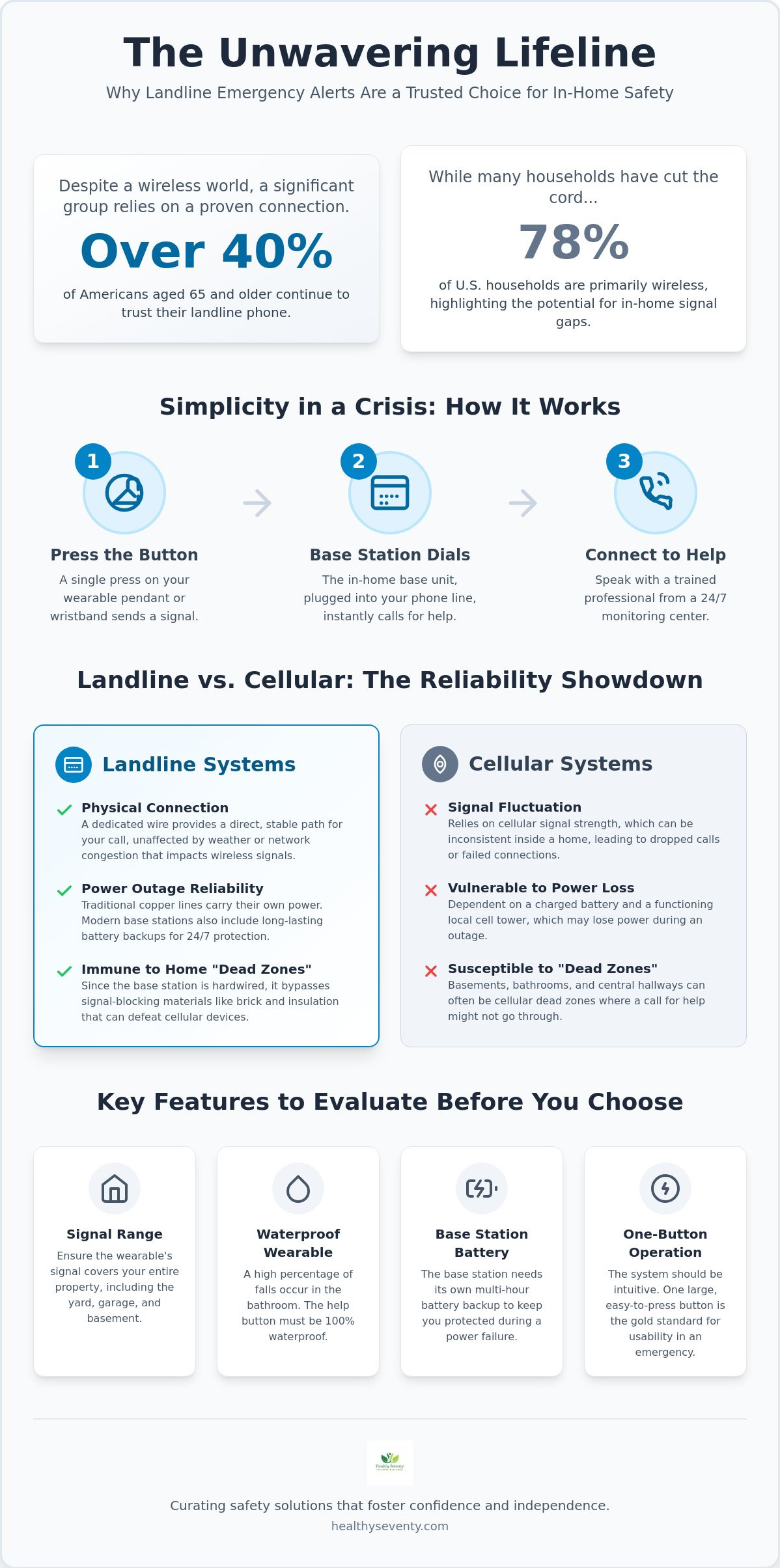
In an era of 5G and fiber optics, the most reliable lifeline for your home might actually be the one plugged into the wall. While 78% of U.S. households have gone wireless as of 2026, over 40% of Americans aged 65 and older continue to trust their landline for a very good reason. You likely value your independence but might worry about cellular dead zones or technology that feels too complex to use during a crisis. Choosing a landline personal emergency alert device ensures your connection to help remains steady, even in those corners of your house where a smartphone signal often fails.
We believe that your home should be a place of comfort, not a source of anxiety about what might happen if you're alone. It's completely natural to feel overwhelmed by modern gadgets that require constant charging or confusing software updates. This guide will show you why landline-based systems remain the most dependable safety net for seniors aging in place. You'll discover how to achieve total peace of mind through simple one-button operation and a connection that stays active even during a power outage.
Table of Contents
The Safety Net: What is a Landline Personal Emergency Alert Device?
Admitting that you might need a little extra support is a brave step toward preserving your freedom. It isn't a sign of slowing down; rather, it's a strategic choice to ensure you can continue enjoying your home on your own terms. A Medical alarm, specifically a landline personal emergency alert device, serves as a bridge between your independent lifestyle and the immediate help you might need in an unexpected moment. By choosing this path, you're embracing a proactive approach to your well-being that prioritizes reliability over flashy, often temperamental, new technology.
This system operates as a two-part safety mechanism designed for maximum simplicity. The first part is a base station that plugs directly into your existing telephone jack and a standard power outlet. The second part is a lightweight, wearable help button, typically worn as a pendant or a wristband. These two components talk to each other through a dedicated radio frequency, creating a protective safety zone around your living space. This setup is a cornerstone of modern "aging in place" strategies because it provides a constant, invisible safety net that doesn't require you to change a single thing about how you live your life.
How the Help Button Connects You to Care
When you press your wearable button, the base station instantly dials a dedicated monitoring center. You'll hear a calm, professional voice through high-output speakers designed to be clear even if you're in a different room. In 2026, these monitoring centers are staffed by trained experts who can assess your situation and contact family members or emergency services. It's helpful to know the distinction between system types. Monitored systems connect to a professional center, while unmonitored systems dial pre-programmed personal contacts. Most seniors find that professional monitoring provides a much deeper level of reassurance for themselves and their loved ones.
Why Seniors Choose Landline Over Mobile in 2026
Why do so many choose this traditional path despite the rise of smartphones? The answer lies in the "always-on" nature of the technology. A landline personal emergency alert device doesn't require a cellular signal that might flicker or a battery that needs daily charging. It's a "set it and forget it" solution that offers a sense of vitality and clarity. You can maintain your daily routines, from gardening to reading in your favorite chair, without the technical anxiety that mobile devices often bring. This shift from reactive emergency response to proactive independence allows you to focus on your legacy and well-being. It empowers you to live with confidence, knowing that help is always just a single, simple press away.
How Landline-Based Medical Alerts Ensure 24/7 Reliability
Reliability isn't just a marketing term; it's a matter of physics. When you choose a landline personal emergency alert device, you're opting for a physical connection that doesn't rely on the invisible, often fickle nature of cellular waves. Wires don't wander. Unlike wireless signals that must fight through brick, insulation, and distance from the nearest tower, a copper wire or dedicated digital line provides a direct, shielded path for your call for help. This grounded approach ensures that your message reaches the monitoring center without the "jitter" or dropped packets that can plague mobile devices.
Traditional Plain Old Telephone Service (POTS) is particularly valued because the copper lines carry their own small electrical charge. This means that even if your neighborhood loses power, the phone line itself often remains active. Modern systems are also designed to be compatible with digital landlines (VoIP), though the physical stability of the connection remains the primary benefit. In many traditional networks, emergency signals are given priority, ensuring your alert moves to the front of the line during high-traffic periods. If you're looking for a foundation for your home safety, exploring a landline personal emergency alert device is a wise first step.
Signal Penetration and Home Dead Zones
Have you ever noticed how your cell phone loses bars when you walk into the basement or a central hallway? Thick walls and certain types of insulation act as barriers to wireless signals. A landline system eliminates these "dead zones" because the base station is hardwired into your home's infrastructure. The range between your wearable button and that station is typically quite generous, often covering several hundred feet. To ensure total coverage, it's a good practice to test your button from the furthest corners of your home, including the attic or the porch, before you finalize your setup.
Battery Backups and Power Outage Protection
What happens when the lights go out? In 2026, industry standards require robust backup power to handle such events. Most high-quality base stations come equipped with a battery backup that can last for 32 hours or more, as seen in verified 2026 specifications for leading home systems. This ensures that your safety net remains intact during a summer storm or a winter blackout. To keep your system in peak condition, perform a monthly test by pressing the button to confirm the connection. This simple routine verifies that both the primary power and the backup systems are ready to support your vitality and independence whenever you need them.
The Pros and Cons: Landline vs. Cellular Emergency Systems
Choosing between a landline and a cellular system isn't just about technology; it's about matching a safety net to your specific lifestyle. While cellular devices are often marketed as the "modern" choice, they frequently come with trade-offs in battery life and signal consistency that can be unsettling. A landline personal emergency alert device, by contrast, offers a stationary anchor for your home. These systems usually feature larger, high-contrast buttons that are much easier to navigate if your vision isn't what it used to be or if you struggle with fine motor skills. Cellular units can sometimes feel like small, slippery mobile phones, whereas the landline base station is a sturdy, permanent fixture that stays exactly where you need it.
Reliability remains the strongest argument for the traditional approach. Cellular signals can drop during peak usage times or fade in the center of a large house. The physical connection of a landline ensures that your call for help doesn't have to compete with neighboring data traffic. You get the peace of mind that comes from a dedicated, hardwired path to assistance. This stability is why many seniors prioritize these systems, especially in rural areas where tower coverage can be spotty at best.
The Advantage of Lower Monthly Costs
One of the most practical benefits of a landline system is the predictable cost. Because these devices utilize your existing home phone line rather than a costly cellular data plan, the monthly monitoring fees are generally the most affordable in the industry. You should also be mindful of one-time setup or activation fees that some providers might charge. For those on a fixed income, these long-term savings add up over the years. This allows you to invest your resources into other areas of your well-being without ever having to sacrifice your immediate safety.
The Mobility Limitation: Is It Right for You?
The primary trade-off with a landline personal emergency alert device is its "life radius." This system is designed specifically for your home and immediate surroundings, such as your porch or garden. If you're someone who enjoys spending most of your time in your own sanctuary, this is likely the perfect fit. However, if you're frequently traveling long distances alone, you should consider how a stationary system fits into your broader plan. Many of our readers find that combining a reliable home alert system with other mobility aids for seniors creates a comprehensive environment of support. This allows you to move freely and confidently, knowing your home remains a fortified space of safety.
Key Features to Evaluate Before Your Purchase
Selecting the right landline personal emergency alert device is about more than just checking a box on a safety list. It's about finding a tool that integrates seamlessly into your daily rhythm and offers a sense of curated quality. You deserve a system that understands the unique layout of your life, from your favorite reading nook to the edge of your property. When you begin comparing options, focus on these essential pillars of home safety:
Signal Range: Verify that the button maintains a strong connection with the base station throughout your entire home. A high-quality system should reach from the basement to the attic and even out to the mailbox or garden.
Waterproof Ratings: Statistics consistently show that the bathroom is the most critical area for falls. Ensure your wearable button has a high waterproof rating so you never have to take it off while bathing or showering.
Speaker Clarity: The base station should feature a high-output speaker. You need to be able to hear and speak with the operator clearly, even if you're in an adjacent room when the alert is triggered.
The Truth About Automatic Fall Detection
By 2026, sensor technology has evolved significantly to distinguish between a genuine fall and a heavy object being dropped. This reduces the frustration of false alarms while providing an essential layer of protection for those who may experience vertigo or sudden fainting. While fall detection often involves an additional monthly cost, many find it a vital companion to wearing the best walking sneakers for balance. Together, these tools form a holistic approach to stability, ensuring that if your physical balance fails, your safety net will not. If you're ready to enhance your home security today, you can explore our landline personal emergency alert device options to find your perfect fit.
Installation and Ease of Setup
Most modern landline systems are designed for simple, plug-and-play installation. You won't need a technician to drill holes or run complex wiring; you simply connect the base station to your phone jack and power outlet. On your first day, follow a methodical testing routine. Press your button to confirm the connection and speak with the operator to verify the speaker volume is sufficient. Many systems now also offer caregiver notification features, allowing your family members to receive a simple text or app update whenever you perform a successful test. This creates a shared sense of reassurance without ever intruding on your privacy or independence.
Finding Peace of Mind with Healthy Seventy’s Curated Solutions
Choosing a safety system is a deeply personal decision that reflects your commitment to a vibrant, independent future. At Healthy Seventy, we don't just list products; we act as your dedicated researcher and advocate. We've scoured technical specifications and user experiences to ensure that every landline personal emergency alert device we highlight meets a high register of reliability. Our goal is to bridge the gap between complex home technology and your everyday lifestyle choices, allowing you to focus on your legacy rather than your fears. We believe that the later stages of life should be cherished, and having a dependable safety net is a vital part of that experience.
True peace of mind comes from a holistic approach to well-being. While a landline personal emergency alert device provides a critical connection to help, it's most effective when integrated into a broader strategy for home safety, which may include professional accessibility modifications from HomeSafe Living Solutions. This proactive mindset transforms your living space into a fortified sanctuary where you can move with confidence. Before you finalize your setup, consider this final checklist for a secure environment:
Remove loose rugs or secure them with non-slip backing to prevent trips.
Increase lighting in hallways and stairwells to ensure clarity during evening hours.
Place frequently used items within easy reach to avoid the need for step stools.
Ensure your base station is located in a central area with a clear path to your most-used rooms.
Integrating Alerts into a Safe Home Environment
A single button is a powerful tool, but it works best when supported by the foundational medical alert systems for seniors pillars. These pillars include physical environmental safety, reliable communication technology, and a robust social support network. Don't hesitate to involve your family or local community in your safety plan. Sharing your testing routine with a loved one doesn't just provide technical verification; it fosters a sense of connection and collective reassurance. Simple modifications, such as installing grab bars or improving floor traction, work in harmony with your alert device to stop accidents before they occur.
Your Next Steps Toward a Safer Tomorrow
If you're feeling unsure about which path to take, consider having an open conversation with your healthcare provider. They can offer personalized insights into your specific balance needs and help you determine if features like automatic fall detection are right for you. We're here to act as your partner in this journey, offering the wisdom and experience you need to make an informed choice. When you're ready to take that next step toward a more secure and confident lifestyle, we invite you to browse our curated safety products here. You've worked hard to build a life you love; let's make sure you can enjoy it with total peace of mind.
Securing Your Independence with Confidence
Choosing a landline personal emergency alert device is a powerful decision that prioritizes steady reliability over the often unpredictable nature of wireless signals. Throughout this guide, we've seen how a physical connection ensures your safety net remains intact even in cellular dead zones or during power outages. By focusing on simple operation and cost-effective monitoring, you're building a foundation for a lifestyle defined by vitality rather than technical anxiety. It's about ensuring that your home remains a place of comfort and absolute security.
Healthy Seventy has been empowering seniors since 2024 by providing expert-vetted wellness resources dedicated to your independence. We treat this stage of life as a cherished phase, and our research is designed to help you maintain your well-being with clarity and grace. You don't have to navigate these choices alone; we are here as your partner in creating a safer environment. Explore Our Curated Medical Alert Devices for Senior Safety and take a proactive step toward a more confident tomorrow. Your legacy of strength and independence deserves a safety net that is just as reliable as you are.
Common Questions About Home Safety Systems
Do landline medical alert systems work with VoIP or digital phone lines?
Yes, most modern systems are fully compatible with digital and VoIP phone services. While these lines operate differently than traditional copper wires, providers usually supply a simple adapter or filter to ensure your signal remains clear. It's a standard setup in 2026 that allows you to maintain your current phone provider while enjoying the stability of a dedicated home safety connection.
Can I still use my phone while the emergency alert device is plugged in?
You can continue to use your home phone exactly as you always have. The base station is designed with a "pass-through" feature that allows your telephone and the alert system to share the same jack. If an emergency occurs while you're on a call, the system will automatically disconnect the line to prioritize your alert, ensuring help is never delayed by a busy signal.
What happens if I press the button by mistake?
Nothing negative happens if you trigger a false alarm. Simply wait for the operator to speak through the base station and calmly let them know it was an accident. The monitoring staff actually appreciates these moments because they serve as a real-world test of your system. You don't need to feel embarrassed; it’s a wonderful way to confirm that your safety net is active and ready.
Is fall detection 100% accurate in 2026 landline models?
No technology is 100% accurate, although fall detection has become much more sophisticated over the last few years. It's designed to recognize the specific velocity and impact of a fall, but it might occasionally miss a "slow fall" against a wall or furniture. For this reason, you should always press your button manually if you're able to do so after an incident occurs.
Will the medical alert device work in my yard or garden?
Your device will work in your yard as long as you stay within the signal range of the base station. Most systems offer a range of several hundred feet, which easily covers a standard porch or garden area. It's a good idea to have a friend stand by the base station while you walk to the edge of your property to test the connection boundaries together.
Do I need a contract for a landline personal emergency alert device?
Many reputable providers now offer flexible month-to-month plans rather than restrictive long-term contracts. This shift in the industry allows you to maintain your independence without feeling locked into a multi-year commitment. When selecting your landline personal emergency alert device, always confirm that you can cancel the service or return the equipment without facing hidden penalties or high cancellation fees.
Can I wear the help button in the shower or bath?
You should absolutely wear your help button in the shower, as these devices are designed to be fully waterproof. Since the bathroom is one of the most common areas for household slips, keeping the button on while bathing is a vital part of your safety routine. You can feel confident knowing the internal components are sealed against moisture and ready to function in wet environments.
How often should I test my landline emergency alert system?
You should perform a manual test of your landline personal emergency alert device once every month. This simple habit ensures that the battery, speaker, and telephone connection are all in perfect working order. Regular testing only takes a moment and provides the ongoing reassurance that your connection to care is strong, allowing you to focus on enjoying your daily vitality.


Comments