
Choosing the Right Orthopedic Footwear for Senior Comfort
- healthyseventy3
- 8 hours ago
- 12 min read
What if the secret to reclaiming your morning walk wasn't found in a medicine cabinet, but in your closet? Many people view specialized shoes as a concession to age, but choosing high-quality orthopedic footwear for seniors is actually a proactive investment in your ongoing vitality. You've likely experienced the nagging ache of arthritis or the unsettling instability that makes every step feel like a risk. It's exhausting when the fear of a fall or the simple struggle of tying laces keeps you from the independent lifestyle you've worked so hard to build.
We believe that your later years should be defined by movement and joy, not by the limitations of chronic foot pain. This guide will show you how specialized footwear can transform your daily mobility, alleviate discomfort, and provide the stability needed for an active life. We'll explore how modern designs blend sophisticated style with medical-grade support; this ensures you can enjoy pain-free walks and increased confidence without needing help to get your shoes on. From understanding support features to finding the perfect fit, you're about to discover how the right pair of shoes can help you maintain your legacy of health.
Table of Contents
Why Standard Shoes Fail: Understanding the Unique Needs of Aging Feet
The Anatomy of Support: Key Features to Look for in Senior Orthopedic Shoes
Solutions for Common Conditions: Arthritis, Diabetes, and Swelling
More Than Just Comfort: How Proper Footwear Prevents Falls and Boosts Independence
Finding Your Fit: How to Choose and Maintain Your Orthopedic Footwear
Why Standard Shoes Fail: Understanding the Unique Needs of Aging Feet
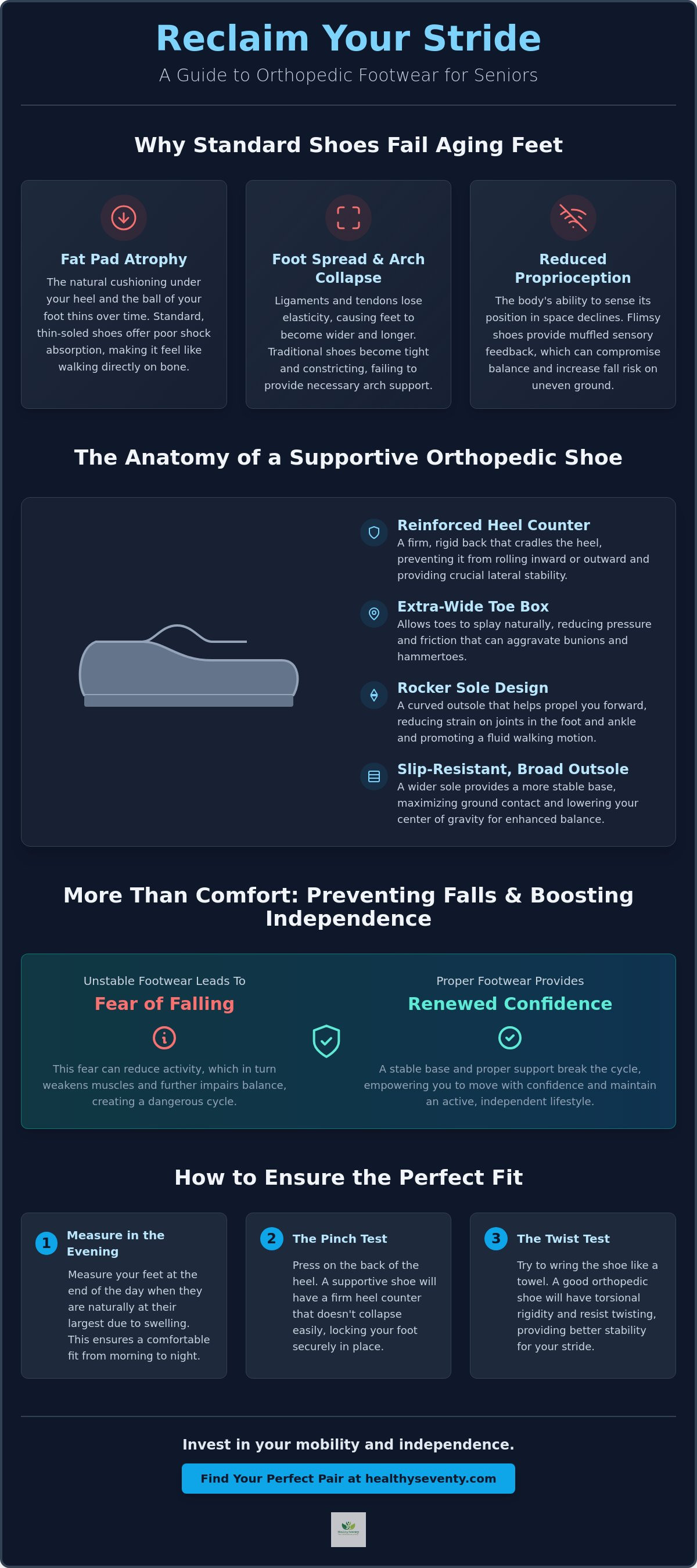
Your feet have carried you through decades of adventures. This journey naturally changes your foot structure, making the shoes you wore in your fifties less effective today. One common shift is fat pad atrophy, which is the thinning of the natural fatty cushioning beneath your heel and the ball of your foot. Without this built-in shock absorber, walking in standard, thin-soled shoes can feel like walking directly on bone. It isn't just uncomfortable; it's a signal that your equipment needs an upgrade to match your current needs.
As we age, the ligaments and tendons that hold the foot's delicate structure together lose some of their elasticity. This often leads to "foot spread," where the foot becomes wider or longer, and arches begin to collapse. If you've noticed your old shoes feel tight or your feet seem flatter, you're experiencing a normal part of a long, active life. Properly designed foot orthoses and supportive footwear manage these changes by providing the external structure your anatomy now requires.
Another vital factor is the decline in proprioception, which is your body's ability to sense its position in space. Standard, thin-soled shoes often fail to provide the sensory feedback needed to navigate uneven ground safely. When your brain receives muffled signals from your feet, your balance suffers, turning a simple stroll into a potential hazard. Reframing these changes as a natural evolution allows you to approach your footwear as high-performance gear rather than a medical necessity.
The Biomechanics of the Senior Stride
Your walking pattern naturally evolves over time. Most seniors adopt a slightly shorter stride and a wider stance to maintain balance. This shift changes how your shoes wear down and how your weight is distributed. Traditional sneakers often lack torsional rigidity, meaning they twist too easily, which can leave you feeling unstable. High-quality orthopedic footwear for seniors often incorporates a rocker sole. This curved design assists in the toe-off phase of your step, reducing joint strain and making movement feel more fluid.
When to Make the Switch to Orthopedic Support
Don't wait for sharp pain to signal a change. Often, improper footwear causes dull aches in your knees, hips, or lower back. Evaluate your shoes with the pinch test, pressing the back of the heel, and the twist test, wringing the sole. If the heel collapses easily or the sole twists like a towel, the shoe lacks the necessary support. Switching to orthopedic footwear for seniors proactively ensures you stay mobile, protecting your joints before issues become severe.
The Anatomy of Support: Key Features to Look for in Senior Orthopedic Shoes
Understanding the internal architecture of your shoes is the first step toward lasting comfort. While standard sneakers often focus on aesthetics, high-quality orthopedic footwear for seniors prioritizes structural integrity. The "Heel Counter" is a prime example of this focus. This is the firm, reinforced back part of the shoe that cradles your heel. A rigid counter is essential because it locks the foot in place, preventing the ankle from rolling inward or outward. This lateral stability is your first line of defense against strains and unsettling instability.
Equally important is the extra-wide toe box. As feet spread over time, traditional narrow shoes can squeeze the forefoot, leading to painful bunion irritation or hammertoes. A spacious toe box allows your toes to splay naturally, which reduces pressure and promotes better circulation. Inside high-quality orthopedic footwear for seniors, you'll find multi-layer orthotic insoles. These aren't just flat pads; they provide anatomical arch support that realigns the foot. This redirection of pressure helps alleviate the strain often felt in the plantar fascia and the ball of the foot.
Finally, examine the foundation of the shoe. A slip-resistant outsole with a broad base ensures maximum ground contact. A wider footprint lowers your center of gravity, providing a steady platform for every step you take. If you're looking for a pair that incorporates all these structural benefits, exploring orthopedic walking sneakers for seniors can help you find a design tailored to these specific needs.
Closure Systems: Beyond Laces
Traditional laces often present a challenge for those with arthritis or limited dexterity. Hook-and-loop straps provide a secure fit without the struggle of fine motor movements. Some modern designs even feature hands-free technology, allowing you to step in without bending over. Bungee laces offer another excellent alternative, providing a customized, snug tension that stays in place all day long.
Material Matters: Breathability and Protection
The skin on aging feet requires extra care. Soft, non-binding uppers are essential for preventing the friction that leads to blisters or ulcers, particularly for those with neuropathy. Moisture-wicking linings help keep your feet dry and healthy by discouraging fungal growth. Choosing lightweight synthetic materials can also significantly reduce the energy required for each step, making long walks much more enjoyable.
Solutions for Common Conditions: Arthritis, Diabetes, and Swelling
Managing your foot health often requires a targeted approach based on your specific medical history. While general support is helpful, certain conditions demand specialized features to ensure long-term comfort and safety. Choosing the right orthopedic footwear for seniors involves matching the shoe's technology to your primary concern, whether that's the inflammation of arthritis or the sensitivity of a diabetic foot.
Arthritis: Focus on maximum shock absorption and rocker soles to reduce the burden on stiff joints.
Diabetes: Prioritize seamless interiors to prevent friction and extra depth to accommodate custom inserts.
Edema (Swelling): Look for highly adjustable closure systems and stretchable uppers that adapt as foot volume changes throughout the day.
For those living with arthritis, every step can send a jarring vibration through the ankles, knees, and hips. Specialized footwear addresses this through advanced midsole materials that dissipate energy more effectively than standard foam. By reducing the peak impact on your joints, these shoes help you extend your daily walks without the lingering soreness that often follows. Similarly, "edema-friendly" designs recognize that your foot size at 8:00 AM might be different from your size at 4:00 PM. Stretchable fabrics and long-strap closures ensure a consistent, non-constricting fit regardless of swelling.
Managing Plantar Fasciitis and Heel Pain
Heel pain is often the result of strain on the plantar fascia ligament, which can become less resilient over time. Targeted heel cushioning combined with firm arch support is the most effective way to alleviate this tension. If you're struggling with flat feet, you might find our guide on orthopedic sneakers for fallen arches helpful for deeper insights. Remember that maintaining this support indoors is just as vital as wearing it outside; walking barefoot on hard floors can quickly undo the progress made during your morning stroll.
The Diabetic Foot: Safety Through Design
For individuals with diabetes, footwear is a critical component of preventative care. "Extra depth" shoes are designed with a deeper interior cavity to prevent pressure points and accommodate custom-milled inserts. This space is essential for preventing ulcers that can arise from even minor friction. Protective toe shields also offer a layer of defense against accidental bumps that might go unnoticed due to decreased sensation. As of 2026, the Medicare Durable Medical Equipment, Prosthetics, Orthotics, and Supplies (DMEPOS) fee schedule has seen a net increase of 2.0%, reflecting the ongoing importance of these medical devices. These regulations help ensure that high-quality orthopedic footwear for seniors remains a reliable part of your wellness plan.
More Than Just Comfort: How Proper Footwear Prevents Falls and Boosts Independence
Stability is the foundation of independence. For many, a single slip can trigger a "fear of falling" cycle. This psychological state often leads to reduced activity, as the worry about a stumble leads to staying indoors. Over time, this inactivity weakens the very muscles needed to stay upright, making future falls more likely. High-quality orthopedic footwear for seniors breaks this cycle by providing a sense of security with every step you take.
A low-profile sole is a critical feature in this safety framework. By keeping your foot closer to the ground, you effectively lower your center of gravity. When this is combined with a wide footprint, the shoe provides a much broader base of support. Think of it as the difference between standing on a narrow beam and a sturdy platform. This design ensures that minor imbalances don't turn into major accidents. According to the Centers for Disease Control, three million older people are treated in emergency departments for fall injuries each year; the right shoes are a vital tool in reducing those risks.
A smooth heel-to-toe transition is also essential for maintaining a steady gait. Specialized shoes are engineered to guide your foot through its natural motion, ensuring you stay centered as your weight shifts. If you're looking for specific stability recommendations, you can explore our curated list of the best walking sneakers for balance.
The Science of Traction
Slip-resistance involves more than just "sticky" rubber. It's about how the tread pattern channels water and debris away from the contact point on surfaces like tile or wet pavement. While heavy, lugged soles might look sturdy, they can often be trip hazards for seniors who might not lift their feet as high as they once did. Instead, look for soles that offer a balance of grip and flexibility. A flexible forefoot allows for better ground feel, which helps your brain react quickly to changes in the terrain beneath you.
Footwear as a Tool for Active Aging
Choosing the right orthopedic footwear for seniors is a proactive choice for your long-term vitality. When your feet feel secure, the world opens up again. Whether it's returning to the garden or enjoying a morning at the mall, the right equipment makes these cherished hobbies possible. There's also a significant psychological boost in "getting ready" with ease. Shoes that feature simple closures remove the daily frustration of starting your day, fostering a spirit of confidence and self-reliance. To start your journey toward safer, more comfortable movement, view our guide to orthopedic walking sneakers for seniors.
Finding Your Fit: How to Choose and Maintain Your Orthopedic Footwear
Finding the right fit is the final, essential step in your journey toward better mobility. It's a process that requires a bit of patience and attention to detail. We recommend measuring your feet in the late afternoon. This is because your feet naturally swell as you move throughout the day. If you measure first thing in the morning, you might find that your shoes feel uncomfortably tight by dinner time. High-quality orthopedic footwear for seniors is designed to accommodate these changes, but starting with an accurate, "end-of-day" measurement ensures lasting comfort.
Once you've selected your orthopedic walking sneakers for seniors, allow for a brief break-in period. While these specialized shoes are often comfortable right out of the box, they're also working to realign your stride. Start by wearing them for two or three hours a day inside your home. This gives the orthotic insoles time to mold to your unique foot shape and allows your muscles to adapt to the improved support without overexertion. You'll likely find this period is much shorter than with standard shoes, but it's a vital step for long-term success.
Sizing Secrets for Aging Feet
It's common to find that you need a half-size larger than you did ten years ago. This isn't a mistake; it's a result of the natural foot spread we discussed earlier. Width is just as critical as length. Many seniors benefit from exploring Wide, X-Wide, or even XX-Wide options to prevent pressure on sensitive areas. When testing the fit, use the "Rule of Thumb." There should be roughly a half-inch of space, or about the width of your thumb, between your longest toe and the front of the shoe. This space prevents your toes from crowding during the "toe-off" phase of your walk.
Caring for Your Investment
To keep your shoes performing at their best, you must maintain their structural integrity. We suggest rotating between two pairs of shoes. This practice allows the specialized foam in the midsoles to fully decompress and dry out between uses, which can significantly extend the life of the support features. Cleaning is simple; use a damp cloth and mild soap for breathable mesh or synthetic uppers, but avoid high heat which can damage the adhesives. Watch for signs of wear, such as a smoothed-out tread or a visible lean in the heel. When the support begins to fade, it's time for a new pair to ensure your safety remains a priority. Explore our curated Orthofeet collection for premium support and discover the difference that a truly professional fit can make in your daily life.
Step Into Your Next Chapter With Confidence
Reclaiming your mobility isn't just about managing pain; it's about protecting your independence and continuing to enjoy the activities that bring you joy. We've explored how natural changes like fat pad atrophy and ligament spread require more than just a standard sneaker. By prioritizing structural features like firm heel counters and wide toe boxes, you can address the root causes of discomfort while significantly reducing your risk of falls. Investing in high-quality orthopedic footwear for seniors is a proactive commitment to your long-term vitality.
Since 2024, we've been dedicated to empowering wellness for the 60+ community by offering podiatrist-recommended designs that focus on stability and safety. You don't have to let foot pain dictate your daily schedule. Take a decisive step toward a more active, stable future today. Browse Our Curated Selection of Orthopedic Footwear for Seniors. Your feet have carried you through a lifetime of memories; now, let us help you carry that legacy forward with comfort and grace.
Frequently Asked Questions
Is there a difference between orthopedic shoes and comfort shoes?
Orthopedic shoes are medical-grade devices engineered to support specific foot structures, while comfort shoes focus primarily on soft cushioning and aesthetics. High-quality orthopedic footwear for seniors features rigid soles and reinforced heel counters to correct or stabilize your gait. Unlike standard comfort shoes, these designs are built to manage physiological changes like fallen arches or fat pad atrophy, providing the structural integrity needed for long-term joint health.
How do I know if I need wide or extra-wide shoes?
You likely need a wider fit if you notice redness on the sides of your feet or if your toes feel cramped after a short walk. Aging often causes the feet to spread; measuring your feet late in the afternoon when swelling is at its peak will give you the most accurate result. If you have bunions or hammertoes, opting for an extra-wide toe box ensures these sensitive areas aren't subjected to painful friction throughout the day.
Can I use my custom orthotics with these sneakers?
Most professional orthopedic sneakers are designed with removable insoles specifically to accommodate custom-milled inserts. This "extra depth" design ensures that when you swap the factory pad for your personal orthotic, your foot still sits securely within the shoe without slipping at the heel. Always check that the shoe's interior is deep enough so your foot doesn't feel compressed against the top of the upper once your custom insert is in place.
Will Medicare cover the cost of my orthopedic footwear?
Medicare Part B covers therapeutic shoes and inserts if you have diabetes and meet specific health criteria verified by a doctor. For 2026, the Medicare reimbursement for a depth-inlay shoe is set at $181.26 under the current DMEPOS fee schedule. It's vital to have your podiatrist or primary care physician certify that you need these specialized shoes as part of a comprehensive treatment plan for your condition to ensure your claim is processed correctly.
Are orthopedic shoes only for people with foot problems?
No, choosing orthopedic footwear for seniors is a proactive choice for anyone looking to maintain their balance and prevent future mobility issues. You don't need a diagnosed condition to benefit from the enhanced stability and shock absorption these shoes provide. By wearing supportive footwear early, you can protect your joints from unnecessary wear and tear, effectively extending your years of active, independent living and reducing your overall risk of falls.
How often should I replace my orthopedic walking shoes?
You should generally replace your shoes every 300 to 500 miles, or roughly every six to twelve months for most active adults. Even if the uppers look pristine, the internal support structures and shock-absorbing foams eventually lose their resilience. Inspect your outsoles regularly; if the tread is worn smooth or you notice a visible lean in the heel when the shoe is placed on a flat surface, it's time to invest in a new pair.
What is the best type of closure for someone with severe hand arthritis?
Hands-free slip-on technology or hook-and-loop (Velcro) straps are the most effective solutions for those with limited hand dexterity. These systems eliminate the need for the fine motor movements required to tie traditional laces, allowing you to get ready for your day independently. Some modern designs also use adjustable bungee laces, which provide a snug, customized fit that you can set once and never have to tie again.
Can orthopedic shoes help with my lower back pain?
Yes, orthopedic footwear for seniors can significantly alleviate lower back pain by realigning your entire kinetic chain. When your feet aren't properly supported, it forces your knees, hips, and spine to overcompensate, which leads to chronic aches. By providing a stable foundation and correcting your posture from the ground up, these shoes reduce the strain on your lower back muscles and allow you to walk with a much more natural, comfortable gait.
Comments