
How to Use an Upright Walker Correctly: A Complete Safety & Posture Guide for 2026
- healthyseventy3
- 3 days ago
- 13 min read
What if the secret to walking further isn't about pushing harder, but about standing taller? You likely chose an upright model to escape the hunched posture and persistent back pain that traditional rollators often cause. It's completely natural to feel a bit of hesitation at first, especially when you're navigating door thresholds or worrying about the front wheels. Learning how to use an upright walker correctly is the bridge between feeling tentative and feeling truly empowered in your daily movements.
We understand that maintaining your independence is a cherished goal, and we're here to support that journey with professional, research-backed advice. In this guide, you'll master the art of walking with a "proud" upright posture and gain the confidence to increase your daily distance without discomfort. We will explore everything from the vital distinction between handle and armrest height to safety techniques for various surfaces. By the end of this article, you'll have a clear, step-by-step roadmap to using your VOCIC Upright Walker for Seniors with total stability and ease.
Table of Contents
What is an Upright Walker and How Does it Support Your Mobility?
The 3-Step Setup: Adjusting Your Walker for Maximum Ergonomic Support
Walking with Confidence: Proper Technique and Avoiding Common Mistakes
Navigating Real-World Obstacles: From Thresholds to Outdoor Terrain
Choosing Longevity: Why the VOCIC Upright Walker is Our Top Recommendation
What is an Upright Walker and How Does it Support Your Mobility?
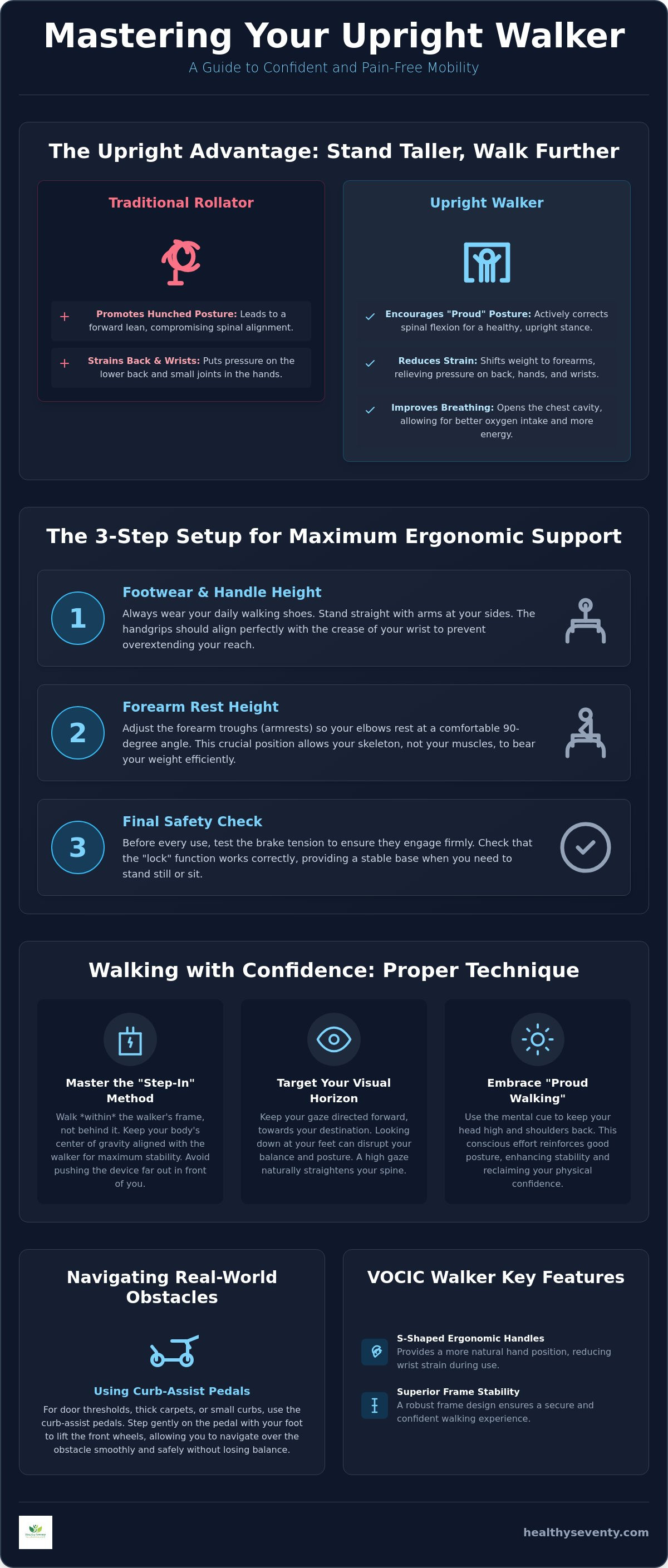
An upright walker is a specialized Walker (mobility) aid designed specifically to support your weight through your forearms rather than your wrists. This design represents a significant evolution from the standard rollator. While a traditional rollator requires you to lean forward and grip handles at hip height, an upright model features elevated, padded armrests. This fundamental shift in design is the first thing to understand when learning how to use an upright walker correctly, as it completely changes your center of gravity and how you interact with the world around you.
The core difference lies in how your body distributes its weight. By resting your arms in the cradles, you're shifting the burden of support from the small, often arthritic joints in your hands and wrists to your larger skeletal system. It's a much more efficient and comfortable way to move. Instead of "pushing" a device out in front of you, you're essentially standing within a supportive frame that moves with you. This naturally corrects long-term spinal flexion, which is the tendency to hunch forward that many people develop after years of using traditional mobility aids.
We often encourage our community to think of this as "proud walking." It's a simple mental cue that reminds you to keep your head high and your shoulders back. When you stand tall, you aren't just improving your appearance; you're actively reclaiming your physical space and your confidence. It's about moving with intention rather than just getting from point A to point B.
The Biomechanics of Upright Walking
The mechanical advantages of this design are quite profound. Forearm rests significantly reduce the shearing force on your wrists and hands, which is a major relief if you manage chronic joint pain. Perhaps even more importantly, standing upright opens your chest cavity. When you aren't hunched over, your lungs have more room to expand, leading to better oxygen intake and more energy for your daily activities. A straight spine also improves your overall balance by aligning your head directly over your hips. This alignment reduces the risk of "scuffing" your steps or losing your footing on uneven surfaces.
Is an Upright Walker Right for You?
This type of walker is particularly beneficial for individuals living with conditions like spinal stenosis or kyphosis, where leaning forward can cause significant discomfort or nerve pressure. If you find that you're constantly looking at your feet while you walk, an upright model can help reset your gaze to the horizon. However, it's worth noting that if you have severe upper body weakness or balance issues that require a more rigid, non-wheeled support, a traditional walker might still be the safer choice. For a broader look at how these tools can fit into your life, you can explore our mobility aids for seniors guide to see which solution best matches your unique needs.
The 3-Step Setup: Adjusting Your Walker for Maximum Ergonomic Support
Before you begin adjusting your equipment, please ensure you are wearing your standard walking shoes. Whether you prefer supportive sneakers or your daily loafers, the thickness of the sole changes your height and, consequently, your alignment. Learning how to use an upright walker correctly starts from the ground up, ensuring that every adjustment reflects your actual height during movement. If you fit the device while wearing slippers or standing barefoot, you'll likely find the support inadequate once you head outdoors.
Step 1 focuses on the handle height. Stand as straight as possible with your arms hanging naturally at your sides. The handgrips should align with the crease of your wrist. This foundational step is a key part of Using a walker safely, as it prevents you from overextending your reach or straining your fingers to maintain a secure grip. When the handles are at the correct level, your hands should fall onto them with a very slight, natural bend in the wrist.
Step 2 involves the forearm troughs. Adjust these until your elbows rest at a comfortable 90-degree angle. This position is critical because it allows your skeleton to bear your weight, rather than relying on muscular strength. Step 3 is your final safety check. Always test the brake tension and the "lock" functionality before you set off. You should hear a distinct click when the parking brakes engage. Finally, perform the "Center of Gravity" test. Your torso should remain firmly within the footprint of the rear wheels. If you are leaning too far forward, you risk the walker tipping; if you are too far back, you lose the support you need.
Finding Your Perfect Height
Are you shrugging your shoulders while you walk? That is a clear sign your armrests need to be lowered. A correct fit should feel effortless and relaxed. If you find yourself hunching over the frame, you're losing the "proud" posture that makes these devices so effective. Take the time to find that middle ground where your spine feels long and your chest feels open. This balance is the secret to mastering how to use an upright walker correctly over long distances.
Adjusting for Comfort and Stability
Check the padding in the forearm troughs to ensure it provides a secure, non-slip surface for your skin or clothing. Stability also depends on clear paths. Ensure your brake cables are managed properly and not dangling where they could catch on your feet or surrounding furniture. For those seeking a device designed with these precise ergonomic needs in mind, the VOCIC Upright Walker for Seniors offers intuitive adjustment pins that click firmly into place, providing a reliable and customized fit every time you step out.
Walking with Confidence: Proper Technique and Avoiding Common Mistakes
Once your equipment is tailored to your body, the focus shifts to how you move within the world. Many people instinctively try to push their walker far out in front, but learning how to use an upright walker correctly requires a different approach. We call this the "Step-In" method. Instead of treating the device like a shopping cart, you should aim to walk into the frame. This ensures your weight remains centered over the wheels, providing the maximum stability the design intends.
Your gaze plays a vital role in your stability. It's tempting to watch your feet or the front wheels, especially when you're first getting started. However, looking down can actually compromise your balance. Keep your eyes on the horizon. This visual target naturally encourages a straighter spine and helps you anticipate changes in the terrain before you reach them. While walking, maintain a light, relaxed touch on the handles. Your fingers should be ready to engage the brakes at any moment, particularly when navigating gentle slopes. If you feel the walker beginning to "run away" on a decline, a gentle squeeze on the hand brakes will keep your pace steady and safe.
When it's time to change direction, avoid sharp, stationary pivots. These can cause the wheels to catch or the frame to become unstable. Instead, use wide, sweeping arcs. This methodical approach keeps the walker’s center of gravity aligned with your own, making every turn feel smooth and controlled.
The Correct Gait Cycle
A healthy gait should feel natural and rhythmic. Aim for a heel-to-toe stride, allowing your feet to move through their full range of motion. If you notice yourself taking short, choppy steps, it's often a sign that your posture isn't quite right. You might need to revisit Adjusting your walker for proper fit to ensure you aren't leaning too far forward. Maintaining a consistent distance between your torso and the seat ensures you have enough room for your legs to move without the risk of tripping.
Sitting and Standing Safely
The transition from walking to sitting is a critical safety moment. Before you attempt to sit, back up until you feel the edge of the seat against the back of your legs. This "Back of the Legs" rule ensures you're perfectly positioned. Engaging the parking brakes is a non-negotiable step before every pause; never sit down unless you've heard that reassuring click. When you're ready to stand, use the sturdy armrests as leverage to push yourself up, rather than pulling on the handles, which could cause the device to tilt toward you.
Navigating Real-World Obstacles: From Thresholds to Outdoor Terrain
Mastering your environment is the next natural step after you've perfected your gait within the frame. Indoors, you'll often encounter thick carpets that offer more resistance than hardwood or narrow door frames that require precise steering. Understanding how to use an upright walker correctly involves learning to manage these subtle shifts in resistance without losing your momentum. If you find yourself in a long grocery line, don't forget that your device doubles as a portable seat. Simply lock the brakes, ensure you're on a level surface, and take a well-deserved rest to maintain your energy for the walk home.
While these tools provide incredible freedom, safety remains our primary focus. It is vital to remember that upright walkers are never intended for use on stairs or escalators. These environments pose a significant fall risk because the center of gravity cannot be maintained on a vertical incline. Always seek out an elevator or a ramp to ensure your journey remains safe and stress-free.
Conquering Curbs and Bumps
One of the most valuable features of a modern upright walker is the curb-assist pedal. To use it safely, always approach a curb or threshold head-on. Approaching at an angle can cause the walker to tip sideways or the wheels to catch unevenly. Once you're squared up, place one foot on the pedal and apply gentle downward pressure. At the same time, lean your torso back slightly. This biomechanical shift allows the front wheels to rise easily over the obstacle without requiring you to lift the entire weight of the frame with your arms. Once the front wheels are clear, release the pedal and step forward to bring the rear wheels over.
Managing Different Surfaces
Outdoor terrain like gravel or grass requires a bit more steady momentum. The 8-inch all-terrain wheels are designed to glide over these surfaces, but you'll want to maintain a consistent pace to prevent the wheels from settling into soft patches. On wet sidewalks, your personal traction is just as important as the walker's brake grip. We recommend pairing your device with the best walking sneakers for balance to ensure you stay firmly planted with every step. If you're ready to explore more ways to enhance your daily activity, you can browse our curated wellness resources to find the perfect solutions for your lifestyle.
Choosing Longevity: Why the VOCIC Upright Walker is Our Top Recommendation
Selecting the right equipment is just as vital as mastering the physical technique of movement. When you are learning how to use an upright walker correctly, the specific engineering of your device acts as the foundation for your success. We recommend the VOCIC Upright Walker for Seniors because it isn't just a mobility aid; it's a carefully researched tool designed for long-term vitality. With a robust weight capacity of 300 lbs, the frame provides a sense of "groundedness" that lightweight, flimsy alternatives simply cannot match. This stability is what allows you to lean into the forearm rests with total peace of mind.
One of the most thoughtful details in this model is the ergonomic "S-shape" handles. Many traditional walkers place undue stress on the ulnar nerve in your palm, often leading to that frustrating tingling or numbness after a long stroll. The VOCIC design redirects that pressure, ensuring your hands stay comfortable and responsive. Beyond the ergonomics, this model champions your independence with integrated features like a sturdy cane holder and a spacious storage bag. These additions allow you to keep your essentials close at hand while keeping your arms free to focus on your posture and balance.
We also understand that life doesn't stop at your front door. The VOCIC model features a streamlined folding design that fits easily into a standard car trunk. Whether you're heading to a doctor's appointment or a family gathering, your support system can travel with you. This dedication to both function and lifestyle is why this device has earned the Healthy Seventy seal of approval for curated senior wellness products.
Key Features of the VOCIC Model
Padded Forearm Troughs: These are contoured to cradle your arms, providing soft yet firm support that makes long-duration walks much more comfortable.
One-Hand Folding: Designed for users who might have limited grip strength, the mechanism is intuitive and requires very little physical force to operate.
"Proud Posture" Engineering: The height adjustment range is specifically calibrated to ensure users of varying heights can achieve that optimal 90-degree elbow bend we discussed earlier.
Your Journey to Independent Living
Mastering how to use an upright walker correctly is a significant milestone in your holistic wellness plan. It's about more than just walking; it's about reclaiming the "proud" stance that defines your confidence. This transition fits perfectly into a lifestyle focused on active independence, where every step you take contributes to your long-term strength and social well-being. We encourage you to take that first upright walk today and feel the difference that proper alignment makes. If you're ready to make this change, you can Explore the VOCIC Upright Walker on Healthy Seventy and begin your journey toward a more mobile, pain-free future.
Step Forward with Renewed Vitality
Embracing a more active lifestyle begins with the right tools and the knowledge to use them safely. We've explored how the transition from a traditional rollator to an upright design can open your chest, protect your joints, and restore your "proud" walking posture. By mastering the 3-step ergonomic setup and the "Step-In" gait technique, you're already well on your way to mastering how to use an upright walker correctly in your daily life. These small adjustments in your routine can lead to significant improvements in your comfort and your ability to engage with the world around you.
Our mission is to act as your partner in this journey toward sustained wellness and independence. Every product we offer is expert-curated for seniors 70+ and specifically designed for ergonomic posture correction. With national shipping and dedicated support, we ensure that your path to mobility is as smooth and reliable as possible. We are here to bridge the gap between complex health needs and your everyday lifestyle choices.
Regain your posture and confidence with the VOCIC Upright Walker and discover the joy of walking further without the burden of pain. You have the wisdom and the experience; now you have the support to match. We believe in your ability to live every day with vitality and clarity, stepping forward into a healthier, more independent future.
Frequently Asked Questions
Can I use an upright walker if I have severe vertigo or balance issues?
Upright walkers are generally not recommended for individuals with severe vertigo or significant balance instability without a professional medical evaluation. These devices require a certain level of active core engagement and upper body control to navigate safely. If you experience frequent dizzy spells, a physical therapist can help determine if an upright model or a more traditional, stationary walker is the safest choice for your specific needs.
How do I know if my upright walker is adjusted to the right height?
Your walker is at the ideal height when your forearms rest comfortably in the troughs with your elbows at a 90-degree angle. Your shoulders should remain relaxed and level rather than shrugged toward your ears. If you feel yourself leaning forward or "reaching" for the armrests, the height is likely too low and needs to be raised to prevent back strain.
Are upright walkers safe to use on steep hills or inclined driveways?
You can use an upright walker on inclines, but it requires extra caution and constant brake engagement. When descending, apply light, steady pressure to the hand brakes to prevent the device from gaining too much speed. Learning how to use an upright walker correctly on slopes involves keeping the frame close to your body and taking small, controlled steps to maintain your center of gravity.
Can I use an upright walker on stairs or an escalator?
No, you should never attempt to use an upright walker on stairs or escalators. These devices are designed for flat or gently sloped surfaces and cannot provide stable support on vertical steps. Attempting to use one in these areas creates a severe risk of the walker tipping or sliding. Always locate a nearby elevator or a gradual ramp to ensure your safety and maintain your balance.
How do I clean and maintain the brakes on my upright walker?
Maintain your brakes by regularly wiping the wheel rims and brake pads with a clean, damp cloth to remove dust or grit. Check the cable tension every few weeks to ensure the brakes engage immediately when you squeeze the handles. If the brakes feel "spongy" or don't lock firmly when you push the handles down, you may need to tighten the adjustment screw located near the rear wheels.
Is an upright walker better than a rollator for someone with back pain?
An upright walker is often a superior choice for back pain because it promotes a neutral, straight spine. By shifting your weight from your wrists to your forearms, you eliminate the hunched posture that many people adopt with a standard rollator. This ergonomic shift reduces compression in the lower back and allows you to walk longer distances with significantly less discomfort and fatigue.
How do I fold my VOCIC upright walker for transport in a car?
The VOCIC Upright Walker for Seniors is designed with a simple, one-hand folding mechanism for your convenience. To collapse the frame, just pull upward on the handle or strap located in the center of the seat. The walker will fold inward from the sides, making it compact enough to slide into a standard car trunk or the back seat of most vehicles without any heavy lifting.
What should I do if my walker feels 'wobbly' or unstable during use?
If your device feels unstable, first check that every height-adjustment pin is fully engaged and "clicked" into its designated hole. Ensure that your weight is distributed evenly across both armrests and that you are walking within the footprint of the rear wheels. If the wobbliness persists, inspect the wheels for any loose bolts or uneven wear that might be affecting the walker's contact with the ground.
Comments