


Posture Correction for Seniors: A 2026 Guide to Vitality and Alignment
Updated: Aug 5

What if that persistent ache in your shoulders and the gradual curve in your spine aren't just inevitable signs of aging, but a challenge your body is ready to overcome? You might feel like you're losing height or worry that your balance isn't as reliable as it once was, making a simple stroll feel like a source of anxiety. It's discouraging when your physical posture makes you feel older than the vibrant person you are inside. We understand that chronic back pain and the fear of falling can diminish your daily joy, but effective posture correction for seniors is more accessible in 2026 than it has ever been.
You've probably tried to "sit up straight" only to find your muscles quickly fatigue, leaving you right back where you started. This guide promises to show you how to reclaim your upright alignment and independence by blending gentle movement with modern ergonomic wisdom. We'll walk through a steady progression of restorative exercises, home adjustments, and supportive mobility technology designed to help you breathe easier, improve your digestion, and stand tall with a renewed sense of confidence.
Table of Contents
Understanding Age-Related Posture Changes: More Than Just a Slump
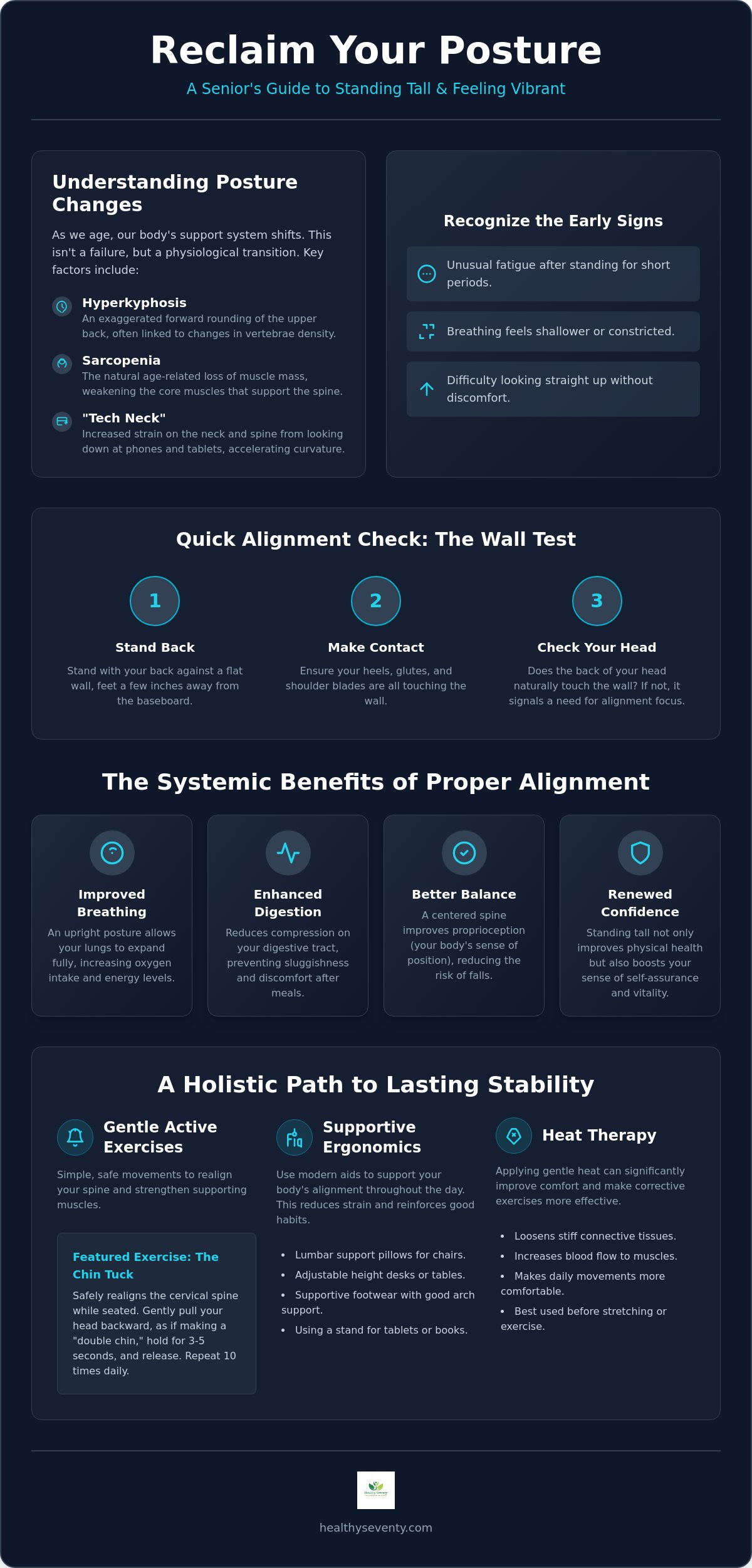
When you notice your reflection in a shop window and see a slight curve in your shoulders that wasn't there before, it's natural to feel a sense of frustration. Many people assume this "slumping" is simply an unavoidable part of getting older, but it's actually a complex shift in your body's internal support system. Your spine is a masterpiece of engineering, yet over time, changes in bone density and muscle mass begin to alter its alignment. This isn't a failure of will; it's a physiological transition that requires a new, informed approach to wellness. By understanding these shifts, you can begin the journey of posture correction for seniors with confidence and clarity.
One of the most common changes is a condition called hyperkyphosis, which involves an exaggerated forward rounding of the upper back. While often referred to by the outdated term "widow's hump," medical professionals focus on Understanding Kyphosis (Dowager's Hump) as a sign that the vertebrae may be thinning or changing shape. This process is frequently accelerated by sarcopenia, the natural loss of muscle tissue that occurs as we age. When the muscles supporting your spine weaken, the gravity of daily life starts to pull the torso forward, making it harder to maintain that proud, upright stance you've always known.
It's helpful to distinguish between structural and functional changes. Structural changes involve permanent alterations to the bone or discs, often resulting from long-term conditions like osteoporosis. Functional changes, however, are rooted in habits, muscle imbalances, and the way we move. These are often correctable. Even if some structural changes have occurred, improving your functional alignment can significantly reduce pain and improve your overall vitality.
The Impact of "Tech Neck" on the Golden Years
In 2026, we're seeing a new challenge for spinal health that doesn't discriminate by age. Spending hours looking down at tablets to video call grandchildren or reading news on smartphones puts immense strain on the cervical spine. Tech-neck in seniors acts as a modern catalyst for spinal curvature, forcing the delicate structures of the neck to support the head at an unnatural, taxing angle. This repetitive strain can lead to "forward head posture," which eventually pulls the rest of the back into a slouch.
Recognizing the Early Warning Signs
Early intervention is the most effective way to preserve your mobility. You might notice subtle cues before a visible "hump" appears, such as feeling unusually fatigued after standing for a short time or finding it difficult to look directly up at the sky. Some seniors report that their breathing feels shallower because a compressed chest limits the diaphragm's movement. To check your alignment at home, try the "Wall Test." Stand with your heels, glutes, and shoulder blades against a flat wall. If your head doesn't naturally touch the wall without tilting back, it's a clear signal that your body is seeking better alignment. Addressing these signs now ensures you stay tall and independent for years to come.
The Vital Link Between Spinal Alignment and Systemic Health
When we think about our wellness, we often focus on nutrition or heart health, yet the way we carry ourselves is equally fundamental to how we feel. Your spine is more than just a support beam; it's a conduit for vitality. Research from MedlinePlus highlights the importance of posture for long-term health, illustrating how alignment influences everything from your balance to your internal organ function. When the spine is properly aligned, your body operates with a level of efficiency that makes daily tasks feel lighter, making posture correction for seniors a foundational habit for a vibrant life.
A hunched chest does more than just affect your silhouette. It physically restricts the space your lungs need to expand fully. This compression often extends to the digestive tract, where a slumped torso can lead to gastrointestinal sluggishness or discomfort after eating. By prioritizing posture correction for seniors, you aren't just standing taller; you're literally giving your internal systems the room they need to thrive. This structural freedom is especially important for maintaining proprioception, which is your body's innate sense of its position. A centered spine is your first line of defense against the instability that leads to falls.
Breathing Room: Posture and Lung Capacity
Have you ever felt winded after a short walk despite feeling otherwise healthy? The culprit might be thoracic restriction. When the upper back rounds forward, the ribs cannot lift properly, which limits the diaphragm's ability to pull in oxygen. This reduced oxygen intake can lead to persistent fatigue and a lack of mental clarity. Choosing the right mobility aids for seniors can provide the necessary support to keep your chest open and your breathing deep. Standing tall ensures that every breath you take delivers maximum energy to your muscles and brain.
Confidence and the Legacy of Presence
There's a significant psychological weight to how we move through the world. An upright gait doesn't just signal vitality to others; it sends a powerful message to your own brain. This biofeedback loop means that standing straight can actually lower stress hormones and improve your mood. While some might feel that "looking frail" is an inevitable part of aging, reclaiming your alignment is a profound act of self-care. It's about maintaining your presence and the legacy of your strength. If you're ready to explore tools that support this journey, you can discover curated solutions for a more aligned life today.
Strategic Approaches to Correction: Exercises, Ergonomics, and Aids
How do we bridge the gap between knowing we need to stand taller and actually achieving that goal? While exercise is a powerful tool for rebuilding strength, relying on movement alone can sometimes feel like an uphill battle. True vitality comes from a multi-modal approach that combines active correction with passive ergonomic support. Active correction involves the intentional strengthening of your core and back muscles, while passive support includes the tools and environment that help you maintain that alignment without constant conscious effort. For many, this integrated strategy is the most sustainable path toward long-term success in posture correction for seniors.
Stiffness is often the biggest hurdle to better alignment. When connective tissues are tight, they act like a restrictive suit that prevents you from standing tall. Addressing this stiffness through heat therapy can transform your progress. Using deep-penetrating heat before you begin your daily movements can loosen paraspinal muscles, making alignment feel natural rather than forced. This preparation allows your muscles to respond more effectively to the strengthening exercises you perform later in the day.
The Role of Infrared Heat in Spinal Flexibility
Deep-penetrating infrared heat is uniquely effective for relaxing the paraspinal muscles that run alongside your spine. Unlike traditional heating pads that only warm the skin's surface, infrared waves reach into the deeper layers of muscle and fascia. This process increases blood flow and oxygenation, which is why many are turning to home infrared saunas for the elderly as a gentle way to manage daily stiffness. Incorporating heat as a "warm-up" for your posture routine ensures your body is supple and ready for change.
Ergonomic Mobility: Beyond the Standard Walker
Your choice of mobility aids plays a direct role in your spinal health. You've likely seen traditional walkers that require the user to lean forward, inadvertently encouraging a hunched position. This mechanical disadvantage can actually accelerate postural decline. In contrast, an upright walker is designed to support you from a standing position, allowing your gaze to remain forward and your shoulders back. You can find more details on how these devices help in our comprehensive guide to upright walkers.
A supportive gait also begins at the foundation. Wearing high-quality, orthopedic footwear provides the stability your spine needs to stay centered. When your feet are properly supported, your entire skeletal system finds a more natural balance, making the process of posture correction for seniors feel less like a chore and more like a natural evolution of your daily life.
Daily Posture Correction Routine: Simple Movements for Lasting Change
Consistency is the secret to reclaiming your alignment. When embarking on a journey of posture correction for seniors, your safety is always the first priority. You don't need to perform strenuous workouts to see results; instead, focus on gentle, intentional movements that you can easily perform while seated in a sturdy chair or standing near a wall for balance. By integrating these habits into your daily life, you're teaching your muscles to support your spine correctly without the risk of overexertion or falls. These movements are designed to be accessible, ensuring that physical limitations don't stand in the way of your progress.
Start with the "Chin Tuck," which is widely considered the single most effective movement for cervical alignment. Simply draw your chin straight back, as if making a double chin, while keeping your gaze level. This elongates the back of the neck and counteracts the strain of looking down at devices. For your upper back, try "Wall Angels" by standing against a flat surface and slowly sliding your arms up and down like a snow angel. This opens the chest and engages the rhomboid muscles. To address the lower back, "Seated Pelvic Tilts" help restore the natural lumbar curve by gently rocking your pelvis forward and back while sitting. The Shoulder Blade Squeeze is the foundational move for building upper-back strength.
The 5-Minute Morning Alignment Ritual
Starting your day with intention sets the tone for your physical health. Begin with deep diaphragmatic breathing to expand the ribcage, which creates internal space for your spine. Follow this with gentle neck rotations and three to five chin tucks to release overnight stiffness. Finish the ritual with standing or seated shoulder rolls, moving them up toward your ears and then back and down to release tension. This simple routine ensures your body is prepared for the day's activities.
Core Stability for Long-Term Support
A stable, upright spine relies heavily on core strength, but this doesn't require difficult floor exercises. You can engage your abdominals while seated by simply imagining you're pulling your belly button toward your spine and holding for ten seconds. For those using mobility assistance, these same engagement techniques can be performed while using your device for stability. Building this internal support system is vital for maintaining balance and independence. If you're looking for more ways to enhance your daily routine, you can explore our curated wellness tools to support your journey toward better posture correction for seniors.
Cultivating a Proactive Lifestyle for a Straighter, Stronger Future
Reclaiming your alignment is a journey that extends far beyond a morning exercise routine. It's about bringing a new level of awareness to the simple, repetitive movements that fill your day. Whether you're stirring a pot on the stove or enjoying a favorite novel, your body is constantly receiving cues on how to hold itself. By integrating small adjustments into these moments, you make posture correction for seniors a seamless part of your lifestyle rather than a separate task. This proactive approach ensures that every activity becomes an opportunity to reinforce your strength and stability.
Your home environment plays a silent but significant role in your physical alignment. If your favorite reading chair is too deep or your computer monitor is positioned too low, your body will naturally compensate by slouching. Consider adjusting the height of your workspace so that your gaze remains level. Use supportive cushions to maintain the natural curve of your lower back while sitting. These ergonomic shifts, combined with the right foundation, create a space where your spine can thrive without constant effort. Remember that this process is a marathon, and celebrating small wins along the way is essential for staying motivated.
A stable spine begins at the ground level. The way your feet interact with the floor dictates the alignment of your knees, hips, and back. Choosing high-quality walking sneakers for balance provides the essential grip and arch support needed to stand tall. When your base is secure, your body doesn't have to work as hard to maintain its center of gravity. This reduces the risk of falls and allows you to move with a more fluid, confident gait, making posture correction for seniors a natural extension of your daily movement.
Selecting the Right Tools for Your Journey
Choosing the right equipment can significantly accelerate your progress. If you find that traditional walking aids cause you to lean forward, it might be time to consider the VOCIC Upright Walker for Seniors. This device is specifically engineered to keep you in a vertical position, preventing the "shuffling gait" that can lead to long-term postural decline. Additionally, orthopedic sneakers from brands like Orthofeet offer the cushioning and stability required to keep your skeletal system in check. While these tools are incredibly helpful, consulting with a physical therapist can provide you with a tailored correction plan that addresses your unique physiological needs.
For men who want to complement these efforts with a focused strength and health strategy, you can visit Built After 50 Coach to discover online coaching programs designed specifically for your stage of life.
A Message of Empowerment from Healthy Seventy
At Healthy Seventy, we believe that vitality isn't a destination but a continuous path of discovery. We understand that the later stages of life are a cherished phase, and we're here to act as a partner in your wellness journey. Reclaiming your posture is an act of self-care that pays dividends in your confidence and independence. We invite you to join our community, where we share resources and support for proactive living. Your legacy is one of grace and strength; it is never too late to invest in a straighter, stronger future for yourself and those you love.
Standing Tall for the Years Ahead
Your journey toward a more aligned and vibrant life starts with a single, intentional choice to prioritize your physical well-being. Throughout this guide, we've explored how reclaiming your upright stance isn't just about appearance; it's a vital step toward better breathing, efficient digestion, and increased confidence. By combining gentle daily movements with the right ergonomic support, you're building a foundation for lasting independence. Posture correction for seniors is a rewarding process of rediscovery, proving that vitality and grace are achievable at any stage of life.
Healthy Seventy has been dedicated to senior independence and vitality since 2024, providing expert-vetted wellness advice specifically tailored for those ages 60 and older. Whether you're looking for restorative heat therapy or a curated selection of high-quality mobility aids like the VOCIC Upright Walker, we're here to act as your knowledgeable mentor and partner. You deserve to move through the world with strength and clarity.
Explore our curated collection of mobility aids and wellness products to support your journey to better posture.
Take that first step today, and remember that every small adjustment is a celebration of your enduring strength and presence.
Frequently Asked Questions
Is it possible for a 70-year-old to correct a hunched back?
Yes, it's entirely possible to improve spinal alignment at any age, including for those who are 70 or older. You can still make progress. While some structural changes to the bone might be permanent, functional improvements can significantly reduce the severity of a "hunch" and alleviate chronic pain. Strengthening the core and paraspinal muscles helps support the spine more effectively, allowing for a more upright and confident posture even if age-related bone changes have already occurred.
How long does it take to see results from posture exercises?
Most seniors begin to notice subtle improvements in their comfort and physical awareness within four to six weeks of consistent practice. Consistency is key. Significant changes in physical alignment typically require three to six months of dedicated effort, as the body needs time to rebuild muscle memory and strength. Even ten minutes of daily focus on posture correction for seniors can yield noticeable results over the course of a few months.
Can an upright walker really help improve my posture?
An upright walker is specifically designed to encourage a vertical stance by allowing you to walk within the frame of the device rather than leaning over it. It makes a difference. Unlike traditional walkers that often lead to a slumped position, these modern devices support your forearms at a height that keeps your gaze forward and your shoulders back. This mechanical advantage helps reinforce healthy spinal alignment during every stroll, making it easier to maintain your height and independence.
What are the best exercises for someone with severe osteoporosis?
Gentle weight-bearing movements and resistance exercises that focus on the back and core are generally recommended, provided they avoid heavy spinal flexion. These moves build strength. Scapular squeezes and wall-supported stretches are excellent for opening the chest without putting undue stress on fragile vertebrae. It's essential to consult with a healthcare professional or physical therapist to create a safe, personalized plan that prioritizes bone safety while still challenging your muscles.
Does sleeping on your back help with posture correction?
Sleeping on your back is often considered the best position for spinal alignment because it allows your weight to be distributed evenly across the widest surface of your body. Give it a try. Using a small pillow or rolled-up towel under your knees can further support the natural curve of your lower back. This position minimizes pressure points and prevents the neck from twisting awkwardly, which supports your daytime efforts in posture correction for seniors and reduces morning stiffness.
Are posture corrector braces safe for seniors to use daily?
Posture braces can be safe and helpful as a temporary training tool, but they shouldn't be relied upon as a permanent solution for daily use. Muscles need to work. Overuse can lead to muscle atrophy because the brace does the work your muscles should be doing. It's best to wear them for short intervals, such as 30 to 60 minutes a day, while simultaneously performing strengthening exercises to build the internal support and muscle memory your spine requires.
What is the "Wall Test" for posture, and how do I do it?
The Wall Test is a quick self-assessment where you stand with your heels, glutes, and shoulder blades touching a flat wall. It's simple to do. Once in position, check if the back of your head also touches the wall without you having to tilt it back or strain your neck. If there's a significant gap between your head and the wall, it indicates a forward-head posture that may need targeted corrective attention and professional guidance.
How does dehydration affect spinal health and posture in seniors?
Dehydration can lead to the thinning of the intervertebral discs, which are largely composed of water and act as shock absorbers for your spine. Stay hydrated. When these discs lose fluid, they become less resilient and lose height, which can contribute to a more compressed or slumped posture. Maintaining proper hydration ensures these discs stay plump and functional, providing the necessary cushioning to keep your spine flexible and aligned throughout your golden years.


Comments